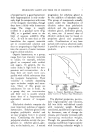
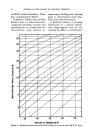
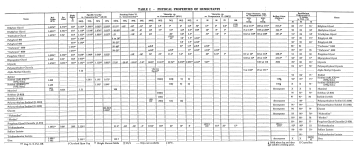
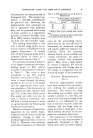
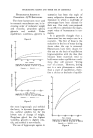
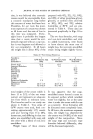
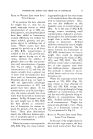
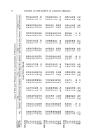
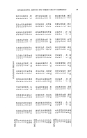
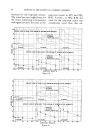
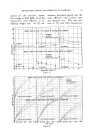
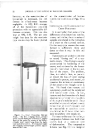
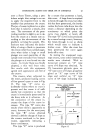
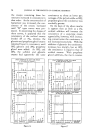
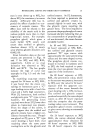
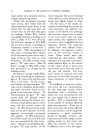
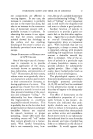
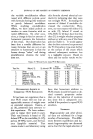
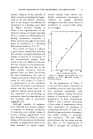
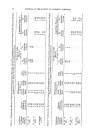
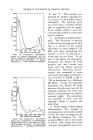
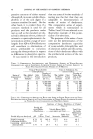
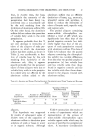
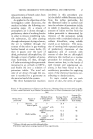
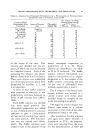
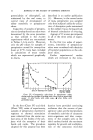
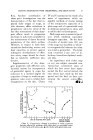
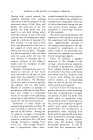
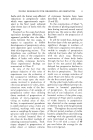
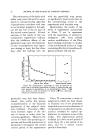
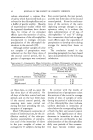
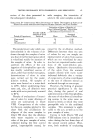
HYGROSCOPIC AGENTS AND THEIR USE IN COSMETICS I1 of humectants has been proposed by Livengood (21). This method rep- resents a desirable simplification for practical use. However, the hygroscopicity data presented are not in agreement with published data, and his proposed relationship of water content as a logarithmic function of relative humidity from 20 to 100% relative humidity does not hold over this humidity range. The semilog relationship is true over a limited range within an ac- curacy of about 4-5% H•O for most organic humectants. A revised form of the Livengood graph with a corrected family of curves on a limited scale is shown in Fig. 2. To ascertain the general behavior of an organic humectant the water- holding power at 50% relative humidity is determined by reference to Table 1. This value is then transferred to the 50% relative humidity vertical line on Fig. 2. A curve is drawn through this point, parallel to the curves in the graph and the approximate water reten- tion properties of the humectant at any desired humidity between 25% and 75% is then read off the curve. The graph and table may also be used to choose a humectant that will hold a desired amount of water at a given humidity by following the reverse of this procedure. Blends or mixtures of humectants apparently do not exhibit hygro- scopicities exactly in accord with the arithmetic average of their in- dividual hygroscopicities, as seen in Table 2. However, since moisture control by humectants is influenced TABLE 2--HYGROS½OPI½ITIES OF BLENDS OF HUMECTANTS R.H., % Water Held at Equilibrium-- 50/50 Arlex-Glycerol----. Found* Calculated t 30 8.7 8.3 5O 17.6 16.6 70 32.0 30.9 * Points from curve plotted from actual data. t Arithmetic average of points taken from curves plotted from actual data. more by the surrounding atmos- phere than by the over-all choice of humectant, an arithmetic average will usually .suffice for estimate cal- culations. There are occasions wherein blends of non-volatile and volatile humectants are used, for example, sorbitol and propylene glycol. Here, when a large surface to volume is exposed, the over-all hygroscopicity will change due to the change in composition and net remaining weight of the humectant. DYNAMIC HYGROSCOPICITY DATA Dynamic hygroscopicity studies have been carried out in our labora- tory utilizing the sample-on-sand technique. Our reason for using this method was twofold--since the sample is present in a thin film, the actual rate of moisture change of the product is not influenced by the rate of moisture transfer inside the solution, and the large area ex- posed provided a rapid gain or loss which allowed the study to be com- pleted in a relatively short time. The importance of the thickness of the film in rate measurements is graphically illustrated in Fig. 3, which shows data for several depths,
Purchased for the exclusive use of nofirst nolast (unknown)
From: SCC Media Library & Resource Center (library.scconline.org)