68 JOURNAL OF THE SOCIETY OF COSMETIC CHEMISTS the skin coincident with the maxi- mum degerming of the skin's sur- face would not assure the excretion of a non-odorous sweat in response to thermal stimulation during tests undertaken four hours after contact of the cleanser with the skin. Un- der the conditions of the sweating tests, odorous end products of metab- olism of which the rate has been stepped up by increases in both the internal and environmental temper- atures of the body may be excreted by way of the coil glands (32) and, thereby, contribute to intensities of odors of perspiration.' These odors attributable to metabolites may be differentiated from perspiratory odors by two major criteria: (a) they are not unpleasant and usually faint intensities of these odors, when measurable, vary inversely with the volumes of perspiration collected and (b) intensities of odors arising from metabolites eliminated in sweat do not increase during periods of storage of perspiration under condi- tions which are propitious for the growth and multiplication of cuta- neous bacteria. Determinations of odors of samples of perspiration im- mediately after collection and again at the ends of periods of storage and directing particular attention to the increment in intensities of the odors during storage afford more reliable indices of greater reproducibilities of the detergent and degerming actions of skin cleansers in respect to their capacities to protect against devel- opments of objectionable perspira- tory odor than do the odor values of fresh samples of perspiration. Although observations of the bio- logical reactions of inocula of pure cultures of micro6rganisms into aliquots of sterile perspiration have shown that the production of malo- dorous metabolites is not a common characteristic of all species of cu- taneous bacteria which have been isolated and identified to date nev- ertheless studies of about 2000 sam- ples over a period of approximately two decades have demonstrated uniformly good correlations between intensities of odors produced and rates of growth and multiplication. Conversely, restrictions of growth and reproduction of the cutaneous organisms, by antibacterial agents, retard rates of production of offen- sive odors. Finally, removals of all viable micro/Srganisms from perspi- ration inhibit completely the develop- ment of obnoxious odors no matter what the soil content of the perspira- tion may be (33). All of these findings lead to the inescapable con- clusion that control of the bacterial populations on the surfaces of skin is the "sine qua non" of the control of perspiratory odors. In his pub- lication entitled "Cosmetic Aspects of Perspiration," Klarmann (34) has presented a comprehensive and instructive review of the chemical and biological reactions resulting in the production of objectionable odors on skin. Inasmuch as the two soaps were utilized for cleansing the entire cu- taneous areas of the subjects' bodies (except those of their heads and necks), it was imperative to sample both perspiration and cutaneous

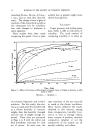
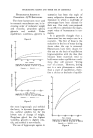
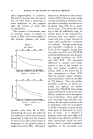
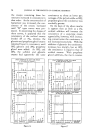
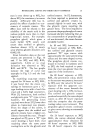
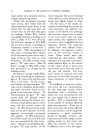
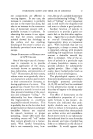
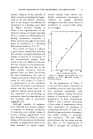
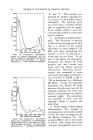
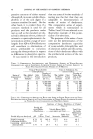
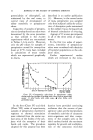
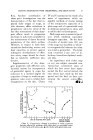
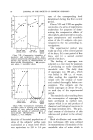
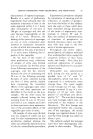
TESTING DEODORANTS WITH CHLOROPHYLL AND DERIVATIVES 69 bacteria from the same surface area for purposes of appraising the com- parative deodorant efficiencies of the soaps. The most practical method of obtaining representative samples of the bacterial flora of skin from more than 90 per cent of the surface area of the body and in a medium to which the metabolic activities of the micro6rganisms had become adjusted was the utilization of perspiration as a medium of lav- age. Under the conditions of ther- mal stimulation, as used in this se- ries of experiments, volumes of per- spiration collected from the subjects in a total of 540 sweating tests varied from 256 to 375 c.c. with a mean of 276 c.c. (standard error of mean = 5.1). It is the author's conviction that, for purposes of sampling bacteria from extensive areas of skin, ther- mal stimulation of sweating has distinctive advantages over other procedures, One notable asset is the fact that elevation of the skin temperature (33) not only results in the production of volumes of per- spiration adequate for lavage of bac- teria from the skin's surface but, also, it contributes to the mobiliza- tion of micro/Srganisms from their deeper habitats in the skin, e.g., the crevices and folds of the corneum and the orifices of hair follicles. Hence, stimulation of sweating yields samples which are more truly representative of the cutaneous bac- terial flora than do other direct or indirect procedures. A second asset of the technique of stimulation of sweating as a means of sampling cutaneous bacteria is the fact that it maintains day to day variations within narrower ranges than those which are characteristic of other methods, either direct or indirect, of obtaining representative samples of the bacterial flora of skin. During the control period preceding tests with the plain soap, the mean of numbers of viable bacteria counted in stored samples of perspi- ration was 9.73 millions per 1 c.c. with a standard error of the mean of 1.30. Samples of perspiration collected from the same subjects, during the control period before tests of the germicidal soap, had a mean count of 10.12 millions of bac- teria per 1 c.c. of which the standard error was 1.95. Day to day varia- tions in counts of cutaneous bac- teria have been calculated as per- centage variations from the mean re- sult determined for all samples of perspiration from each subject dur- ing the two control periods. The average of all day to day variations from their respective means deter- mined for 15 subjects was q-15 per cent with a standard error of 3.5. In the light of the range of diurnal variations in bacterial populations of perspiration collected from the subjects during control periods, there can be no question of the sig- nificances of the differences between the mean percentage reductions in cutaneous bacteria effected by wash- ings with either the plain soap or the germicidal soap on the nine days of the bathing period for which data have been summarized in Chart V. The second limitation of in-vitro
Purchased for the exclusive use of nofirst nolast (unknown)
From: SCC Media Library & Resource Center (library.scconline.org)