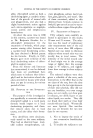
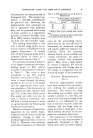
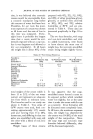
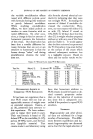
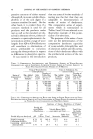
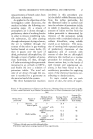
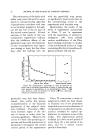
28 JOURNAL OF THE SOCIETY OF COSMETIC CHEMISTS the variable emulsification effects noted with different polyols occur with formulas•having only mediocre or poorly balanced emulsifiers. While studying emulsification effects, we have added polyols at random to some formulas with no noted differences. On other occa- sions, a change in kind or amount of humectant prevents the formation of the cream. Our observation has been that a notable difference be- tween formulas that are not or are sensitive to humectants is that the former always "takes" well during emulsification whereas the latter does not. this formula showed electrical con- ductivity indicating that they were not strongly W/O. Increasing the amount of Arlacel C emulsifier de- creased the conductivity. How- ever, our test creams with either 1% or with 5% Arlacel C stored at 50% R.H. for 20 days have lost less than 2% in weight whether prepared without or with any one of the three polyols (Table 5). It would appear that the first moisture loss promoted the W/O emulsion type even further at the surface of the cream which reduced subsequent moisture loss to a negligible amount. Based on these and our earlier results we be- Tau•.E 5--WEmav Loss trow W/O Evlul•sIo/qs Test No. Polyol, % Type % Arlacel C© Emulsion % Wt. Lost from ---•4-Oz. Sample 15 Days 12 Days 1 None 1% 2 Sorbitol, 10% 1% 3 Glycerin, 10% 1% 4 Propylene Glycol, 10% 1% 5 None 5% 6 Sorbitol, 10% 5% 7 Glycerin, 10% 5% 8 Propylene Glycol, 10% 5% Dual ? 0.8% 1 ._1% Dual ? 0.4% 1.5% Dual ? 1.6% 2.3% Dual ? 1.2% 3.2% W/O 0.6% 0.9% w/o o. 3% •. 5% W/O 1.3% 1.9% W/O O. 5% 1.9% HYoltoscovle AGIgNTS IN COSMETICS--W/O EMULSIONS It has been our experience that a true W/O cream will not lose an appreciable amount of weight even on extended exposure. Cessna, et al. (6), presented data contrary to this experience. We have endeav- ored to repeat their work in part. Their test • formula is based on 1% Arlacel C© as the emulsifier, 0-15% polyol, 34-49% water, and the bal- ance lipophilic material. Test creams made in our laboratory using lieve that humectant addition to W/O creams should be based on de- sired cosmetic properties rather than on the reduction of moisture loss since this is adequately con- trolled if the product is a good W/O emulsion. SUMMA RY Hygroscopicity and other physi- cal data are tabulated for a large number ofhumectants. The differ- ences between equilibrium and dy- namic hygroscopicity are discussed and a chart for the rapid selection of

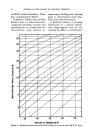
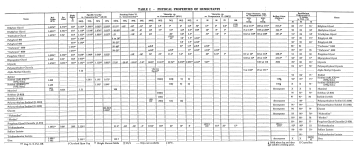
HYGROSCOPIC AGENTS AND THEIR USE IN COSMETICS 29 humectants, based on equilibrium data, is presented. Rate of weight loss of water from O/W cosmetic creams was studied at different humidities and different levels of humectant. In a stearic acid-soap type cream sorbitol was found to retard moisture loss to an increasing extent with increasing amounts of sorbitol. In contrast, the addition of small amounts of glycerin or propylene glycol in- creased the rate of weight loss and only the addition of large propor- tions of these polyols resulted in a reduction of weight loss. In non- ionic emulsified creams the differ- ences between the three humectants were less pronounced. Humectants are added to retard "drying out" of cosmetic creams. One of the effects observed on drying of most cosmetics is the formation of a crust at the exposed surface. In this study, soap emulsified creams formed crusts badly, whereas non- ionic emulsified creams remained smooth and homogeneous even though they had lost similar amounts of weight. Methods of measurement of these properties are described. BIBLIOGRAPHY (1) "Amines," Carbon & Carbide Co., New York (1944). (2) "Average Temperature and Humidity," American Maize-Products Co., Twelve Maps (months of year), New York (1939). (3) "Atlas Sorbitol," Atlas Powder Com- pany (1947). (4) Bauschinger, CI., Fette u. Seifen, 46, 723 (1939). (5) "Carbowaxes," Carbon & Carbide Co., New York (1946). (6) Cessna, O. C., Ohlmann, E. O., and Roehm, L. S., Proc. Sci. Sect., Toilet Goods Assoc., No. 6, 20 (1946). (7) "Dow Glycols," Dow Chemical Co. (1947). (8) Gallagher, A. F., and Hibbert, H., 5 t. Am. Chem. Sot., 58, 813 (1936). (9) "Glycols," Carbon & Carbide Co., New York (1941). (10) Gregory, T. C., e,d,., "Condensed Chem- ical Dictionary,' Reinhold, N. ¾. (1942). (11) Griffin, W. C.,Ind. Eng. Chem., $7, 1126 (1945). (12) Hangen and Watson, "Chemical Proc- ess Principles," P•trt I, John Wiley & Sons, New York (1943), p. 155. (13) Heilbron, I. M., ed., "Dictionary of Organic Compounds," Oxford Univer- sity Press, New York (1934). (14) Hodgroan, C., ed., "Handbook of Chem- istry & Physics," Chemical Rubber Publ. Co., Cleveland (1939), pp. 351- 847. (15) 7. Assoc. Oj•c. Agr. Chem., $, 255 (1925). (16) Karolet, J., U.S. Pat., 2,483,418. (17) Kline, G. M., •t. Research Natl. Bur. Standards, 14, 67 (1935). (lit) "Handbook of Chemistry," Lange, N. A., ed., Handbook Publishers, San- dusky, Ohio (1944), pp. 314-654. (19) Lawrie, J. W., "Glycerol and the Glycols," ACS Monograph No. 44, Chem. Cat. Co., New York (1928), pp. 155-207, 369-374. (20) Lesser, M. A., Proc. Sci. Section, Toilet Goods Assoc., No. 3, 7-12 (1945). (21) Livengood, S. M., Chem. Ind., 65, 9411 (1948). (22) deNavarre, Proc. Sci. Sec., Toilet Goods Assoc., No. 4, 22 (1945). (23) "Chem. Eng. Handbook," J. H. Perry, ed., McGraw-Hill, New York (1941), pp. 271-574. (24) Rinkenbach, W. H., Ind. Eng. Chem., 19, 474 (1927). (25) Sheeley, M. L., Ibid., 24, 1060 (1932). (26) Spaght, M. E., Thomas, S. B., and Parks, G. S., •'. Phys. Chem., 36, 882 (1932). (27) "Synthetic Organic Chemicals," Car- bon & Carbide Co., New York (1945). (28) "International Critical Tables," E. W. Washburn, ed., Vols. III and V.
Purchased for the exclusive use of nofirst nolast (unknown)
From: SCC Media Library & Resource Center (library.scconline.org)