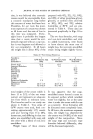
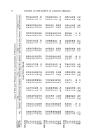
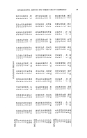
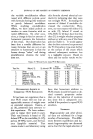
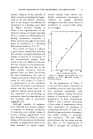
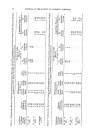
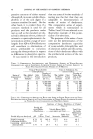
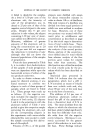
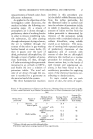
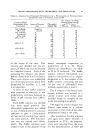
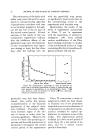
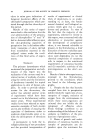
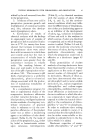
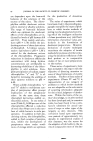
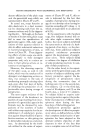
42 JOURNAL OF THE SOCIETY OF COSMETIC CHEMISTS parative amounts of either natural chlorophyll, its water-soluble chloro- phyllins or of the acid digest if a common standard be used. On the other hand, it is evident that, if a common standard is used for all products and the products under test as well as the standard are dis- solved in the same solvent, either col- orimetric or spectrophotometric de- terminations within a range of wave lengths from 420 to 430 millimicrons will contribute to eliminations of errors attributable to variations among the three products in respect to differences in absorption spectra. It was stated in the introduction that one asset of in-vitro methods of testing was the fact that they are adaptable to demonstrations of modes of action of deodorants. The comparative series of experi- ments which is summarized in Tables 3 and 3-A was selected as an illustrative example of this poten- tiality of in-vitro tests. The purposes of the series of tests were (a) the determination of the comparative deodorant capacities of water-soluble chlorophyllins and of aluminum sulfate and (b) correla- tions of their deodorant effects with the antibacterial actions of the two products. TABLE 3--COMPARATIVE ANTIBACTERIAL AND DEODORANT ACTIONS OF WATER-SoLuBLE CHLOROPHYLLINS AND OF ANHYDROUS ALUMINUM SULFATE ADDED IN VARYING AMOUNTS TO STALE PERSPI•TION DURING PERIODS OF 30 MINUTES Series of Comparative Tests Tests of Water-Soluble Tests of Anhydrous Alu- .Chlorophyllins .... minum Sulfate.-- Number of Number of Mg. Added Odor Viable Bac- Mg. Added Odor Viable Bac- to 100-c.c. Values teria as 10 a to 100-c.c. Values teria as 10 a Samples as pC per 1 c.c. Samples as pC per 1 c.c. 1 0 32 12,000.000 0 32 12,116.000 2 10 16 6,100.000 750 16 615.000 3 20 8 200.000 1,000 16 5.120 4 35 2 0.751 1,500 8 0.450 5 50 0 0.105 2,000 8 0.165 6 100 0 0.065 3,000 8 0.090 TABLE 3-A--CoMPARATIVE AMOUNTS OF BAsEs AND ACIDS IN STEAM DISTILLATES OF STALE PERSPIRATION AND OF SAMPLES OF THIS PERSPIRATION TO WHICH EITHER ALUMINUM SUEFATE OR WATER-SoLUBLE CHLOROPHYLLINS HAD BEEN ADDED Pooled Aliquots Analyzed Analyses of Steam Distillates of Pooled t-- -Aliquots Pooled Ali- quots Before Volatile Bases, Milli- Total Vola- •Distillation--- f . equivalents per Liter--• tile Acids, Milliequiva- pC Other than lents per pH Values Total Ammonia Ammonia Liter Negative controls 8.74 32 149.4 132.8 16.6 40.5 Containing A12(SO4)a 2.92 8 7.3 0.7 6.6 68.5 Containing water-soluble chlorophyllins 5.74 0 24.7 9.2 15.5 7.1

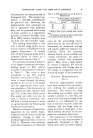
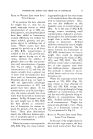
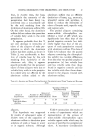
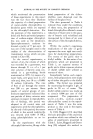
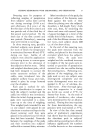
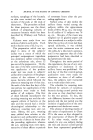
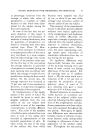
TESTING DEODORANTS WITH CHLOROPHYLL AND DERIVATIVES 43 The substrate was a pooled sample of perspiration collected from the bodies, except the heads and necks, of five subjects and, then, incubated at 37øC. for forty- eight hours. The pooled sample was divided into two major parts and each of these major parts was subdivided into six aliquots each of which had a volume of 100 c.c. One series of six aliquots was utilized in tests of the chlorophyll and the other series was employed in com- parable experiments with aluminum sulfate. In each of.these two series, one aliquot was maintained as a negative control neither product was added to this aliquot. Varying amounts of the water- soluble chlorophyll preparation were added to the remaining five aliquots of one series. In like manner, different quantities of anhydrous aluminum sulfate were introduced into five aliquots of the other series. Relative amounts of the two test products added to 100-c.c. aliquots in either series were deter- mined on the basis of previous ex- periences in separate groups of tests of each compound. Following addi- tions of the chlorophyll derivative to one series and of the aluminum sulfate to the other, the six aliquots of both series were incubated at 37øC. for thirty minutes with con- stant but gentle agitation. At the ends of these periods, intensities of odors, as pO values, were deter- mined by the air dilution method, and counts were made of viable bacteria in all aliquots. Also, repre- sentative portions of some of the aliquots in each series were utilized in chemical analyses for pH and for volatile bases and acids. Table 3 presents the results of measurements of intensities of odors, of the counts of bacterial colonies and the comparative amounts of either product added to 100 c.c. of the aliquots in each series. During the periods of incubation for thirty minutes, both the chloro- phyll derivative and the almninum sulfate effected reductions in num- bers of viable micr6organisms. Magnitudes of these reductions progressed in the same direction as did the amounts of either product added to the samples of perspiration. However, in both series of test samples, rates of decline in numbers of viable bacteria exceeded the proportionate increments of the preparations added to the aliquots. Progressive reductions in intensi- ties of odors were observed in the series of aliquots to which the water- soluble chlorophyllins had been added up to a level of 50 rag. per 100 c.c. or a concentration of 0.050 per cent. This concentration of the water-soluble derivative of chloro- phyll deodorized completely the malodorous, stale perspiration. Also the bacterial population of this aliquot was reduced to less than 1 per cent of the nmnbers determined in the negative control aliquot of the same series. Although the aluminum sulfate effected equally great or even greater reductions in bacterial counts of the samples of perspira- tion to which it had been added,
Purchased for the exclusive use of nofirst nolast (unknown)
From: SCC Media Library & Resource Center (library.scconline.org)