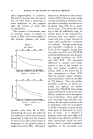
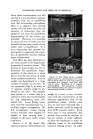
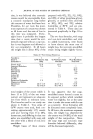
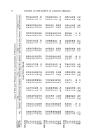
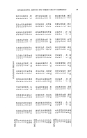
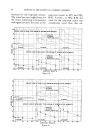
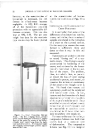
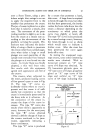
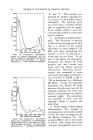
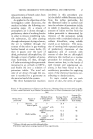
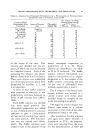
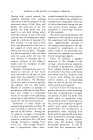
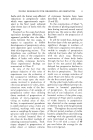
HYGROSCO?IC AGENTS AND THEIR USE IN COSMETICS 9 It will be seen that the dynamic hygroscopicity for a given sample or product containing the sample will depend upon (1) the inherent rate of the product, (2) the starting and final concentrations (or humidities), (3) the temperature, (4) the thick- ness of the sample, (5) the physical nature of the sample (liquid, solid, gel, etc.), and other factors. In our laboratory, both the sample-on- sand technique and uncovered beakers of the material have been employed. It would appear that the sample-on-sand method would mini- mize the effect of moisture migra- tion or transfer through a finite thickness of film and would there- fore give a truer value of rate. Much of the published hygroscopicity data is based on observations of the rate of weight gain of a thick layer of sample in a beaker which combines factors of equilibrium and dynamic hygroscopicity, volatility, and rate of moisture transfer in solution in unknown proportions. Determination of volatility is complex because it is a rate phenom- enon and depends upon the area exposed, temperature, and relative humidity. Constancy of relative humidity is also important since variation will lead to gain and loss of water during which a form of steam distillation can occur. The vapor pressure of the humectant (100%) is an indication of its volatility. These methods of determining hygroscopicities were chosen as being the most practical for ob- serving a reasonable number of samples at one time with good ac- curacy. Previous methods that were given trial included the iso- teniscope, the Bureau of Standards individual humidors (17) and saturated salt solutions in desic- cators and in specially built boxes. Generally, we have found saturated salt solutions to be unsatisfactory because of their slow gain and loss of water. This was true even when the surface of the solution was agitated. Our present equipment consists of a stainless steel lined cabinet through which air is recirculated. Tem- perature is controlled by a sensitive mercury thermo-regulator which controls electric heating through an electronic relay. Humidity is con- trolled by a silk wick hygrostat operating a pneumatic air-water aspirator spray. Dehumidification is provided by external means and is controlled only grossly, the actual control being the humidifying sys- tem mentioned above. Performance of the equipment and an estimation of the accuracy of the methods of determining equilibrium hygro- scopicity in comparison with pre- viously published data have been described (11). EQUILIBRIUM HYGROSCOPICITY DATA These data were determined as previously described, the found values expressed as per cent solids in equilibrium •ith the chosen rela- tive humidity, and the successive values plotted. From the resulting curves, values of per cent solids were read off at 30%, 50%, 70%,

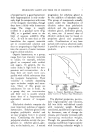
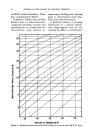
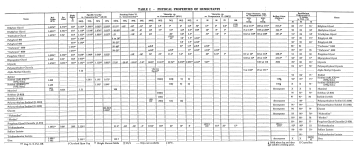
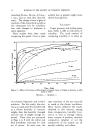
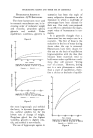
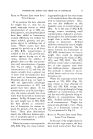
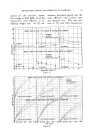
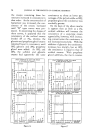
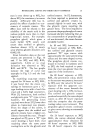
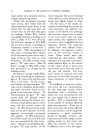
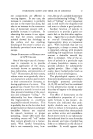
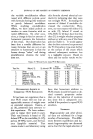
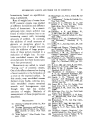
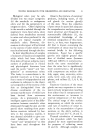
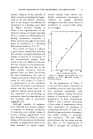
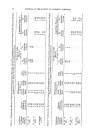
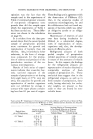
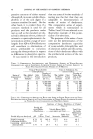
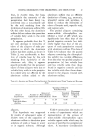
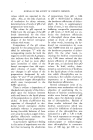
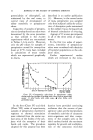
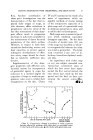
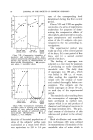
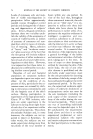
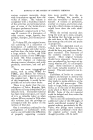
10 JOURNAL OF THE SOCIETY OF COSMETIC CHEMISTS and 85% relative humidities. These data are presented in Table 1. In addition, Table 1 lists available physical data on these humectant compounds including viscosity and specific gravity .rs. temperature and concentration, vapor pressure rs. temperature, boiling point, freezing point rs. concentration, water solu- bility, and other information. A graphical method of choosing humectants for a desired equilib- rium hygroscopicity and for cal- culating the effect of combinations • 10 3 3o 4O 5o •0 70 Relatlv• •u•d•ty-• Figure 2.--Humectants Estimation of Equilibrium Moisture Contents from 500)• R. H. Value
Purchased for the exclusive use of nofirst nolast (unknown)
From: SCC Media Library & Resource Center (library.scconline.org)