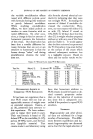
48 JOURNAL OF THE SOCIETY OF COSMETIC CHEMISTS ments was divided into two groups. In one group of experiments, 300 rag. of the dried preparation of the chlorophyllins were spread over the bottom of the gas-washing bottle through which the odorous vapors were drawn. In this respect, the technique was similar to that adopted in the experiments with butyric acid which are presented in Table 4. However, in the second group of experiments, 300 mg. of the preparation of chlorophyllins were added directly to the source of the odor. Air was drawn through the system at a uniform rate of 200 c.c. per minute for thirty consecutive minutes. Diallyl sulfide, or as it is some- times called allyl sulfide, is an un- saturated compound containing two double bonds. It reacts readily with iodine pentoxide and an end result of this reaction is the libera- tion of free iodine. Table 5 presents a summary of this series of experiments. In the tests with the aqueous extract of garlic, the dried chlorophyllins in con- tact with the vapor phase effected greater reductions in the volatile odorous compound than did an equivalent amount of the same preparation added to the liquid phase of the source of the odor. This result is in agreement with the findings of several comparable series of experiments all of which indicate that dried preparations of either natural chlorophyll or chlorophyl- lins derived from it exhibit greater capacities to deodorize gases than their abilities to eradicate the odors of liquids in which they were sus- pended or dissolved. However, the results of the experi- ments with diallyl sulfide appear 'to be exceptions to this general state- ment. In tests carried out on this source of odor, the chlorophyll preparation added to the liquid phase was more effective in reducing intensities of odor than it was as a solid in contact with the vapor phase. The apparent explanation of this exceptional result is the fact that rapid volatilization of di- allyl sulfide in the stream of air during the first five to ten minutes of the test period (thirty minutes) resulted in the delivery of practi- cally all of the odorous vapors into the bottle containing the chloro- phyll preparation within a period which was less than the time requisite for deodorization by the chlorophyllins. On the other hand, addition of the chlorophyll prepara- tion to the liquid phase of the source of the odor provided a longer interval for deodorizing actions of the chlorophyllins. The deodorant capacities of chlo- rophyll may be influenced to a marked degree by the balance between bases and acids in liquid sources of odors. The group of experiments which are summarized in Table 6 has been selected as an instructive illustration of the com- parative effects of varying levels of pH upon the efficiency of the prep- aration of sodium-copper chloro- phyllins as a deodorizer. A 0.20 per cent mixture of benzyt mercaptan with water was utilized

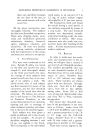
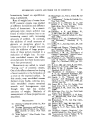
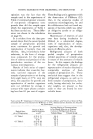
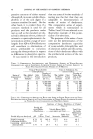
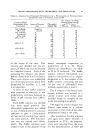
TESTING DEODORANTS WITH CHLOROPHYLL AND DERIVATIVES 49 Ta•L• 6--CoMvaRaTXVE DEODO}ta•T EVVXC•E•CXES OVa P}tEva}taxIO• ov SODXuM-CovvE}t CHLOKOPHYLLINS AT VAKYINO LEVELS or pH Levels of pH of Preparations After Series of Prepara- Chlorophyll Incubation tions Added, Mg. pO Values of Prep- arations After Storage •--at 37 ø C. for:--. 5 Minutes 30 Minutes Not buffered, Negative pH = 6.14 control 0 32 64 Not buffered. A• 0 32 64 In water at Aa 200 16 16 pH = 6.50 Aa 500 8 4 pH = 2.20 B• 0 32 64 B2 200 32 32 Ba 500 32 16 pH = 5.29 C• 0 32 64 Ca 200 16 16 Ca 500 16 8 pH = 8.04 D• 0 32 64 D2 200 16 4 D• 500 4 0 pH = 10.50 E• 0 32 64 Ea 200 16 4 E• 500 4 0 as the source of the odor. This mixture was divided into six ali- quots, of which one was maintained as a negative control. Each of the remaining five aliquots was identi- fied by a letter from A to E inclusive. Then, each aliquot was subdivided into three equal portions which were designated by numbers 1, 2, and 3 as subscripts. A series of four buffer solutions were prepared to maintain in test preparations acid-base balances at levels of pH varying from 2.00 to 12.00. Each buffer solution was divided into three equal portions. The chlorophyll preparation was added to two of these portions in amounts sufficient to give a concentration of 2 per cent in one and 5 per cent in the other portion. The third por- tion was not treated with chloro- phyll. The buffer solutions were added to four of the aliquots of the benzyl mercaptan suspension in proportions of 1 to 10. These aliquots are identified in the table as B to E inclusive. The buffer solution without chlorophyll was added to the portion of an aliquot designated as 1 the samples of the buffer solution containing 2.0 and 5.0 per cent of chlorophyll were marked, respectively, 2 and 3. The A aliquot of the benzyl mer- captan mixture was treated in a similar manner with either plain distilled water or samples of the water containing chlorophyll. The negative control aliquot was diluted with water to a volume equivalent to that of all of the other preparations listed in the table. After incubation for five minutes and again after thirty minutes of incubation at 37øC., the prepara- tions were removed from the oven for the determinations of their pO
Purchased for the exclusive use of nofirst nolast (unknown)
From: SCC Media Library & Resource Center (library.scconline.org)