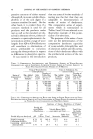
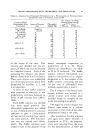
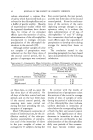
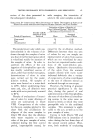
38 JOURNAL OF THE SOCIETY OF COSMETIC CHEMISTS During storage either in contact with air or under anaerobic condi- tions, increases in both volatile bases and volatile acids were ob- served. However, the more signifi- cant result was the fact that the increments in volatile bases exceed the increases in volatile acids as shown in the tabulation on page 37. In view of the fact that aliquots of the two pooled samples of per- spiration, at any one of the three levels of acid-base balances listed in the preceding tabulation, exhibited approximately equivalent increases in both base and acids, volatile with steam, during storage either in contact with air or in the absence of oxygen, data for the two aliquots were combined in the calculations of the average ratios reported above. It will be seen that aliquots of both pooled samples of perspiration which were buffered at levels of pH = 7.00 or above yielded greater increments in both volatile bases and acids than did the aliquots buffered at levels of pH = 4.00. Also, the former aliquots were malodorous at the ends of periods of storage whereas the weakly acid aliquots developed no demonstrable odors during periods of incubation. In this respect, results of the two series of experiments reported in Tables 1 and 2 corroborate the find- ings of earlier investigations (5). Subsequently, several consecutive experimental studies were under- taken for purposes of identification of the volatile bases and volatile acids produced during incubation of perspiration either exposed to air or exposed to similar volumes of gases from which oxygen had been eliminated. Only a brief summary of the results of these later investiga- tions will be presented in this intro- duction. In samples of perspiration which were analyzed immediately after collection, the total nitrogen varied from about 70 to 150 mg. per cent and the non-protein nitrogen made up about 80 per cent of the total nitrogen. The principal constitu- ent of the non-protein nitrogen was urea. Ammonia accounted for rela- tively small fractions, i.e., from 3 to 4 per cent of the total nitrogen. Approximately 10 per cent of the total nitrogen of fresh perspiration was volatile with steam and about 70 per cent of this volatile fraction was found to be ammonia nitrogen. Primary amines or amides ac- counted for the remaining 30 per cent of the nitrogen which was volatilized with steam. In contrast with freshly collected perspiration, samples of stale, malo- dorous perspiration yielded quanti- ties of volatile nitrogen which were equivalent to from 50 to 70 per cent of the total nitrogen and to about 90 per cent of the non-protein fraction. Nitrogenous compounds made up the total volatile base of which about 90 per cent was found to be ammonia. Amines and amides were identified as constituents of the remaining 10 per cent. Components of the fraction of acids which have been identified to date in steam distillates from stale perspiration but were not found in

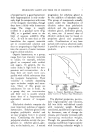
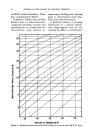
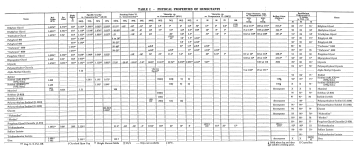
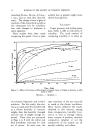
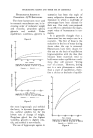
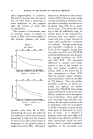
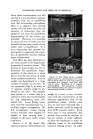
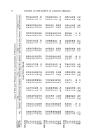
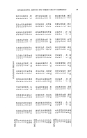
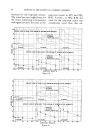
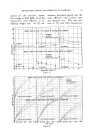
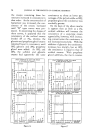
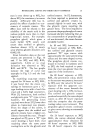
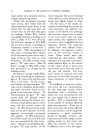
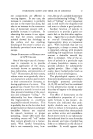
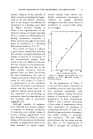
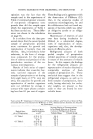
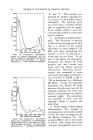
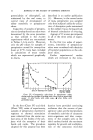
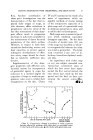
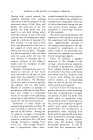
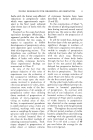
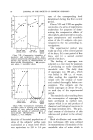
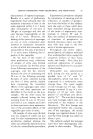
TESTING DEODORANTS WITH CHLOROPHYLL AND DERIVATIVES 39 fresh and non-odorous samples are: (a) acetic acid, (b) caproic acid, (c) caprylic acid, and (d) burytic acid. The preceding citations of data for volatile bases and acids include only compounds in either category which have been identified in the author's laboratory in samples of stale or stored perspiration. It is not intended that these lists of either group of compounds be regarded as representative of all of the volatile bases and acids which might be end products of metabolic activities of micro-organisms growing and multi- plying on surfaces of skins of human subjects. The purpose of this introduction has been to summarize the principal chemical and biological reactions which take place among the chemi- cal and microbial constituents of perspiration on the cutaneous sur- face and result in the production of offensively odorous compounds. An understanding of these reactions is fundamental to an intelligent ap- preciation of the modes of action of topical deodorants. Furthermore, a clear comprehension of these fundamentals is an essential pre- requisite to the planning of experi- mental studies of deodorants and, also, to the interpretation of the experimental results. F, XPERIMENTAL STUDIES OF TOPICAL DEODORANTS This group includes all prepara- tions which are intended for topical applications to surface areas of the body in order to achieve direct in- hibitory or deodorizing actions upon either the sources of or the agents producing the odors. Some chloro- phyll derivatives are classified in this group. In experimental studies directed to appraisals of chlorophyll and of products derived from it, the first problem confronting the experimen- talist is the selection of an analytical procedure which may be adapted to determinations of either the pigment itself or of the derivatives alleged to be deodorants. Charts II and III have been pre- pared with the objective of illustrat- ing the basic principles of the analytical procedure in use in the author's laboratory. These charts present transmission curves for four preparations which are described below. l. Natural Chlorophyll. This is a sample of chlorophyll which had been prepared from spinach by extraction with acetone (16). The crude product contained 8 per cent of chlorophyll. It was purified (90 per cent) by repeated extrac- tions with immiscible, organic sol- vents. This method was a modi- fication of the technique originally utilized by Willstiitter and his collaborators (17). Chlorophyll"a" made up 69.4 per cent of the puri- fied product and 30.6 was in the form of chlorophyll "b." Its mag- nesium content was 2.39 per cent which is about 90 per cent of the theoretical. This natural chloro- phyll was insoluble in water but soluble in acetone and ethyl ether. 2. Water-Soluble Chlorophyllins
Purchased for the exclusive use of nofirst nolast (unknown)
From: SCC Media Library & Resource Center (library.scconline.org)