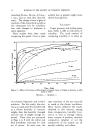
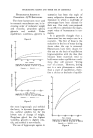
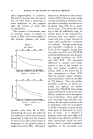
HYGROSCOPIC AGENTS AND THEIR USE IN COSMETICS* Bv W. C. GRIFFIN, R. W. BE•RENS, and S. T. CRoss /ltlas Powder Company, 1/Filmington 99, Del. HYGROSCOPIC agents, or humectants, are materials that ex- hibit the property of absorbing water from moist air. They ex- tract water from the air until a given dilution is attained, depend- ing upon the nature of the humec- rant and the amount of moisture in the air. Two conditions may exist when a humectant is being used. First, while the humidity is changing, or has just been changed, the humec- rant or product in which the humec- rant is used, will gain or lose water, at which time the rate of change is of importance. Second, if condi- tions are constant for a suitable time, equilibrium is finally attained, at which time the amount of water held is important. Unfortunately, much of the published data repre- sent a combination of these condi- tions, at times further complicated by loss of the humectant itself. This promotes confusion in the in- terpretation of hygroscopicity data and the choice of humectants. * Presented at the December 8, 1949, Meeting, New York City. DEFINITIONS The three properties of major importance are defined as follows: Equilibrium hygroscopicity is the state or condition that exists when an aqueous solution will neither gain nor lose water at a given rela- tive humidity. In our work this is usually expressed as the weight percentage of water in the solution in equilibrium with the given rela- tive humidity. A single value does not characterize the behavior of a compound rather the values must be expressed as a curve of solids content rs. relative humidity. Dynamic hygroscopicity is the speed with which a compound or its aqueous solution will gain or lose moisture while approaching equilib- rium. Since the rate depends on both the initial and final conditions as well as the exposed area-to- volume ratio, absolute units are usually not assigned and the dy- namic hygroscopicity is expressed in comparison with another ma- terial. Folatility is the tendency of the product to evaporate and may be expressed as weight loss per unit

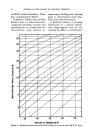
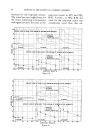
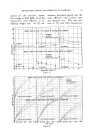
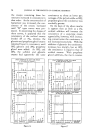
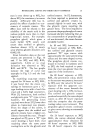
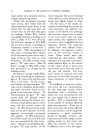
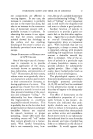
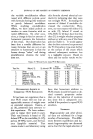
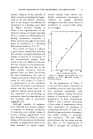
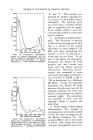
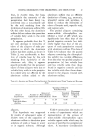
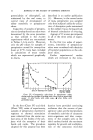
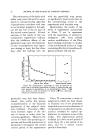
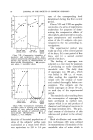
6 JOURNAL OF THE SOCIETY OF COSMETIC CHEMISTS area at a given temperature. Vola- tility is usually of importance under practical conditions of use, usually room temperature, and is propor- tional to the vapor pressure at room temperature. It will be seen that these three properties are directly related to the determination of water retention of humectants either when tested as such or when added to a cosmetic, etc., and evaluation methods must take these factors into account. HYGROSCOPIC AGENTS--GENERAL The properties of an ideal humec- tant are briefly summarized below: 1. High hygroscopicity--The product should hold an appreciable amount of water. 2. Narrow humectant range-- For a given change of relative humidity there should be a mini- mum change in water content. 3. Desired viscosity--The lower the viscosity of the humectant the more easily it may be mixed with the materials to be conditioned. (Mixing is usually done in aqueous solution so that the actual viscosity of the humectant may be of secondary importance.) For some applications high viscosity is desirable. 4. Low viscosity index--The usual terminology for viscosity in- dex refers to change of viscosity with temperature. In this case a low viscosity change with both ternpe.rature and water content is desirable. 5. Good compatibility--The product must be compatible with a wide variety of materials. 6. Low volatility--Complete lack of volatility is desirable. 7. Low cost. 8. Lack of toxicity. 9. Good color, odor, and taste. 10. Lackof corrosive action. 11. Low freezing point. In general, humectants are di- vided into three classes: inorganic, organic, and metal-organic. The inorganic type, of which calcium chloride is an example, finds only limited use because of their corrosive nature and lack of compatibility. Organic humectants, the most widely used type, are usually poly- hydric alcohols and their ethers or esters. The metal-organic type, such as sodium lactate, is not too generally employed. Considering inorganic humectants in view of the above list of qualities, we find that their hygroscopicity and viscosity characteristics are favorable, since they hold large quantities of water and the viscos- ities of the aqueous solutions change little with wide changes in water content (until a solid state is at- tained). Salts and their hydrates generally have hygroscopicity curves that progress in a stepwise fashion until complete solution is attained (Fig. l-A). For the most part they are highly corrosive and they exert a "salting out" effect on organic colloids. They are non- volatile and--the major reason for their use--they are low in cost. Most organic humectants have the following relationship to our list
Purchased for the exclusive use of nofirst nolast (unknown)
From: SCC Media Library & Resource Center (library.scconline.org)