64 JOURNAL OF THE SOCIETY OF COSMETIC CHEMISTS odors in urine gave indications of hangover deodorant effects of the chlorophyll preparation which per- sisted through the first three days of this period. Results of this series of experi- ments lead to the conclusion that the oral administration of the prepara- tion of chlorophyllins "a" and "b" had no demonstrable influence upon the odor-producing capacities of perspiration but it did reduce effec- tively intensities of odors derived from metabolites excreted in the subjects' urines under the condi- tions of this final series of experi- ments. SUMMARY The primary determinant which motivated the preparation and sub- mission of this report was the realization of the current need for a critical review of methods of evalu- ating the merits and the limitations of deodorants intended for topical applications to skin of human sub- jects. In order to provide subject matter for the discussions, the author has selected several series of experiments which have been carried out in his laboratory within recent years. These experimental studies have been selected as repre- sentative examples of both in-vitro and in-vivo methods of assdying the capacities of deodorants either to eradicate objectionable odors or in- hibit the development of obnoxious odors. A prerequisite to both the in- telligent planning of test procedures and the practical interpretation of results of experimental or clinical trials of deodorants, is an under- standing of, at least, the funda- mental chemical and biological re- actions which give rise to malo- dorous end products. In view of the fact that the majority of the experiments, selected for review in this report, were concerned with the elimination or protection against the development of perspiratory odors, it was deemed advisable to present, in the Introduction, a brief discussion of the two variables upon which developments of perspiratory odors were dependent, viz. (a) the chemical composition of cutaneous soils in respect to the nutritional requirements of cutaneous bacteria and (b) metabolic activities of the micro6rganisms on the skin's sur- face. Results of the in-vitro experiments, reviewed in the Introduction, pointed to the conclusions which are listed in the following para- graphs. 1. Despite the fact that bacteria sampled from skin in perspiration exhibit relatively rapid rates of con- sumption of oxygen, exclusion of oxygen from the environments in which these micro-organisms are cultured does not inhibit the de- velopment of offensive odors. These findings contribute to an understanding of the failures of anti- oxidants as inhibitors of the pro- ductions of perspiratory odors. 2. Rates of growth and multi- plication of cutaneous bacteria in samples of perspiration are de- pendent upon the nutriment fur-

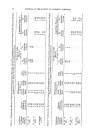
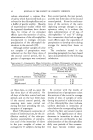
TESTING DEODORANTS WITH CHLOROPHYLL AND DERIVATIVES 65 nished by the soil removed from skin in the perspiration. 3. A balance of base over acid in perspiration promotes growth and multiplication of cutaneous bacteria ,and, also, enhances the develop- ment of perspiratory odors. 4. Correlations of results of .chemical analyses with the findings in organoleptic tests of samples of perspiration before and after incuba- tion at 37øC. for twenty-four hours showed that increases in intensities of perspiratory odors were coinci- ,dent with increments in volatile base and volatile acids but the rises in concentrations of volatile bases in perspiration were greater than the concomitant increases in volatile acids. The resulting balance of base over acid results in the eleva- tion of the pH of perspiration to lev- els above 7.00. This increase in pH levels of perspiration is a uniformly characteristic, physico-chemical change associated with the produc- tion of malodorous metabolites of cutaneous bacteria. In a comprehensive program for tests or experimental studies of the comparative deodorant efficiencies of either tentative formulas or fin-- ished products, intelligently planned in-vitro methods of testing may con- tribute information of practical value in reference to (a) the com- parative efficiencies of the product under test as either a deodorizing agent or an inhibitor of odor devel- opment (Table 3), (b) the mode of action of the preparation, e.g., either by lethal or bacteriostatic actions upon cutaneous micro6rganisms (Table 3), or by chemical reactions with the sources of odors (Tables 3-A, 4, and 5), (c)the environ- mental conditions which may influ- ence the effectiveness of the prepara- tion either.as a deodorizing agent or as an inhibitor of the development of odors, e.g., variations in balances of base and acid in the medium in which sources of odors are dissolved or suspended and to which the prep- aration is added (Tables 3-A and 6), and (d) the molecular structures of the sources of odors, having varying qualitative characteristics, upon which the preparation under test is effective as a deodorant (pages 45 and 50). These potentialities of in-vitro methods of testing deodorants have been illustrated by citations of their applications to five series of experi- mental studies of chlorophyll and its derivatives. Results of these as- says have demonstrated that natu- ral chlorophyll and its water-soluble derivatives, viz., sodium-magnesium chlorophyllins and sodium-copper chlorophyllins, exhibited their max- imum efficiencies as deodorants un- der test conditions in which the odor- ous compounds in vapor phases are exposed to either the natural chloro- phyll or the combination of chloro- phyllins "a" and "b" in solid phases. In order to eradicate odors arising from sources soluble in water, it is essential that the chlorophyll deriva- tive be either water-soluble or dis- persible in colloidal form in the liq- uid to which it is added. Deodorant capacities of water- soluble chlorophyllins "a" and "b"
Purchased for the exclusive use of nofirst nolast (unknown)
From: SCC Media Library & Resource Center (library.scconline.org)