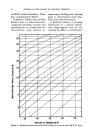
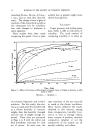
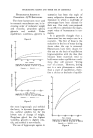
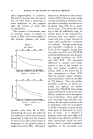
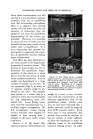
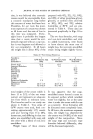
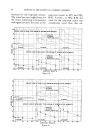
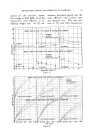
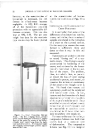
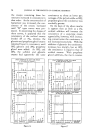
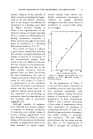
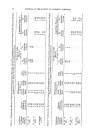
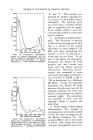
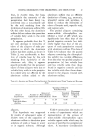
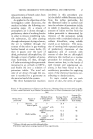
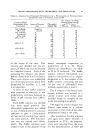
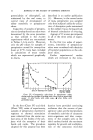
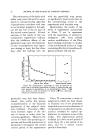
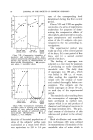
26 JOURNAL OF THE SOCIETY OF COSMETIC CHEMISTS type curves were obtained with in- creased penetrating values. Where the unexposed non-ionic type creams were tested with the improvised Scott type tester, it was found that for the most part the creams were so soft that they gave no reading. Where 20% sorbitol was added, however, a loading curve with a slope of 0.7 was obtained. On 24 hours' storage at 50% R.H. the non-ionic creams containing no humectant showed a curve with a slope of 0.1. With the exception of the cream containing 20% sorbitol, all of the creams gave curves with a slope of 0.3 or less with no crust formation. The 20% sorbitol cream gave a "B" type curve. After 48 hours' storage at 50% R.H., there was practically no change in the loading curves. On 24 hours' storage at 30% R.H., the cream containing no humectant gave a "B" type curve which leveled off at a low value. At 2% humec- tant sorbitol and glycerin gave "D" type curves however, the penetrat- ing values were only slight as com- pared to the soap-type creams. At 5% humectant all gave "B" type curves with the glycerin cream apparently having the firmest con- sistency, the propylene glycol cream next, and the sorbitol cream the least. At 10% humectant the same type curves were obtained with the apparent consistencies increasing only slightly. At 20% humectant, the sorbitol cream was very firm and was not penetrated by the instru- ment. Glycerin and propylene gly- col gave "D" type curves. At 48 hours' exposure the curves obtained were similar to those obtained at 24 hours, but slightly higher in value. On the basis of the results ob- tained on examining the creams for crust formation one definite con- clusion can be drawn, that although the non-ionic creams lose as much, if not more, water than the soap- type creams, they apparently form no crust or only a negligible crust on exposure, whereas the soap-type creams form very definite crusts. In addition, the apparent consist- ency of the non-ionic creams is lower. These results were sub- stantiated by observations. After exposure, the soap-type creams pos- sessed definite films on the surface of the creams which in most cases had shrunk away from the sides of the jars and cracked. The non- ionic creams on exposure were still quite soft to the touch and gave no visual indication of lateral shrink- age. It is difficult to draw any conclu- sions from the crust measurements for the soap-type creams within themselves and a correlation be- tween the crust measurements and per cent weight loss is almost im- possible. This is undoubtedly due to the number of variables affecting these measurements. If the loss of water alone from the creams affected the crust hardness and the apparent consistency, a good correlation should be possible however, the humectants probably supply a plas- ticizing action to the crusts and affect the tackiness of the creams in different ways so that the appar-

HYGROSCOPIC AGENTS AND THEIR USE IN COSMETICS 27 ent consistencies are affected to varying degrees. In any case, the increase in consistency is probably not due to the water loss alone, but also to an increase in the concentra- tion of humectant present with a probable increase in tackiness. In observing the creams it was appar- ent that the creams containing sorbitol showed less shrinkage at the surface and less cracking. Cracking of the cream's surface un- doubtedly permitted more water to escape. OTHER FUNCTIONS OF HUMECTANTS iN O/W CREAMS One of the major uses of a humec- rant in cosmetics is to provide smooth application of the cream, variously known as spreading ac- tion, lubrication, and prevention of "roll." Humectants,by their nature, release water more gradually than a non-humectant solution particularly as their concentration increases, as during application of a cream. This gradual loss of water from the emul- sion permits a smooth inversion and thus prevents breaking of the emul- sion and subsequent "rolling." No relationship has been observed in the hygroscopicity vs. conditions required for smooth inversion. This is probably due to the fact that both proper humectant balance and proper emulsifier balance are required for smooth inversion or proper spreading. Lesser (20) states that vanishing creams will "roll" unless they contain glycerin (or a humec- rant). With careful formulation, this is not necessarily true how- ever, the use of a suitable humectant assists in eliminating "rolling." This lack of "rolling" is very important and is well worth the required trial and error to obtain a good product. Another function of polyols in cosmetics is to provide a good cos- metic feel on the skin after applica- tion. Again this is no doubt related to over-all formulation, though hygroscopicity plays an important part. With materials that are too hygroscopic, a damp or sweaty feel is imparted, whereas with products exhibiting low equilibrium moisture content a desirable smooth dry effect is obtained. One of the ac- tions of polyols in a particular type of cream, foundation creams, is to provide adhesion for subsequently applied powder. Here a high vis- cosity, heavy bodied polyol such as sorbitol is most advantageous. The physiological aspects of the three principalhumectants have been thoroughly presented previously (4, 19, 20) and will not be considered in this presentation except to state that they all appear to be adequately innocuous. The effect of humectants on the emulsification properties of a cos- metic formula is less known. de- Navarre also indicated that poly- hydric alcohols are a factor with which to reckon in formulation, and some have stated that these polyols are surface active and emulsifiers. Some recent work in our laboratory has indicated that for some formulas the amount and type of polyol has little or no influence on the choice of emulsifier. It would appear that
Purchased for the exclusive use of nofirst nolast (unknown)
From: SCC Media Library & Resource Center (library.scconline.org)