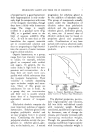
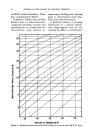
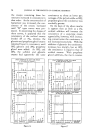
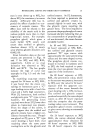
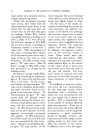
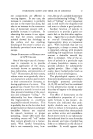
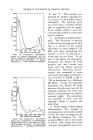
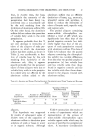
32 JOURNAL OF THE SOCIETY OF COSMETIC CHEMISTS lected from any part of, or from the entire surface area of, the body (except the head and neck) may have been called sweat, in reality they are mixtures of sweat and of a variety of materials which were on the surface of the skin at the time of excretion of the sweat (5). Among these materials which become in- corporated in the sweat either by solution or suspension are: (1) sebum excreted by the sebaceous glands, (2) desquamated epithelial cells and debris derived from these cells, (3) soil or dirt from extraneous sources, and (4) micro6rganisms including resident and contaminant bacteria (7). This mixture of sweat and accumulated materials which the sweat has washed from the skin's surface is called perspiration. Marked variations in the chemical composition of perspiration are de- monstrable among samples collected from any one subject either during morning and afternoon sweating tests of one day or during chrono- logically similar periods on consecu- tive days. Results of analyses of samples of perspiration collected daily from subjects over •eriods of two or more weeks have shown that the diurnal variations in composi- tion are attributable to differences in amounts of the non-sweat con- stituents of perspiration (5). The two predominant factors which con- tribute to these diurnal variations are (a) the rate of excretion of sweat in response to thermal stimu- lation and (b) the state of cleanliness of the skin at the time of collection of the samples (5). Inasmuch as an earlier report published by the author and one of his collaborators (5) has presented all of the essential details of the pro- cedure utilized in collection of samples of perspiration from human subjects and, also, of the techniques adopted for determinations of pO values for odors, descriptions of these methods have been omitted from this report as unnecessarily repetitious: However, at this point, attention should be directed to the fact that two determinations of in- tensities of odors were made of all samples of perspiration. Of these two determinations, the first was carried out on the sample immedi- ately after collection, i.e., of the fresh sample, whereas the second was made on the same sample at the end of a period of storage at 37.5 ø C. for twenty-four hours. The difference between these two pO values for any one sample of perspiration was taken as a quan- titative index of its capacity to develop odors under test conditions which were optimum for growth and multiplication of the several species of micro-organisms removed from skin in the sample of perspiration. During the lag phase of the life cycle of the cutaneous bacteria, the consumption of oxygen by the micro-organisms in perspiration is relatively high. Chart I summa- rizes the results of an experiment which is illustrative of the com- parative oxygen requirements of sterile and non-sterilized aliquots of a pooled sample of perspiration which had been collected from five

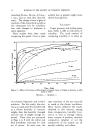
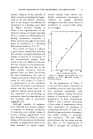
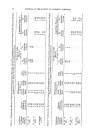
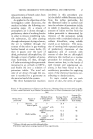
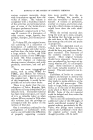
TESTING DEODORANTS WITH CHLOROPHYLi• AND DERIVATIVES 33 human subjects within periods of thirty minutes preceding the begin- ning of the test period. Steriliza- tion of one aliquot was effected by immersion in a boiling water bath for fifteen minutes. Graphs in Chart I are representative of the relative volumes of oxygen absorbed by 2 c.c. aliquots of the perspiration during consecutive intervals of thirty minutes throughout the three hours of incubation in a Warburg Microrespirometer at 37.5 ø C. The curves of Chart I indicate a good linear relationship between the volumes of oxygen absorbed and lengths of periods of incubation of the non-sterilized sample. Inas- much as the sole difference between the two aliquots of the pooled per- spiration was the fact that in the fresh sample, cutaneous microiSr- ganisms have not been inactivated by heat sterilization, the rate of oxygen consumption depicted by the curve for this aliquot in Chart I is representative of the metabolic activities of bacteria in perspiration within the first three hours of in- cubation during which growths of the organisms are proceeding at maximum rates but reproduction of the bacterial cells is practically negligible (12). Although samples of perspira- tion, collected from human subjects in response to thermal stimulation of sweating, may exhibit slopes of curves varying significantly from that illustrated in Chart I, never- theless all the pooled and individual samples of perspiration which have been included in similar experi- mental studies have shown uni- formly cumulative increments in volumes of oxygen absorbed throughout the first three hours of incubation in contact with either air or oxygen. •0 n 0 0 60 120 180 TIME OF INCUBATION, MINUTES Chart [.•Oxygen consumption by per- spiration at 37øC. ß fresh sample, sterilized sample. In the preparation of Chart I, it was not the author's intention to conclude or even to infer that oxida- tion reactions exclusively took place throughout twenty-four-hour periods of incubation of samples of perspiration at body temperature. Tables 1 and 2 present sum. maries of two series of experiments which were undertaken for purposes of comparing intensities of odors pro- duced during incubation of perspira- tion under aerobic or anaerobic test conditions. The sole differ- ence between the two series was the fact that, in the experiments of Table 1, nitrogen was utilized for
Purchased for the exclusive use of nofirst nolast (unknown)
From: SCC Media Library & Resource Center (library.scconline.org)