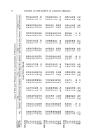
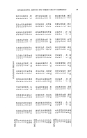
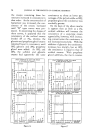
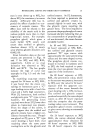
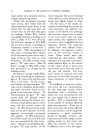
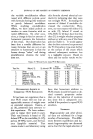
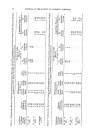
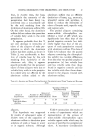
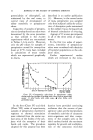
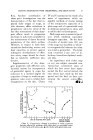
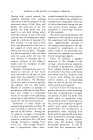
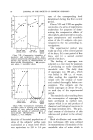
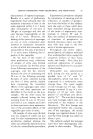
44 JOURNAL OF THE SOCIETY OF COSMETIC CHEMISTS it failed to deodorize the samples. At a level of 1.50 per cent of the aluminum salt, the intensity of odor of the perspiration was re- duced to 25 per cent of that of the negative control aliquot in the same series. Despite this 75 per cent reduction in odor values, the aliquot containing 1.50 per cent of alumi- num sulfate was offensively odorous. Moreover, additions of greater amounts of the aluminum salt to bring the concentrations up to 2.0 and 3.0 per cent did not augment the reductions in intensities of odor although they did cut down the bacterial populations of the samples of perspiration. From the data presented in Table 3, it is evident that deodorizations of the samples of stale perspiration were not dependent solely upon the bactericidal actions of either of the two products under test. In order to obtain volumes ade- quate for chemical analyses, it was found necessary to combine two aliquots in each of three groups of samples which are listed in Table 3-A. These groups were made up as follows: (1) the negative con- tr91s included the negative control aliquots of both series, (2) aliquots 5 and 6 in the experiments with the aluminum sulfate of Table 3 were pooled to give the composite sample containing the aluminum salt, and (3) the corresponding aliquots in the experiments with water-soluble chlorophyllins were pooled to yield the sample containing this deriva- tive of chlorophyll. Volumes of 150 c.c. of the pooled aliquots were distilled with steam for about twenty-five minutes in order to obtain 150 c.c. of distillates. The total volume of a distillate was divided into three equal portions of which two were utilized in analyses for base. However, one of these two portions was treated with Per- mutit prior to acidification and concentration as described on page 35 as the initial steps in determina- tions of total volatile base. Treat- ment with Permutit was omitted in the analysis of the second portion. Hence, analysis of the second por- tions yielded data for total volatile base whereas analysis of the first portions gave values for volatile base other than 'ammonia. The third portion was utilized in analyses for total volatile acids by the pro- cedure which has been described on page 35. Analytical data presented in Table 3-A indicate that the-stale perspiration which had a pH = 8.74 contained an excess of volatile base over volatile acids and, also, about 89 per cent of the total base was in the form of ammonia. The addition of 2.5 per cent of anhydrous aluminum sulfate re- duced the pH of the perspiration from a theoretical level of 8.74 to 2.92. The steam distillate from the aliquot to which the aluminum salt had been added yielded significantly less base but definitely more vola- tile acids than did the negative control aliquots. Decreases in am- monia accounted for the greater part of this reduction in total vola- tile base. These findings indicate

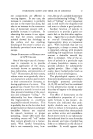
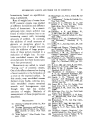
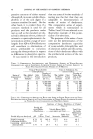
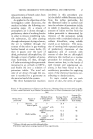
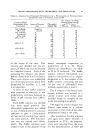
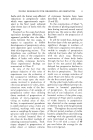
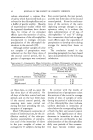
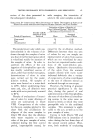
TESTING DEODORANTS WITH CHLOROPHYLL AND DERIVATIVES 45 that, in in-vitro tests, the base, particularly the ammonia of the perspiration had been fixed, i.e., converted into a non-volatile salt by the acid resulting from the hydrolysis of aluminum sulfate (18). On the other hand, the aluminum sulfate did not reduce the quantities of volatile fatty acids in the stale perspiration. It appears probable that the 75 per cent decrease in intensities of odors of the aliquots of stale per- spiration to which the aluminum sulfate had been added, as shown in Table 3, was attributable to fixa- tion of volatile base by the acid resulting from hydrolysis of the aluminum salt. Also, it appears equally probable that the persistent odors of these aliquots were due to volatile fatty acids in stale perspira- tion which were not affected by the aluminum sulfate added to the aluminum sulfate was an efficient deodorizer of bases, e.g., ammonia, trimethyl amine and pyridine, it failed to reduce the intensities of odors of butyric acid, caprylic acid, and caproic acid. The pooled aliquots containing water-soluble chlorophyllins ex- hibited a level of pH which was significantly less than that of the pooled negative controls but defi- nitely higher than that of the ali- quots of stale perspiration treated with aluminum sulfate. The data of Table 3-A indicate that the pooled aliquots containing the chlorophyl- lins exhibit two notable differences from the other two pooled samples of perspiration: (a) less volatile base and less volatile acids than those found in negative controls and (b) less volatile acids than those deter- nilned in the aliquots treated with aluminum sulfate. TABLE 4--Ac'rxoNs or DBIED WATER-SoLuBLE CttLOKOPIIYLLINS UPON VAPORS OF BUTYr. IC Acw Series of Experiments Quantity of Butyric Acid Recovered •-- .... --. Percentage Amount of Standard Reduction Number of Water-Soluble Error of in Butyric Experiments Chlorophyllins Mean Mean Acid Controls 12 0 11.29 0.04 Tests with chloro- phyllins 15 50 5.41 0.01 52 aliquots. This hypothesis was supported by results of subsequent series of in-vitro tests of the capacities of aluminum sulfate to deodorize pure solutions of acids or bases in water or in organic solvents. Although Table •, summarizes the results of a series of experiments which are representative of the actions of water-soluble chlorophyllins upon volatile organic acids which may be sources of putrefactive perspiratory odors. A secondary consideration
Purchased for the exclusive use of nofirst nolast (unknown)
From: SCC Media Library & Resource Center (library.scconline.org)