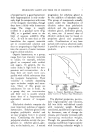
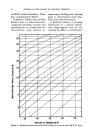
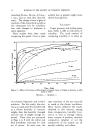
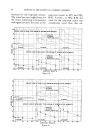
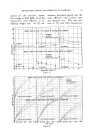
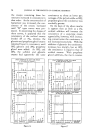
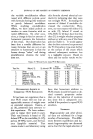
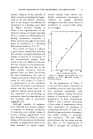
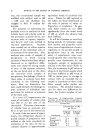
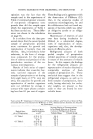
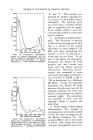
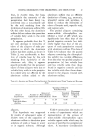
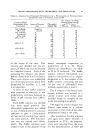
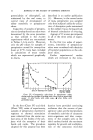
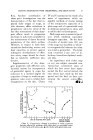
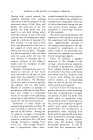
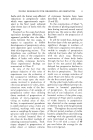
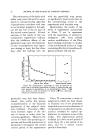
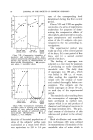
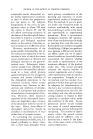
HYGROSCOPIC AGENTS AND THEIR USE IN COSMETICS 7 of properties for a good humectant: their hygroscopicity is only moder- ately high (in comparison with some of the inorganic materials), though they have a fairly wide humectant range. The range is usually covered in a gradual curve (Fig. I-B), or a gradual curve to the limit of aqueous solubility (Fig. l-C). It will be seen that at low humidities the organic materials are in concentrated solution and that on progressing to high humid- ities the amount of water increases to give a dilute solution. Organic humectants, as a group, range from low viscosity materials to solids for example, ethylene glycol as compared with sorbitol and sugars. In general, the vis- cosity index is high both for tem- perature and concentration. .As a class they are much more com- patible with colloid substances than the inorganic humectants. Their volatility is variable depending upon molecular weight and struc- ture. Many of this group are satisfactory for use in foods. As a group they are non-corrosive and their cost is usually several times that of a hygrometrically equivalent amount of inorganic salt. Polyhydric alcohols comprise the most important subclass of organic humectants. Ethylene glycol is the simplest polyhydric alcohol and we may progress from it in several ways. Considering the family of polyhydric alcohols strictly the pro- gression is: ethylene glycol, glyc- erin, to the hexitols, etc. A second progression for ethylene glycol is by the addition of ethylene oxide. This group of compounds actually comes under the classification of dihydric rather than polyhydric alcohols and the progression is ethylene glycol, diethylene glycol, tri, tetra, etc. A second class of dihydric alcohols may be based on propylene glycol and propylene oxide. Combinations of any base polyols with various alkylene oxides is possible to give a vast number of products. 100 0 D $ollds 100 Curve • Comoound A Inorganic Calcium Chloride cB Organle Sorbl•ol Orgenle Uroa D Metal-Organic $odltta Laceate Figure 1.--Typical Equilibrium Hygrosco- picity Curves of Various Type Humectants The physical properties, particu- larly hygroscopicity and viscosity, fall into fairly well-defined trends with molecular weight. Broadly considered, equilibrium hygroscopic- ity decreases, rate of change de- creases, and viscosity increases with increasing molecular weight. Though the generalization of de- creasing equilibrium hygroscopicity with increasing molecular weight is

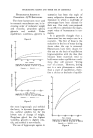
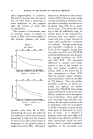
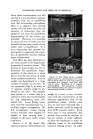
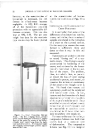
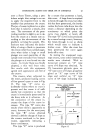
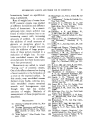
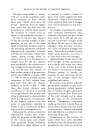
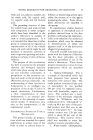
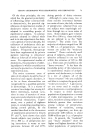
8 JOURNAL OF THE SOCIETY OF COSMETIC CHEMISTS true, this property of the various classes of polyols progresses dif- ferently with different classes. Di- hydric alcohols (formed by the addition of ethylene oxide) show a sharp reduction of humectant value with the first additions of ethylene oxide and then gradually level out at a low value. The initial reduc- tion is even sharper when pro- pylene oxide is used. In contrast, the polyhydric alcohol series, ethyl- ene glycol, glycerin, xylitol, sorbitol, etc., does not show as sharp a re- duction at first, but the decrease becomes more and more rapid with increasing molecular weight. This would indicate that similar mem- bers of eight and higher carbon chain length would have exceedingly low equilibrium hygroscopicities. Although, in most cases, vis- cosity increases with molecular weight, it is interesting that though dry sorbitol is a solid, with the chem- ical addition of ethylene oxide, the resulting product is a liquid. How- ever, with further increasing molec- ular weight by reaction with more ethylene oxide the viscosity in- creases and the ultimate product is a solid. DETERMINATION OF HYGROSCOPICITY Care must be exercised in the de- termination of hygroscopicity so as to differentiate between equilibrium hygroscopicity, dynamic hygro• scopicity• and volatility. For non- volatile materials equilibrium hygro- scopicity may be determined with comparative ease. The basic prin- ciple in determining equilibrium moisture content is that of bringing a thin film of the sample into equilib- rium with thd desired conditions. For non-volatile liquid materials, a modification of the official A.O.A.C. method (15) may be used. In this method, approximately one gram of the test sample is thoroughly dispersed on Ottawa sand in an aluminum dish equipped with a small glass stirring rod and a close fitting cover. The initial weight of the sample, concentration of the initial sample, and observed weight after attaining equilibrium permits calculation of the per cent solids or per cent water at equilibrium. The hygroscopicity of volatile materials cannot be determined by this modified official procedure be- cause the samples lose weight con- tinually. Our method employs similar equipment and differs in that the initial weight of the sample is not observed. The weight is noted and the sample is analyzed for moisture content when equilibrium is attained. This method is only suitable for pure or single component materials. If only a part of the product is volatile, the sample will change in composition of solids as well as moisture content during ex- posure. Under these circumstances, further analyses must be carried out to indicate the complete composi- tion at the time of equilibrium and moisture analysis. Rate of attaining the final mois- ture content or dynamic hygro- scopicity is usually expressed as a comparison with another material.
Purchased for the exclusive use of nofirst nolast (unknown)
From: SCC Media Library & Resource Center (library.scconline.org)