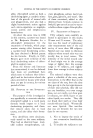
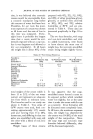
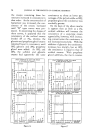
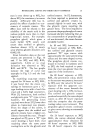
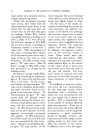
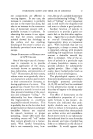
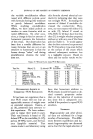
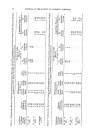
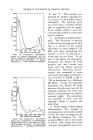
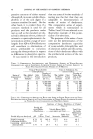
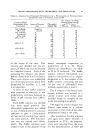
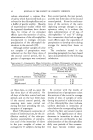
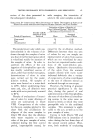
46 JOURNAL OF THE SOCIETY OF COSMETIC CHEMISTS which motivated the presentation of these experiments in this report was the fact that•,they illustrate the capacity of a dried preparation of water-soluble chlorophyllins to deodorize gases which are exposed to the chlorophyll derivative. For the purposes of this experiment, a dried and finely pulverized prepara- tion of sodium-copper chlorophyl- lins was used as the deodorant. Spectrophotometric analyses in- dicated a purity of 77 per cent. It was one of the samples used in the studies of the characteristics of transmission curves which are pre- sented in Chart III. In the control experiments, a current of air, the volume of which was recorded by a gasometer, was drawn through 25 c.c. of a 5 per cent solution of burytic acid, con- tained in a gas-washing bottle maintained at 50øC. by means of a water bath, over glass wool in a U tube and, then, into 50 c.c. of 0.005 _/V sodium hydroxide. The rate of flow of air through the system was 200 c.c. per minute. Since results of several groups of pre- liminary experiments indicated that test periods of thirty minutes were optimum in respect to reproducibili- ties of findings, this period was adopted in all control tests and experiments with the chlorophyllins. At the end of this period, the excess of alkali in the second wash-bottle was titrated with 0.005 N HC1, using phenolphthalein as an in- dicator. In the experiments with the chlorpphyll derivative, 50 mg. of the dried preparation of the chloro- phyllins were dispersed over the surface of the glass wool. The data presented in Table 4 indicate that, under the conditions of these tests, the preparation of dried chlorophyllins effected a mean reduction of 52 per cent in the quan- tity of butyric acid volatilized and transported by 6 liters of air over the surface of the chlorophyll deriva- tive. Within the author's experience, eradications of the odor of garlic represent the most rigid test condi- tions for deodorizing preparations. The source of the garlic odor is diallyl sulfide. In the series of ex- periments which are presented in Table 5, an aqueous extract of garlic and a dilute aqueous solution of diallyl sulfide were utilized as sources of odors. Immediately before each experi- ment, fresh preparations were made up of either the garlic or the diallyl sulfide. The former was prepared by macerating thoroughly 1 gm. of garlic in 20 c.c. of water. The diallyl sulfide solution was made up to contain 0.004 per cent of this compound. The preparation of water-soluble, sodium-copper chlorophyllins tested in the experi- ments of Table 5 was the same product as that used in the experi- ments of Table 4. In 1923, Haggard (19) described the basic principles of the analytical procedure which was utilized in the series of experiments presented in Table 5. Later, Haggard and Green- berg (20) adapted this method to

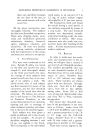
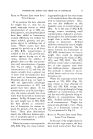
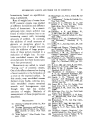
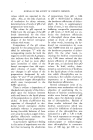
TESTING DEODORANTS WITH CHLOROPHYLL AND DERIVATIVES 47 measurements of breath odors from alliaceous substances. As applied to the objectives of the investigation under discussion, the method includes the following con- ' secutive steps: (1) a stream of atmospheric air is drawn through a preliminary chain of washing bottles in order to remove interfering vola- tile substances, (2) after passing through subsequent drying columns, the air is bubbled through the sources of the odors in gas-washing bottles heated on steam baths, (3) then it passes over the layer of dried, pulverized chlorophyllins, (4) through a tower of pellets of potas- sium hydroxide, (5) then, through a U tube containing iodine pentoxide immersed in an oil bath at 180øC., and finally (6) into a solution of potassium iodide. The total vol- ume of air drawn through the sys- tem is recorded by a gasometer at the terminal end of the system. The three fundamental reactions involved in this procedure are: (a) the diallyl sulfide liberates iodine from the iodine pentoxide, (b) the liberated iodine is carried over into the solution of potassium iodide in which it dissolves, and (c) the amount of iodine set free from the iodine pentoxide is determined by titration of the potassium iodide solution with a standard solution of sodium thiosulfate, using soluble starch as an indicator. The neces- sity of running both repeated series of preliminary clearances of the apparatus and of controls with sources of odor but no chlorophyll eliminate this method as a routine procedure for evaluations of deo- dorant actions but, in the hands of well trained and experienced an- alysts, it has been found to be a satisfactory procedure for exploring some of the chemical reactions con- tributing to deodorizations. In tests carried out on each source of odor, the series of experi- TABLE 5--THE COMPARATIVE EFFECTS ON VOLATILE• ODOROUS CONSTITUENTS OF GARLIC RE- SULTING FROM CONTACTS WITH DRIED CHLOROPHYLLINS OK WITH CHLOROPHYLLINS IN SOLU- TION Average Per- Method of Use Average Titer t centage Re- Series of Ex- Source of of Dried Chloro- with Na2S2Oa duction of Di- periments Odors phyllins c.c. of 0.005 N allyl Sulfide I Aqueous ex- tract of garlic II Diallyl sulfide 0 21.0 .. In contact* with 8.1 61 vapors Added to source of 12.2 42 odors 0 24.5 In contact with 14.7 3•(5 vapors Added to source of 10.3 58 odors * 300 mg. of dried water-soluble chlorophyllins. t All titers reported are average'results of three experiments.
Purchased for the exclusive use of nofirst nolast (unknown)
From: SCC Media Library & Resource Center (library.scconline.org)