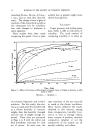
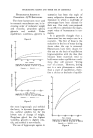
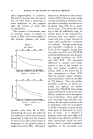
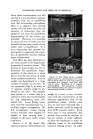
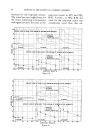
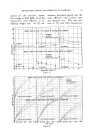
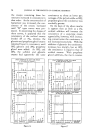
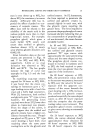
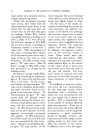
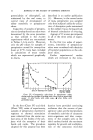
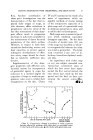
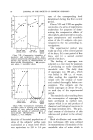
74 JOURNAL OF THE SOCIETY OF COSMETIC CHEMISTS Loads of cutaneous soils and num- bers of viable micro6rganisms in perspiration follow approximately parallel courses throughout control periods and during periods of cleans- ing and degermations of subjects' skins. In fact, the good correlations between these two variables estab- lish the validity of the acceptance of counts of viable bacteria as indices of amounts of cutaneous soil sam- pled from skin by means of stimula- tion of sweating. Hence, selection of "heavy" and "moderate sweat- ers" gives assurance of the fact that the test group will include subjects representative of either moderate or heavy loads of soil and viable micro- 6rganismson their skins. However, it is imperative that rthese latter in- .dications be confirmed by tests dur- ing the first control period. Densities of soil and bacterial population on cutaneous surfaces are dependent upon two major vari- ables: (a) the conditions of ex- posures of skin, particularly the cu- taneous areas not covered by cloth- ing to extraneous contaminants and (b) the hygienic care of the skin's surface. During participation in experiments of the type presented in Charts IV to VIII inclusive, sub- jects are under supervision in the laboratory during about eight hours of each day of an experiment within control and test periods. This sched- ule excludes Sundays and, in some instances, the subjects are not re- quired to report on Saturdays. In other words, the subjects are not under supervision during more than two-thirds of the total number of hours within any one period. In view of the fact that, throughout these extramural intervals, the sub- jects are on "their own," it is im- perative to utilize only those indi- viduals who have shown by their performances in earlier series of ex- periments the requisite evidences of intelligent co-operation and con- scientious adherence to all instruc- tions relative to their activities out- side the laboratory in so far as these activities may influence the experi- mental results. It is essential that the director of the experiments have a general knowledge of the habits and extramural activities of all sub- jects taking part in the tests. In tests of soaps or other detergents, utilized for cleansing the skin of the entire body, the use of any other skin cleanser is prohibited and the tub baths under supervision must be the only procedures for cleansing the surface of the body, except of the face and hands throughout the entire experimental period. In like man- ner, the supervised underarm appli- cations of underarm deodorants or antiperspirants under test must be the sole treatments (including the used soaps) of the cutaneous sur- faces of the axillas during the con- trol and test periods. There is only one way of assembling individuals who may be depended upon to ful- fill satisfactorily the requirements listed above and that is to utilize experienced professional or semi- professional subjects who expect and receive adequate remunerations for their participations in the experi- ments.

TESTING DEODORANTS WITH CHLOROPHYLL AND DERIVATIVES 75 Although numerous attempts have been made to develop a method for direct, quantitative appraisals of odors on skin, all of these endeav- ors proved to be unproductive. During these explorations, the me- tallic osmoscope (40) and several modifications of this instrument were discarded as useless for direct meas- urements of cutaneous odors. In fact, it was less reliable than the unaided nose. It is the author's firm conviction that the procedure for determinations of perspiratory odors which has been utilized in the in-vivo experiments presented in the last five charts of this report repre- sents the most reliable method available today and, also, that well- controlled trials of this method will yield information of practical value in studies of deodorants intended for applications to skins of human sub- jects. REFERENCES (1) Kuno, Y., "The Physiology of Human Perspiration," Churchill, I,td., London (1934). (2) Myers, V. C., "Endocrinology and Metabolism," D. Appleton and Co., New York, Vol. 3, pp. 512-513 (1922). (3) Best, C. H., and Taylor, N. B., "Physio- logical Basis of Medical Practice," Wil- liams and Wilkins Co., Baltimore, pp. 723-724 (1950). (4) Shaw, L. A., and Messer, A. C., Am. 5 t. Physiol., 95, 16 (1930). (5) KillJan, J. A., and Panzarella, F. P., "Proceedings of the Scientific Section of the Toilet Goods Association," No. 7, p. 3 (1947). (6) Hier, S. W., Cornbleet, T., and Bergeim, O., 7- Bid. Chem., 166, 327 (1946) also references 2, 8, 9, and I I. (7) Price, P. B., 7. Infect. Dis., 63, 301 (1938). (8) Plaggemeyer, H. W., and Marshall, E. K., Jr., Arch. Int. Med., 13, 159 (1913- 14). (9) Riggs, R. W., •t. Med. Res. (Boston), 24, 289 (1911). (10) Benedict, F. G., 7. Biol. Chem., 1, 263 (1904-05). (11) Talbert, G. A., Saiki, A. K., Carpenter, R. C., Bergmeyer, J., Staff, H., Borman, C., and Freeman, D., Ibid., 97, 426 (1931). (12) Porter, J. R., "Bacterial Chemistry and Physiology," John Wiley & Sons, lnc., New York, pp. 103-104 (1947). (13) Carpenter, T. N., Fox, E. L., and Se- reque, A. F., 7. Biol. Chem., 83, 211 (1929). (14) Kolmer, J. A., and Boerner, F., "Ap- proved Laboratory Technic," D. Ap- pleton-Century Co., New York (1941). (a) For aerobic cultures, see "Pour Plates," pp. 366-367 (b) for anaerobic cultures, see "Spray Plate Method," p. 369. (15) Pillsbury, D. M., Livingood, C. S., and Nichols, A. C., Arch. Dermatol. and Syphilol., 45, 61 (1942). (16) "Official and Tentative Methods of Analysis," A. O. A. C., 6th edition, pp. 140-141 (1945). (17) Review by Steele, C. C.,in O•ganic Chem- istry by Gilman, H., et aL, John Wiley & Sons, Inc., New York, Vol. lI, pp. 1294-1295 (1943). (18) Cook, E. F., and Martin, E. W., Rem- ington's Practice of Pharmacy, Mack Publishing Co., Easton, Pa., p. 441 (1948). (19) Haggard, H. W., 7. BioL Chem., 55, 131 (1923). (20) Haggard, H. W., and Greenberg, A., 5 t. Am. Meal. Assoc., 104, 2160 (1945). (21) Circular 198, U. S. Department of Agriculture, Washington, D.C., Dec. (1941). (22) Gump, W., "Soap and Sanitary Chemi- cals," and the GivaudanJan Issues of March and April (1945). (23) Killian, J. A., "The Proceedings of the Scientific Section of the Toilet Goods Association," No. 13, May (1950). (24) Traub, E. F., Newhall, C. A., and Fuller, J. R., Surg. Gynec. and Obst., 79, 205 (1944). (25) Udinsky, H. J., 5 t. Med. Soc. N. 7., 42, 15 (1945). (26) Pillsbury, D. M., and Nichols, A. C., 7. Invest. DermatoL, 7, 365 (1946). (27) Hawk, P. B., Oser, B. L., and Summer- son, W. H., "Practical Physiological Chemistry," The Blakiston Co., Phila- delphia, p. 716 (1949). (28) Fair, G. M., 7. New Engl. Water Works Assoc., 47, 248 (1933). (29) Killian, J. A., manuscript in prepara- tion for publication. (30) Klarmann, E.G., and Shternov, V. D., Soap and Sanitary Chemicals, issue of January (1941).
Purchased for the exclusive use of nofirst nolast (unknown)
From: SCC Media Library & Resource Center (library.scconline.org)