2 JOURNAL OF THE SOCIETY OF COSMETIC CHEMISTS ably, chlorophyll acted as both a deodorizing agent, a catalytic stimu- lant of the growth of normal cells and phagocytosis, and also had a slight bacteriostatic action against such micro-organisms as staphylo- coccus aureus and streptococcus hemolyticus. At about the same time in 1938 in this country, a patent was issued to Dr. Benjamin Gruskin for a .chlorophyll preparation for the treatment of wounds, which prep- aration among other features had a marked local deodorizing action. He later obtained a British patent for his formula. Finally, in 1947, Bowers gave more evidence of the local deodorizing action of chloro- phyll in surgical cases. From the history and literature iust summarized, it can be deduced that there are established facts which seem to indicate that chloro- phyll and its derivatives absorb the odors emitted by tissues with which they are put in contact, for various periods of time. III. PURPOSE OF THE INVESTIGA- TION The purpose of this investigation was specifically to ascertain whether chlorophyll added to a tooth paste formula would impart to it local deodorizing properties, and there- fore remove odors due to local causes, and also delay their forma- tion. Two dentifrices were simultane- ously tested on the same subjects. They had an identical base: insol- uble sodium metaphosphate, cal- cium phosphate, sodium lauryl sul- fate, gum, glycerin, and water. One of them contained, added to this identical basic formula common to both, 0.1 per cent of an active water- soluble sodium copper chlorophyllin. IV. SELECTION OF SUBJECTS Fifty subjects were carefully se- lected to participate in this study 29 men and 21 women. The selec- tion was the result of preliminary odor measurement tests of the oral cavity of more than 100 subjects. Special care was taken to eliminate subjects whose mouth odor was not mostly due to local causes. The intensity of the initial mouth odor of local origin was in the average range or higher than the average range in 47 subjects, and slightly lower than average in three subjects only. The selected subjects were then given a schedule of the tests, such instructions to the effect that on the two days of the test, from the time they got up to the last appointment of their test schedule, they did not eat any breakfast, not even orange juice, nor eat candy, nor chew gum or tobacco, nor drink liquor or any other liquid, nor smoke. They did not brush their teeth or rinse their mouth with any liquid. Women did not wear lipstick. One test-free day was set between the two test days for two reasons: 1. Not to impose the strain of two consecutive breakfastless days. 2. To enable the subjects to use

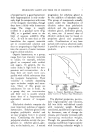
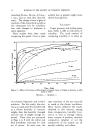
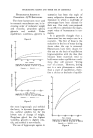
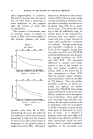
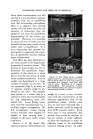
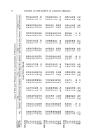
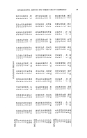
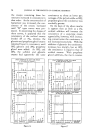
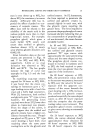
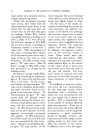
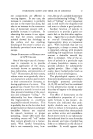
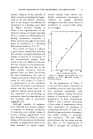
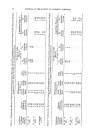
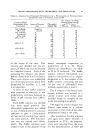
DEODORIZING PROPERTIES OF CHLOROPHYLL IN DENTIFRICES 3 their own dentifrice between the two days of the test, in their usual manner and at the usual time. All the above instructions were thoroughly followed. The subjects had the most diversified occupations. There were shipping clerks, secre- tarial and switchboard personnel, technicians, chemists, bacteriol- ogists, engineers, salesmen, and executives. All were very familiar with testing methods, understood fully the requirements of this study, and were most anxious to co-operate. V. TEST PROCEDURE The tests were conducted as fol- lows: Sample P, plain, was tested on the first and second test days, sample C, with chlorophyll added, on the third and fourth test days. An average of three subjects were tested on each test day, or an aver- age of six subjects a week. The initial mouth odor of each subject was first measured by means of the osmometer, and the odor threshold number of the initial odor thus de- termined. We believe the osmom- eter is well known to THE SOCIETY OF COSMETIC CHEMISTS, as the author demonstrated it at a previous meeting and also at meetings of other technical societies, and there- fore it shall not be described again. Each subject was then given a sterile toothbrush and a tube of each of the test samples. An amount of dentifrice weighing between 1 and 1.2 gs. was applied to the brush. This corresponds, in the chlorophyll tooth paste, to an amount of 1 to 1.2 ms. of active sodium copper chlorophyllin of 97 per cent purity. He brushed his teeth and rinsed his mouth during a total period of two minutes, measured by means of a stop watch. The odor threshold number was determined immedi- ately after brushing, under the same conditions as before. Odor meas- urements were also made one, two, and four hours after brushing of the teeth. All odor measurements were made in triplicate. VI. RESULTS In order to make easy the evalu- ation and interpretation of the re- suits, we will give here a r•sum• of our chart of odor threshold numbers. The smallest perceptible odor has an odor threshold number of 3.13. Numbers from 3.13 to 4.33, indicate traces of odors. Numbers from 4.55 to 5.87 indicate very slight odors. These numbers are always given with two decimals. Stronger odors are: from 6.0 to 8.2 slight odors, from 8.6 to 12.1 definite strong odors. From 13.0 to 26.0 very strong and objectionable odors and from 30.3 to 91.0, extremely strong odors. The initial odor threshold num- bers of the participants in the tests were as follows: males--from 6.0 to 14.0 with 16 different odor values and a greater proportion in the 7.0 to 9.5 range and the 13.0-14.0 range females--from 4.5 to 14.0, with 19 odor values and a greater proportion in the 10.1 to 12.1 range. There were various degrees in the
Purchased for the exclusive use of nofirst nolast (unknown)
From: SCC Media Library & Resource Center (library.scconline.org)