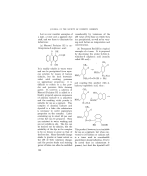
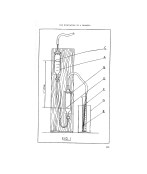
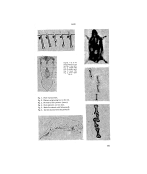
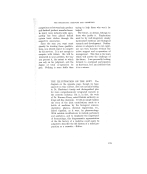
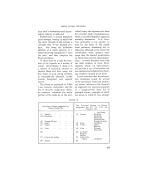
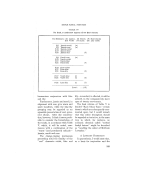
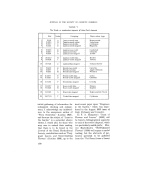
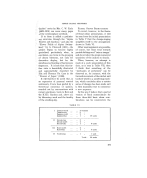
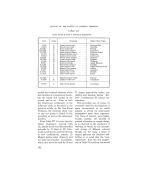
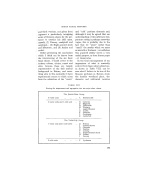
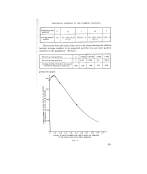
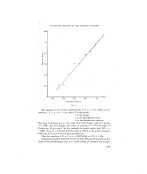
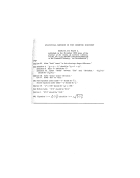
JOURNAL OF THE SOCIETY OF COSMETIC CHEMISTS cream and 2 per cent for a liquid shampoo. The comparison of shampoos of different or unknown composition may conveniently be made at about the level of concentration indicated, bur adjusted to give solutions of equal cost. The lathering power can be ex- pressed in terms of the total volume of solution of the adopted concentra- tion required for the production of free lather on one average half head of hair in a first and a second applica- tion, with intermediate rinsing. A point of great interest is observed when a head chosen at random is submitted to a weekly quantitative shampoo with the same product. The volume of solution required will normally fall from week to week until in the fourth and succeeding treatments the amount used becomes constant. The saloon test is tedious and takes the time of two people for each unit of test a reliable judgment requires a number of tests to be carried out on different types of head, thus adding greatly to the cost of testing. It is imperative, therefore, to provide some simpler method of testing which will give results in agreement with the average of an adequate number of saloon tests on varied heads. Such a simplified test can then be used as a screen to eliminate unsatisfactory samples and materials from the more elaborate and costly saloon testings. Foaming power has been described as a vital criterion of shampoo value to the user, and for this reason a method of measuring foaming quality would be admirable as the screening device. Many tests of foaming power have been described from time to time, and an excellent rdsum• up to 1943 has been made by S. Ross, Ind. Chem., 15,329, 1943. A method will now be described in which variables incidental to such measurements are reduced to a minimum. The results agree well with actual shampoo tests carried out on the same samples. In Fig. I the apparatus is shown to include two 250 mi. cylindrical separating funnels with shortened stems which are joined by means of a length of rubber tubing. One funnel A, which forms an upper water reservoir, is supported so that a mark C indicating the level of 150 mls. of water in the funnel is about 17 inches above a reference mark D on the lower end of the second funnel B which acts as the low-level water reservoir. The lower funnel is fitted with a rubber stopper carrying a rubber connection to a 35 cm. stemmed sintered glass disc oe of porosity No. 1. The disc is placed in a 250 mi. graduated glass cylinder F, 1« inch in diameter, so that it faces upwards, resting on the bottom of the cylinder with the stem inclined diagonally in the cylinder. The cylinder'is placed in a wide glass jar G which acts as a water bath. In setting up the apparatus water is poured into the funnel B and sucked up into A, filling the rubber connecting tube completely and reaching the level of the 150 mi. 152

THE EVALUA•_'ION OF A SHAMPOO A D G C 153
Purchased for the exclusive use of nofirst nolast (unknown)
From: SCC Media Library & Resource Center (library.scconline.org)