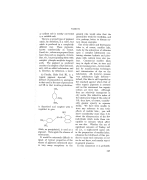
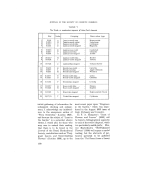
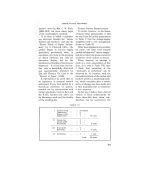
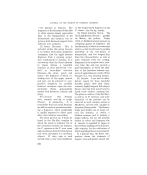
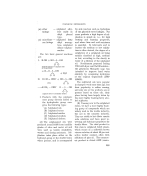
SYNTHETIC DETERGENTS (iii) ether -- sulphated alky- linkage lene oxide on alkyl phenol type. (iv) miscellane--- sulphated fatty ous linkage alkyl' metcap- tans, sulphated alkane sulphon- amides. The two basic general reactions are ß I. R.OH + HO--S--OH O O alcoholic hydroxyl + sulphuric acid or its equivalent. = R--O--S--OH ,,/%, + H•O o o II. R.CH = CHR' -+- HO--S--OH olean 0 0 ----R.CH•.--CHR' O--S--OH o o sulphuric ester of a secondary alcohol. I. Products with the sulphuric ester group directly linked to the hydrophobic group com- prise the following types' ' (A) $ulphated oils (B) Sulphated esters (C) $ulphated amides (D) Sulphated alcohols (E) Sulphated olefines. (A) The sulphonated oils were produced kround 1850 from inedible grades of olive and castor oil and were used as textile emulsifiers, wetters and dyeing assistants. Sul- phation takes place either on the hydroxyl group or the double bond, where present, and is accompanied by side reaction such as hydrolysis of the glyceride ester linkages. For some products a high degree of sul- phation is aimed at, i.e., for high wetting and foaming properties, and where lime and acid resistance is essential. In lubricants and in leather oils medium or low sulpha- tion is often desired, the degree of a sulphation of a sulphated oil being usually classified as high, medium or low, according to the clarity in water of a dilution of the sulphated oil. Stockhausen proposed boiling TRO with 6 per cent NaOH solution: the gelatinous Monopole soap was intended to improve hard water stabihty by completing hydrolysis of the original triglyceride (DRP 113433). The sulphated oils were popular in shampoo work some time ago, but their popularity is rather waning, and only one or two products are at present based on these oils, their place having been largely taken by the more highly foaming fatty alco- hol sulphates. (B) Turning now to the sulphated esters, we have a more highly foam- ing group of compounds which are widely used in the textile industry, but not in the cosmetic industry. q-hey are stable to hot dilute caustic soda solutions and have good re- wetting and lubricant properties for textile fibres. The chief product in this class is sulphated butyl oleate, which occurs as a yellowish brown viscous solution of about 50 per cent active matter content, often with additions of pine oil. The common- est product is Avirol AHX (manu- 203

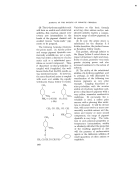
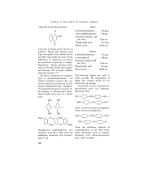
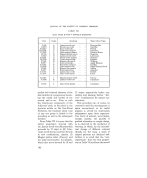
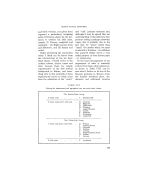
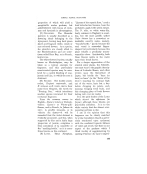
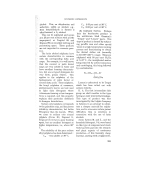
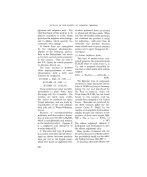
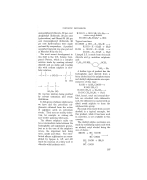
JOURNAL OF THE SOCIETY OF COSMETIC CHEMISTS factured also in this country as Empicol MOS and in the U.S. as Surfax WO, Phi-Sol, etc.). (C) The sulphated amides are exemplified by the Humectol series. Humectol CX is the sulphated di- isobutyl amide of oleic acid, the carboxyl group being blocked by amidation. (D) The sulphated alcohols com- prise the most important group for the cosmetician. Production of the higher fatty alcohols for sulphation purposes, on.a commercial scale, began around 1930, the two main processes being the reduction of fatty acid esters by sodium and a lower alcohol (the well-known Bouveault-Blanc process) and the more recent catalytic hydrogenation process. The catalytic hydrogenation process is now re- sponsible for the largest production of fatty alcohols, and consists of the high-pressure hydrogenation of fatty acid esters in the presence of oxides of chromium and copper as catalysts. Pressures are of the order of 300 atmospheres at a temperature of 250ø-350 ø C. Various other methods of reduc- tion of esters have been proposed, such as the reduction of esters with aluminium and absolute alcohol, but the only present real commercial application of the Bouveault-Blanc method was that worked out by Scott and Hansley of Du Pont, using metallic sodium. A further process, used for the higher (cetyl and cetyloleyl) alcohols is the saponification of certain natural waxes such as spermaceti and sperm oil, followed by distilla- tion or solvent extraction. Normally the fatty alcohols are sulphated with either oleum or chlorsulphonic acid, the product being neutralised with inorganic or organic bases and, where applicable, dried either by spray or drum drying. ROH q- C1S03H - RO.SO3H + HC1. As will be appreciated, sulphation is an equilibrium reaction and equilibrium mixtures form which contain varying amounts of "free" or unsulphated alcohol. For certain purposes this "free" alcohol is reduced to a minimum by careful control of manufacturing conditions or by extraction of the neutralised sulphate with a lower chlorinated solvent such as carbon tetrachloride or a lower aliphatic hydrocarbon such as petroleum ether. To obtain low inorganic sulphate content in sulphated alcohols they are often treated with such solvents as isopropanol separation of an active layer and a salt layer (which is removed) occurs. Small-scale experiments appear to have been made using alcohols produced from fatty acids derived from Irischer-Tropsch hydrocarbons, but none has been found in commer- cial quantities outside wartime Ger- many. A further group of sulphated alcohols marketed by Carbon & Car- bide Corporation is the Tergitol series, where two molecules of aide- hyde (e.g., butyraldehyde) are con- densed in the presence of a mild alkaline catalyst to form aidehyde 204
Purchased for the exclusive use of nofirst nolast (unknown)
From: SCC Media Library & Resource Center (library.scconline.org)