sIMPLE ]FLORAL PERFUMES In the fifth edition, which appeared in 1891, there is added an interesting inset taken from the Chambers' JournaZ review of the first edition: "We know that music depends upon a fixed mathematical law, not invented by man, but existing in Nature. Nature is not a prodigal in her operations--she is no waster of power the better she is under- stood, the more simple she appears and there is nothing, therefore, con- trary to sound reason in the idea that the whole of the pleasures of the sense of smell will be found to depend upon cognate laws." lqATUIRAL LAWS AND PATTERNS As an apt corollary to this opinion, I have found a very significant paragraph in a volume of modern nature stories, entitled "Pan's Gar- den," the author, Algernon Black- wood, in the essay on "Sand," saying: "Life, using matter to express itself in bodily shape, first traces a geometrical pattern. From the low- est form in crystals, upwards to more complicated patterns in the higher organisations--there is always first this geometrical pattern as skeleton. For geometry lies at the root of all possible phenomena and is the mind's interpretation of a living movement towards the shape that shall express it." Should the reader be curious enough to seek some corroboration of this idea, I think that the most remarkable example to be found in nature is that recorded by Thoreau in the "Spring" chapter of "Walden, or Life in the Woods" (1845), where the author takes several pages to describe the geo- metrical forms which thaMng sand and clay assume in flowing down the sides of a steep embankment, and concludes, even before reaching the end of his argument, that: "You will find thus in the very sands an anticipation of the vegetable leaf. No wonder that the earth expresses itself outwardly in leaves it so labours with the idea internally. The atoms have already learned this law, and are pregnant by it." In concluding this digression, I feel that, although these impressions are admittedly subjective, yet they may perhaps have some direct bearing upon my suggestion of the "mechanics of perfumery," because it is obvious that something must be known about the component- parts before there can be any under- standing of the whole built from them. I would add, however, that al- though I have not arrived at any finite opinion, yet if one pauses to reflect, it is always on some imagina- tive impression that the more solid foundation of facts is based, and from Dalton's "symbols" for the chemical elements or the perception of Kekul• of the graphic function of the hexagon, much has subsequently evolved. Even as a result of practi- cal work I have come to the conclu- sion that, in the simple and com- pound asterisk forms of the snow- flake and the ground plan of floral architecture observed in the dia- grams of botany, a similar centre-to- 181

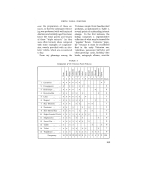
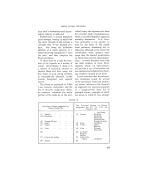
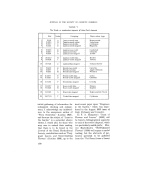
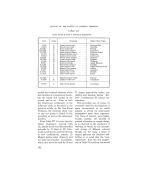
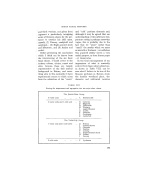
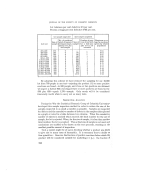
JOURNAL OF THE SOCIETY OF COSMETIC CHEMISTS circumference or radial stellar format is expressed, and from such sources patterns are available which lend themselves to a harmonious presenta- tion, and therefore a deeper under- standing, of the grouping of sweet scents, blossom perfumes and "frag- grances" in general. Reverting, however, to Piesse-- we find him continuing his theme, by remarking: "From the odours already known, we may produce, by uniting them in proper proportion, the smell of almost any flower, except Jasmin." He further adds a paragraph which I think is of con- siderable practical importance: "The odours of some flowers resemble others so nearly, that we are almost inclined to believe them to be the same thing .... " Regarding the average components of a perfume composition to-day, we have perhaps become accustomed to the position in the formula of the support afforded by the isolates and synthetics to the natural essential oils and flower absolutes, so that we can note with interest the comment made by Marcel Billot (see Soap, Perfumery-and Cosmetics, January 1949) that, in bygone days, with only five or six elementary floral tones, the perfumer nevertheless managed to reproduce the complete gamut of the floral odours. Obviously the recipe-books dealing with the "manufacture of perfume for the handkerchief" should pro- vide some idea, upon examination for name and frequency, of these floral primaries hence I have been able to produce a useful collation by abstracting from Piesse (1885) and such later texts as "Perfumes and their Preparation," by G. W. Askinson (1907) strangely enough, from the almost wholesale collection to be found in Erich Walter's "Manual for the Essence Industry" (1916) as also from the "Preparation of Perfumes and Cosmetics" of J.P. Durvelle (1923), and finally from the practical r•sum• in the Cher•ist and Druggist's "Pharma- ceutical Formulas" (10th edition, 1934). OLD-STYLE PERFUMERY COMPOUNDING It must be observed, however, that the technique of the "Victorian" perruiner was based upon the blend- ing of extraits or spirituous solutions made from such floral pomades as cassie, jasmin, jonquil, mignonette, rose, tuberose and violet, which affords some idea of the front line materials then available. As forriflers, there were also the "essences" or "spirits," these being alcoholic dilutions of various per- centages of such items as rose otto, neroli petales, rose geranium and other essential oils, and finally there was also available such apothecary's tinctures as ambergris, benzoin, civet, myrrh, vanilla and tonka. In marked distinction to certain aspects of the present. day technique for the production of quickly matured perfumes and toilet waters, in which the concentrate is com- mitted to raw or slightly pre-fixed spirit, the perfumer of the "eighties" had to expend considerable time 182
Purchased for the exclusive use of nofirst nolast (unknown)
From: SCC Media Library & Resource Center (library.scconline.org)