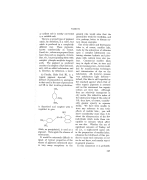
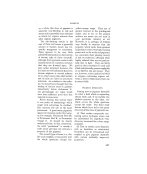
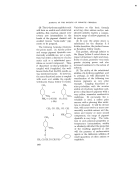
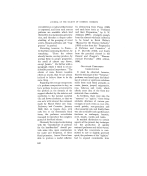
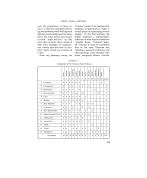
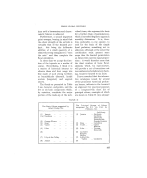
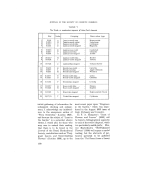
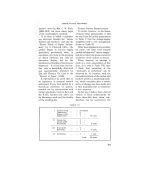
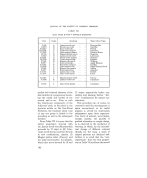
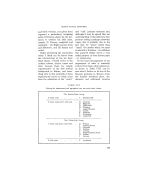
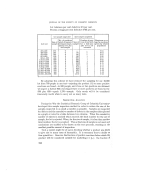
alcohol. This, on dehydration and reduction, yields an alcohol, e.g., from butyrMdehyde is formed 2 ethyl hexanol, a C8 alcohol. This can be sulphated and occurs as a 25 per cent solution with a little isopropanol, as Tergitol 08 and Dupano180, an excellent wetting and penetrating agent. These products are not important in cosmetic prac- tice. The fatty alcohol sulphates have certain characteristics in common with the ,corresponding fatty acid soaps. For example, it is welI known that the coconut or palm kernel soaps are very soluble in water and have excellent foaming characteris- tics, but are not good detergents for very dirty, greasy objects. This applies to the sulphates of the hydrogenares of palm kernel or coconut fatty acids. These sulphates, the lauryl sulphates of commerce, predominantly lauryl, are best used as light duty detergents where voluminotls foaming at low tempera- tures is required, and this property explains their particular usefulness in shampoo formulations. Sodium cetyl sulphate corresponds to the palmirate soap, and has poorer solubility characteristics, but better detergency than the lauryls. When we come to sodium ceto stearyl sulphate (Orvus ES, Dupanol G, Empicol CS) we have a poor foaming agent, but an excellent detergent at higher temperatures, i.e., above 80 ø C. The solubility of the pure sodium Mkyl sulphates has been determined ß C• very soluble at 30 ø C. SYNTHETIC ]DETERGENTS C• 2.53 per cent at 30 ø C. C• 0.03 per cent at 30 ø C. (E) Sulphated Olefir•es. Perhaps here the best-known product is the well-known Shell ChemicaI's "Teepol" and "Lensex" paste. This type of product is formed by subject- ing paraffin wax and other special waxes to a high temperature cracking process and fractionating to obtain the desired define cut (normally in the 160ø-220 ø C. range). These are sulphated with 90 per cent H,SO, at 5-10 ø C., the unsulphated matter being removed by solvent extraction and centrifuging, this being followed by neutrMisation. R--CH•--CH--R' OSO•0Iqa Lensex is understood to be Teepol which has been salted out with sodium chloride. II. A. The first intermediate link group we shall consider is the type having an ester intermediate linkage. This type of product was first investigated by the Colgate Company in America in an attempt to substi- tute a cheaper material for sulpha- tion, and to overcome certain patent difficulties then in existence in connection with the use of fatty alcohols. Arctic Syntex M. and L., and the household detergent, Vel, were based on this type of compound and much work has been put into the research and plant aspects of continuous production of this basically cheap materiM, starting with a triglyceride, 205

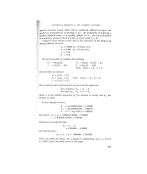
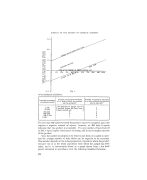
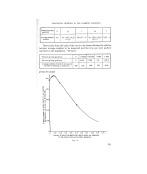
JOURNAL OF THE SOCIETY OF COSMETIC CHEMISTS glycerine .and suIphuric acid. The chief drawback of this product is its relative instability to acids, which hydrolyse the sulphuric ester linkage, and to alkalis, which saponify the carboxylic ester linkage. B. Amide links are exemplified by the sulphated alkylolamides, popular on the Continent, particu- larly in the Netherlands, but which so far have not had much popularity in this country. They are sold in the U.S. chiefly for textile purposes as Alrosene, Emcol, etc. The basic reaction is between either isopropanolamine or mono~ ethanolamine, with a fatty acid followed by sulphation. R.COOH + H•.N--X--OH I• R'CO'NH --X--OH --'---- R'CONH--X-- O'SO •Na These products are rather unstable, particularly in paste form, their life being only 2 to 3 months. The powders are much more stable, but cannot be produced by spray drying technique, and are made by neutralisation of the acid sulphate with soda ash in Werner-Pfleiderer mixers. Reaction of monoethanolamine with fatty acid also results in forma- tion of some ester R.COO.C•.H•.NH• which is unsulphatable and remains in the finished product. (Igepon B is a sulphated aryl derivative of 4-amino-butanol.g.) C. The ether link type •of product is economic only when special advan- tages are shown, but some products were put out in the Igepal range, which were based on sulphated ether alcohols produced from an alcohol or phenol and ethylene oxide. When less than 10 ethylene oxide molecules are combined the product is useful for sulphation with more than 10 molecules the product becomes water-soluble and a typical nonionic surface active agent (Sapogenat B-- Anorgara). (c) Alkane Sulphonic Acids. This type of surface-active com- pound possesses the general formula R.SO3H where R varies from C, to C•0, and is prepared classically by reacting an alkyl halide with sodium sulphite. R.Br. q- Na•SO3------RSO•Na q- NaBr. The Mersolat type of compound, produced in large quantities (of the order of 70,000 ton/year) in Germany during the war and introduced by Du Pont in America, under the Trade Name M.P.189, has not found fayour in this country, and has recently been dropped in the United States. Mersolats are produced by the Reed reaction (after the dis- coverer Cortes F. Reed) by the reaction of an aliphatic hydrocarbon, sulphur dioxide and chlorine in the presence of short wave-length light RH q- SOs q- CI•---+ R.SO•. C1 + HC1 The alkane sulphonyl chloride i• hydrolysed and neutralised to give the alkane sulphonate salt. Many grades of mineral oils can be used as the source of hydrocarbon, but particularly useful are the white oils boiling between 250-350 ø C. In Germany, Mersol D (50 per cent 206
Purchased for the exclusive use of nofirst nolast (unknown)
From: SCC Media Library & Resource Center (library.scconline.org)