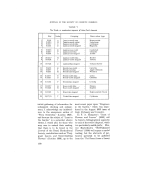
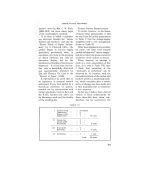
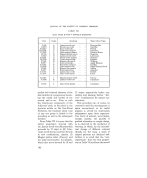
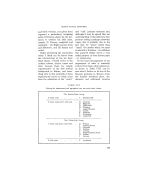
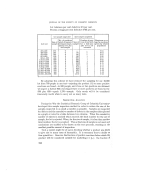
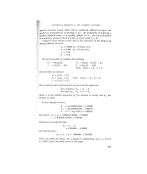
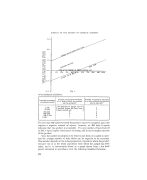
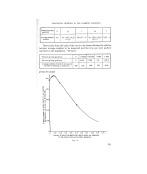
SYNTHETIC DETERGENTS COMMERCIALLY USED SURFACE-ACTIVE AGENTS For cosmetic purposes the sul- phated fatty alcohols and sulphated olefines probably are the most used products. The secondary alkyl sul- phates exemplified by Teepol are available as sodium neutralised pro- ducts in liquid form with a tendency to shed crystals in very cold weather. The lauryl sulphates are usually' presented as triethanolamine or other amine salts, and as sodium salts. Various grades of lauryl alcohol are used, depending on the end use of the product. As will be appreciated, "Lauryl" includes a whole range of alcohols from coconut and palm kernel hydrogenates down to the highly fractionated, almost pure C, alcohols. The sulphated mono- glycerides and sulphated alkylola- mides are usually used as powders. The sulpho acetates have been proposed in America for use as shampoos, but have so far not found application in this country. In certain countries, particularly in the Middle East, the alkyl aryl sul- phonateshave been used in shampoos, although so far they have usually been considered to be too harsh for use in cosmetics. Some of the non- ionics have been used, but their comparative lack of foam is a factor against their use. The sulphonated oils are still used to a small degree and the cationics have not yet appeared in force in shampoos, although some cationks are used in anti-dandruff shampoos. Recently cationics have been under a cloud, due to certain difficulties with respect to the causing of corneal opacity with a cationic-nonionic product in the United States. Within recent months considerable interest has been shown, particularly in the United States, in the possible causing of eye irritation due to deter- gents. A test is made in which a solution of the detergent under test is instilled into the conjunctival sac of one of the eyes of a rabbit, the other being used as a control. After a few seconds the eye used for the test is examined and thereafter regular observations for inflamma- tion and injury are made. By this test the following gradation of pos- sible irritation is seen: cationks greater than anionics--anionics greater than nonionics. A grading has been suggested of 10:1:0.5 -- 1.0. Perhaps now it will be advantage- ous to say a few words about the formation of Micelies. It is known that within a certain limit of con- centration for amphipathic electro- lytes a considerable difference in physical properties becomes appar- ent. This is caused by the aggrega- tion of the ions in aqueous solution to form ionic Micelies. The critical concentration for Micelie formation has been deter- mined by Corrin & Harkins for various materials by the use of an indicator method. They describe (Journ. Amer. Chern. Soc., March 1947, pages 679-683) the method of the determining of critical concentra- tion by titrating detergent solutions containing dye against the dye stuff solution. The dyes used were Pina- 213

JOURNAL OF THE SOCIETY OF COSMETIC CHEMISTS cyanol Chloride and Rhodamide 6G for anionic agents, and Sky Blue FF eosin and fluoroscein for cationic agents. The disappearance of Micelies is determined by a sharp change in colour or sharp reduction of fluorescence. They observe that w/thin each class of detergents the depression of the critical concentra- tion brought about by equal amounts of salt is greater the lower the critical concentration of the detergent. In the case of Potassium Laurate the critical concentration is 2.3 x 10 -• M, in the case of Na Dodecyl sulphate it is 6.02 x 10- 3 M. Dodecyl ammonium chloride has a critical concentrate of 1'31 x 10 The major outlet for surface- active agents in the cosmetic industry is in the preparation of shampoos, although considerable quantities are used in the preparation of liquid and semi-solid emulsions, and as minor constituents in permanent waving solutions and other cosmetic pre- parations. In this country and in Europe in general at present the liquid, paste and powder shampoos appear to have the largest proportion of sales, in America the accent is on liquids and creams, powders being rarities. Liquid products sold by retail are based chiefly on the fatty alcohol or olefine sulphates--triethanolamine or other amine lauryl sulphates, or Teepol, being preferred. Normally the liquids represent about 12 per cent to 15 per cent of fatty alcohols (that is a concentration of about 60 per cent to 75 per cent of the mater- ials as bought) although some manu- facturers keep around 5 per cent of fatty alcohol (about 25 per cent dilutions of materials as bought). Cream shampoos are usually based on the sodium fatty alcohol sul- phates, bought as powder, pastes or needles, and cut with water to about 15 per cent fatty alcohol content and thickened either with sodium stearate or other soap or with colloids such as ' C.M.C., methylcellulose and alginate. The powder shampoos are often totally spray-dried--this form pos- sessing many advantages such as ease of solubility, greater packing volume, cheap packing and increased homogeneity. The fatty alcohol contents vary from about 15 per cent to 45 per cent, and often builders such as sodium sulphate, borax, phosphates are added, following in some cases fairly closely to the older soap powder shampoo formulae. Liquid cream shampoos represent one of the latest presentations and have achieved considerable popu- larity, particularly in the U.S., due to the very attractive packaging used and to the adoption of the aerosol bomb principle of packaging, using freon under pressure as the propel- lent: liquid cream shampoos are often formulated w/th either trieth- anolamine, ammonia or sodium neutralised lauryl sulphates thick- ened and opacified w/th C.M.C. soap, glycerin or glycolesters, magnesium stearate, etc. Zussman, in a paper previously published in this Journal, dealt with the question of the so-called "defatting" action of synthetic sur- face-active agents and brought out, 214
Purchased for the exclusive use of nofirst nolast (unknown)
From: SCC Media Library & Resource Center (library.scconline.org)