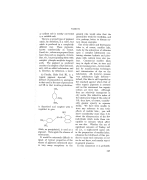
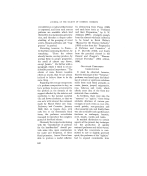
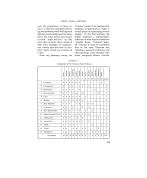
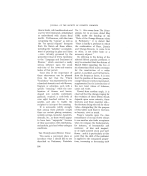
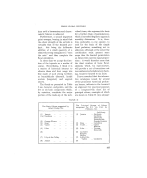
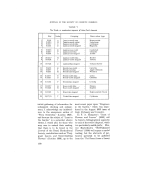
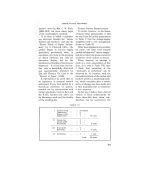
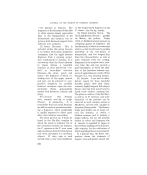
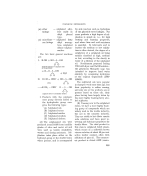
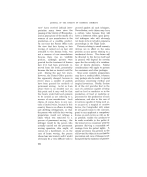
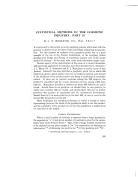
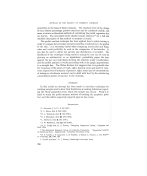
tIAIR For long hydrogen peroxide has been the oxidising agent used for hair bleaching. In addition to its action on the melanin pigments, this material causes oxidative degrada- tion of keratin, the extent of which is governed by temperature, time, concentration, pH of solutions, as well as the presence of metallic catalysts. •8 The cystinc disulphide linkage is the main centre of attack, oxidation to cysteic acid groups taking place, e.g., taurine, H•N.CH•. CH•SO3H, has been isolated from the liquor after treating wool with acid solutions of hydrogen peroxide, •' while chromatographic evidence has been obtained of the formation of cysteic acid groups in wool bleached with hydrogen peroxide. TM Inter- mediate oxidation products such as disulphoxides O II R.S.S.R II O may also result from oxidation of the disulphide linkage. Catalysis of this oxidation reaction by certain metals is of considerable importance in hair- dressing, since traces of copper, nickel or cobalt present in the hair from earlier treatments, e.g., copper- pyrogallol "rasticks," nickel or cobalt from metallic hair dyes, can give rise to excessive damage. The catalytic decomposition of hydrogen peroxide by salts of copper or iron appears to Fe+++ Ho.O• OH + H•O• • HO• + H•O• ---- OH + Fe ++ --- proceed via a free radical mechanism of the type shown at the foot of the page. HAIR DYES Three main types of hair dye have been used at various times, i.e., inorganic, vegetable and oxidation dyes. The first type relies on the deposition in the hair of finely divided metals, metallic oxides or sulphides. A typical example is an ammoniacal solution of silver nitrate which, after application to the hair, is followed by treatment with pyro- gallol. Lead sulphide has also been used as a basis of a hair dye. Copper- pyrogallol dyes depend on the forma- tion of coloured bodies by atmo- spheric oxidation under the catalytik action of the copper. Purpurogallin and hexahydroxy-tribenzoquinone are among the products formed. HO HO CO Purpurogallin HO OH HO OH HO OH o /-- ----=k :N o I-Iexahydroxytribenzoquinone The chief constituent of walnut hulls is juglone, 5-hydroxy-1: 4 naphtha- quinone O II OHO Fe++++ OH-+ OH H•O + HO2 O• + H•O + OH Fe +++ + OH- 165

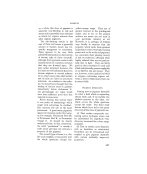
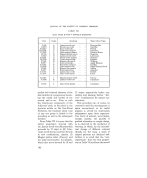
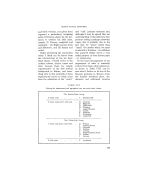
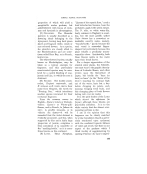
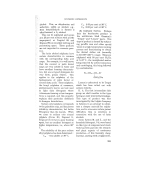
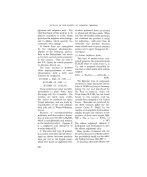
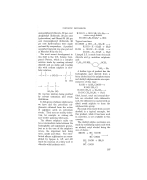
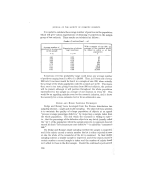
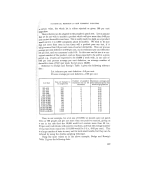
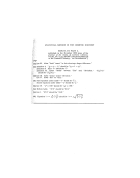
JOURNAL OF THE SOCIETY OF COSMETIC CHEMISTS whle the 2-hydroxy derivative Black O p-phenylenediamine .. 2.5 gins. I1 Amino-diphenylamine 0.2 gin. q/x] -OH Ammonia solution (20 ,Nv•N/• per cent) .. 10-0 ccs. II Thioglycollic acid .. 0' 15 gm. O Water up to .... 100-0 ccs. is present in henna and is known as lawsone. Henna also contains some 6 per cent gallic acid, which may be partially responsible for some of the differences in behaviour of henna and synthetic 2-hydroxy-1: 4-naph- thaquinone. Being quinones there seems to be little doubt that juglone and lawsone will actively combine with hair keratin. •'• The main constituent of oxidation dyes is p-phenylenediamine. In certain countries, however, the use of this material is prohibited by law owing to dermatitis risks. Oxidation of p-phenylenediamine procoeds via the aliimine to Bandrowski's Base, which finally gives rise to a black azine. NH• NH N/ II II NH• NH H•NN• / N %/• H,.NNj k Thioglycerol, polythioglycols and thiocitric acid have been used for stabilising oxidation dye formula- tions/• e.g. Blonde p-phenylenediamine .. 1-5 gms. p-aminophenol .. 0'8 gm. Ammonia solution per cent) .... 10.0 ccs. Thioglycollic acid 0'1 gm. Water up to .... I00'0 ccs. Thio-reducing agents are said to make possible the preparation of stable dye creams which do not deteriorate on storage. Oxidation of p-p'-diamino-di- phenylamine gives the indamine, phenylene blue, while p-amino-p'-hydroxy-diphenyl- amine forms an indophenol. H•N--• •-NH-- .__/•X2--0H-- From the oxidation products of o-aminophenol, on the other hand, cyclic structures such as triphen- dioxazine and aminophenoxazone have been isolated. 166
Purchased for the exclusive use of nofirst nolast (unknown)
From: SCC Media Library & Resource Center (library.scconline.org)