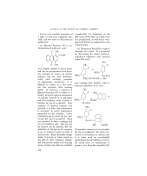
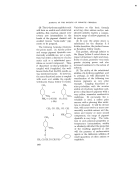
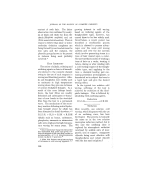
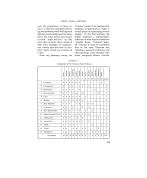
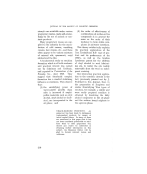
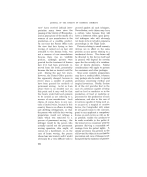
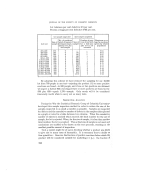
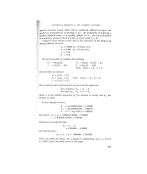
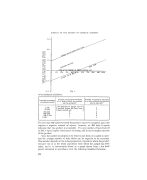
.•jZ•?:::: STATISTICAL METHODS IN THE COSMETIC INDUSTRY '•i'?Positive reactions arising which will be considered sufficient to reject the product as unsuitable for marketing (= p•) the probability of rejecting a i::ii?'product which is really of acceptable quality (---- a) and the probability •'•J•ii?'of accepting a product wkich is really of reject quality (= •). Using the same values as were used in our inspection of the Dodge and Romig schemes, we have' p• = 0.0005 (i.e., 0-05 per cent) p, ---- 0.005 (i.e., 0.5 per cent) a = 0-10 • =O.lO We now have first to calculate the following: G• = Iog,op,/p• G• = log•0(1 --p•)/(1 --p=) • = ZOg•o(1 - •)/• a = log•0(1 - •)/•. Note: whena=fi: a----b. ??And use these to calculate ß /•::/ • = •/(• + •) •i•:i ß • = a/(• + •) 7!::,: s = G•,/(G• q- ß , Our acceptance and rejection limits are given by the equations ß 7' For acceptance d• = sn -- h• :"•' For rejection d R = s•'• + h• Note' whena=fi h•=h• where n is the number inspected, da the decision to accept and d R the decision to reject. In our example we have ß G• -- log 0-005/0.0005 = 1.00000 G• = log 0.9995/0.995 = 0.00196 a = b = log 0.9/0-1 = 0.95424 from which h• ---- h• ---- 0.95424/1.00196 = 0.95238 s = 0.00196/1.00196 = 0'00196 This gives our acceptance line ß d A = sn -- h• = 0.00196n -- 0'95238 and rejection line ' d R = sn q- h• = 0.00196n q- 0.95238 These can either be drawn into a graph by substituting, say, n ' 0 and n = 500 to give two fixed points of the graph ß 229

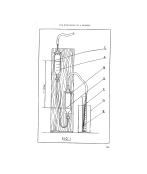
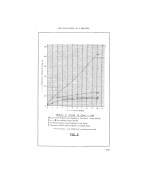
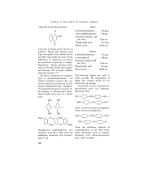
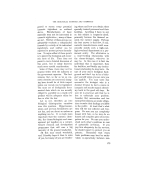
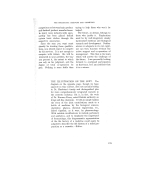
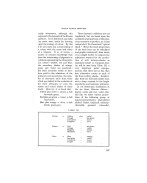
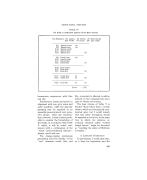
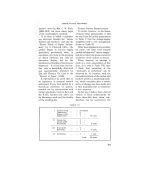
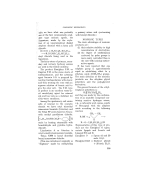
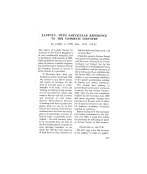
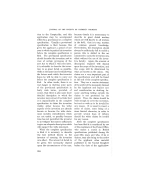
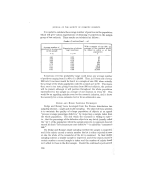
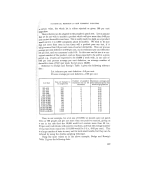
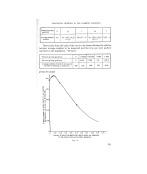
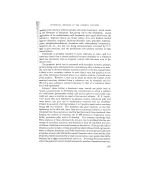
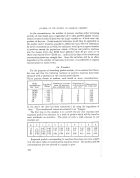
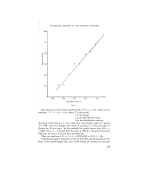
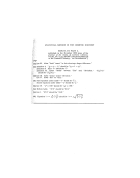
JOURNAL OF THE SOCIETY OF COSMETIC CHEMISTS 3.0 2.0 or be tabulated as follows ß Fig. I. Number of positive reactions Number of positive reactiota Cumulative number at or below wlMch the product at or above which the product of subjects tested can be accepted can be rejected .. . [No decision to accept can be] 1-22 •reached before 485 tests have• 1 23-484 (been carried out. J 2 485-533 0 2 534-994 0 3 995-1,044 1 3 1,045- 1 4 For less than 485 subjects tested the product cannot be accepted, since this requires a negative amount of reiects however, at 485 tests 0 rejects indicates that the product is acceptable. For any number of tests from 23 to 533, 1 reject implies continuance of testing, and 2 rejects implies rejection of the product. Since the number of subjects to be tested is not fixed, it is useful to calcu- late the average number of tests which can be expected to be necessary. This number depends on the actual proportion of positives which the product will give rise to in the whole population from which the sample has been taken, and it is conveniently shown in a graph drawn from a few fixed points calculated in accordance with the following tabulated formulae: 230
Purchased for the exclusive use of nofirst nolast (unknown)
From: SCC Media Library & Resource Center (library.scconline.org)