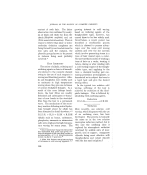
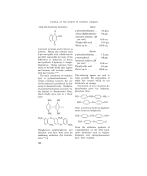
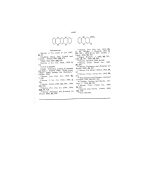
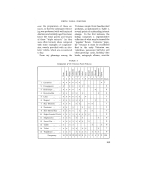
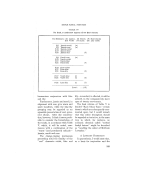
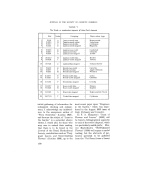
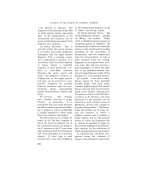
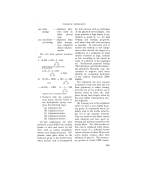
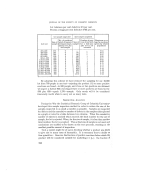
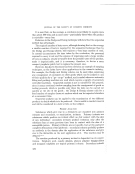
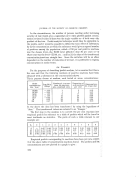
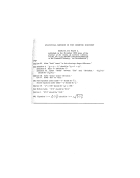
SIMPLE FLORAL PERFUMES over the preparation of these ex- tracts, so that the subsequent blend- ing was performed with well-matured dilutions and suitably-aged tinctures hence the tonal purity and beauty of these "triple extracts" (as they were often termed) when compared with some examples of conglomer- ates, merely provided with an alco- holic vehicle, which are encountered to-day. From my gleanings among the Victorian simple floral handkerchief perfumes, as epitomised in Table 1, several points of outstanding interest emerge. In the first instance, the listing comprises a representative collection of what may be termed the "popular" florals. I reiterate "popu- lar" because it must be recollected that in the early Victorian era, valentines, panoramic birthday and other greetings cards, birthday date books, autograph albums, oracular TABLE I Composition of the Victorion oe1orol Perfumes 1 2 3 4 5 6 7 8 9 10 11 12 13 Units 1 Carnation ... x x x x x x x 7 2 Frangipanni ... x x x • x x x 6 3 Heliotrope ...... x x x x x x 6 4 Honeysuckle ... x x x x x • x 6 -- , 5 Lilac ...... x x x x x x x 7 ' 6 Muguet ...... x x x ix x x x x 7 May Blossom ... x x x x x x x 7 -- 8 Narcissus ...... x x x x x 5 0 NewMownHay ... x x x..x x x x 7 i 10 Night-Scented Stock x x x x x x x I x x 9 .i __ 11 Stephanotis ... x x x x x: x 6 12 Sweet7Pe• ...... x x x x x x x x 8 13 Trefle ...... x x x x x 8 14 Violet ...... x x x x x I x x 7 15 x, VMlflower ...... x x x x x x x x x x 9 Frequency ... 15 13 12 12 10 10 9 5 5 5 4 2 2 103 183

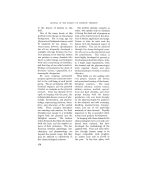
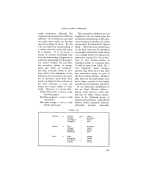
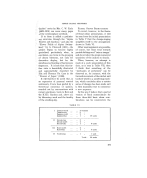
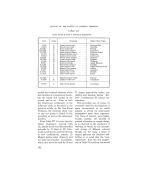
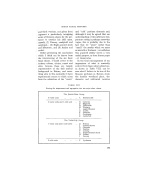
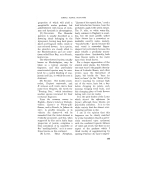
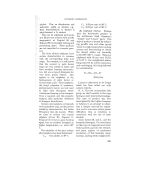
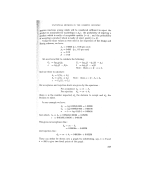
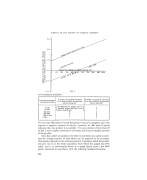
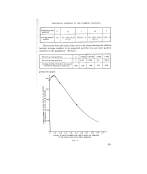
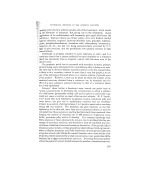
JOURNAL OF THE SOCIETY OF COSMETIC CHEMISTS dream-books, silk handkerchiefs and scarves were illustrated, embellished or embroidered with chosen floral motifs. Furthermore, with the items comprising the "typical" as well as the "by special request" bouquets from the florist--all these affairs, including the "ladylike" accomplish- ment of painting on glass and china --were virtually governed by the prescribed ritual of t lora Symbolica or the "Language and Sentiment of Flowers," which exercised a really serious influence upon the social activities of the town-and-country ladies of that period. Some idea of the importance of these observances can be gleaned from the fack that the "Floral Vocabulary" was represented by over a hundred domestic and wild flowers, •ragrant or odourless, each with a specific "meaning," while the com- bination of flowers and leaves, shaped into suitable emblematic garlands, required a code-book of over eight hundred entries to as- semble, and also to enable the recipient to interpret the meaning. It is noticeable (oddly enough) that among these perfume recipes there are certain glaring omissions, notably syringa, lavender, hyacinth, clematis, etc., as these would appear to have been "unpopulaF' because of their association with dolefulness, melancholy, grief and other unhappy conditions. T.qE ROS•/JASmN/NEROLI This seems a convenient place •o introduce what I should like to see described as Perfumery Postulate No. 1: this comes from The Givau- danjan, for in an issue dated May 1938, under the heading of the "Role of the Orange-blossom odour in Perfumery," it is stated that "there is hardly a perfume in which the combination of Rose, Jasmin and Orange-blossom, in some fo-m or other, is not either basic or a necessary adjunct." On referring to the listing of the selected fifteen popular perfumes it may be remarked that the dictum of Marcel Billot regarding the five or six elementary floral units necessary for the construction of a wider gamut, is justified, and furthermore, from the frequency factor, it is seen that the position of the rose, jasmin, orange-blossom trinity is maintained, supplemented by the' introduction of the new tonal values of tuberose, cassie and violet. Viewed from another angle, it is observed that the change-ringing for the evolution of these fifteen florals depends upon seven extraits, three tinctures and three essential oils-- the tinctures being selected for odour value--disregarding (for the purpose of this table) such fixative tinctures as benzoin, civet or musk. Piesse's remarks upon the close resemblance of certain flower odours to one another also finds acceptance when we compare the fundamentals, for instance, of honeysuckle and narcissus of lilac and muguet or of night-scented stock and wall- flower and it is particularly at this point that the skill of the perfumer is applied to the component propor- tions, increasing or decreasing each 184
Purchased for the exclusive use of nofirst nolast (unknown)
From: SCC Media Library & Resource Center (library.scconline.org)