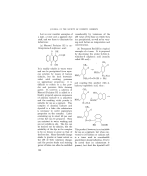
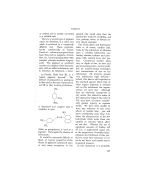
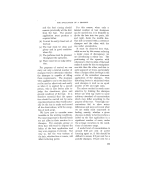
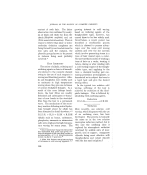
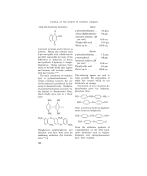
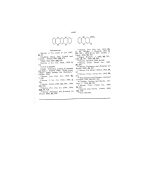
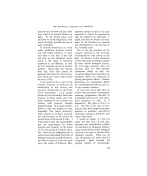
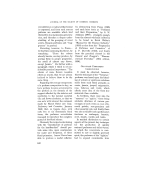
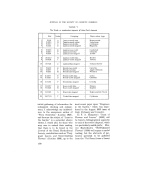
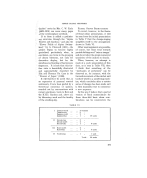
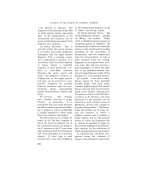
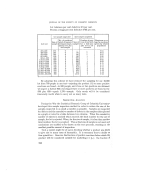
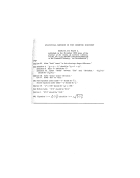
HAIR --• / - • o//'x/7H.COOH ' NH• NH• MELANIN and more recently by others. The results of this synthetic work indi- cate that oxidative polymerisation of 5:6 dihydroxyindole to melanin appears to proceed via the 4:7 positions. Further light has been thrown on to the problem by Stoves' investigation of catalytic bleaching of hair. In this work the iron con- tent of pigmented and non- pigmented fibres was measured be- fore and after treatment with stabil- ised aqueous solutions of a ferrous salt. Specimens of black and white hair from the dog (Canis domesticus familiaris) were extracted with ether, alcohol and distilled water. The purified hair was treated for 16 hours at 25 ø C. with 1 per cent ferrous sulphate heptahych-ate plus 0.1 per cent potassium bitartrate buffered to pHS, a bulk liquor ratio of 1: 30 being used. After being washed for 24 hours in running water, the speci- mens were dried in vacuo over P,.O, at 78 ø C., and a known weight of hair dissolved in a mixture of nitric, sulphuric and perchloric acids. The iron content of the solution was determined colorimetrically using ammonium thioglycollate. Table I summarises the results obtained. Two facts emerge from the above figures. Firstly, the greater fixation of iron by pigmented hair, and secondly the greater natural iron TABLE I Per cent Iron Content of Hair Specimen ]Pigmented Non-pigmented -- Before treatment: A 0.0091 0.0042 713 0.0071 0.0047 After treatment: A 0.3367 0.1200 B 0.2656 0-1134 163

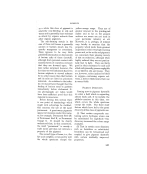
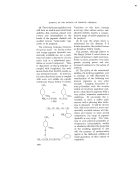
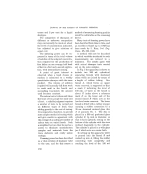
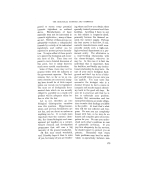
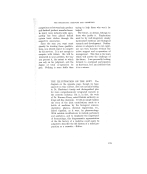
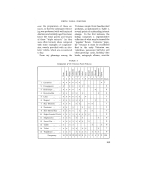
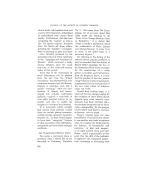
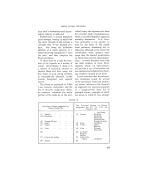
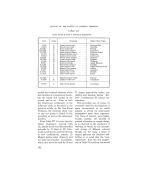
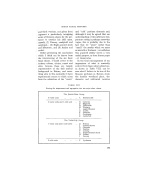
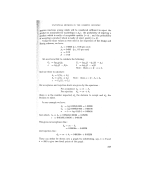
JOURNAL OF THE SOCIETY OF COSMETIC CHEMISTS content of such hair. The latter observation was confirmed by analy- sis of black and white fur from the skunk (Mephitis rnepMtis) and cat (Fells rnaniculata domestica). There is reason to believe that inter- or intra- molecular chelation complexes are being formed by reaction between the iron salts and the melanin, the phenolic groups known to be present in melanin being most probably involved.* HAIR CHEMISTRY The action of alkalis, reducing and oxidising agents on hair is of immedi- ate interest to the cosmetic chemist owing to the use of such reagents in waving and bleaching practice. Alka- lis and bisulphites were widely used as assistants in high temperature waving where they give rise to fission of cystine disulphide linkages. As a result of this cross linkage break- down, the hair fibres are readily deformed and subsequent re-forma- tion of new bonds in the stretched fibre fixes the hair in a permanent wave. The mechanism of the secon- dary reaction following initial hydro- lysis brought about by alkali has been discussed in detail elsewhere. 4,•5 R.S.S.R. q- HzO - R.SH q- R.SOH Alkalis such as borax, carbonates, phosphates, ammonia or ammonium salts were employed in high tempera- ture waving for many years. The * Since this lecture was given the author has elaborated this point and given evi- dence in support of the view that oxidafire polymerisation of 5: 6 dihydroxyindole occurs via the 4: 7 positions. •* t After this lecture was given reviews of advances in cold waving appeared?, •' growing interest in cold waving based on reducing agents of the thioglycollate type, however, has caused them to be less widely used. Nevertheless, a recent patent has described a combination process which is claimed to possess advan- tages over the usual cold waving systems and over the hot systems which involve generating steam in a tress of hair wound upon a curler. The new method consists of winding a tress of hair on a cutler, treating it before, during or after winding with a cold waving reagent of the t. hiogly- collate type, and applying to the tress a chemical heating pad con- taining potassium permanganate, so formulated as to subject the tress to a tepid heat and give the desired waving effect. In the typical two solution cold waving, softening of the hair is achieved by reduction of the disul- pkide linkages. This is followed by rebuilding with oxidising agents. Reduction R.S.S.R --,-2 R.SH Oxidation More recently, one solution cold waving, which dispenses with the use of an oxidising rinse, has been developed. The process is basically the same as in the two solution mercaptan reduction method, but in this case the oxidising rinse is replaced by atmospheric oxidation catalysed by soluble salts of man- ganese, iron or copper manganese chloride being most effective w/th thioglycollates and cobalt chloride with the less used sulphites.$ 164 ,
Purchased for the exclusive use of nofirst nolast (unknown)
From: SCC Media Library & Resource Center (library.scconline.org)