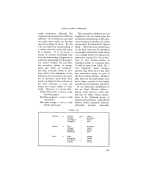
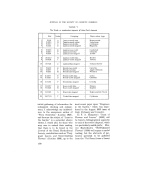
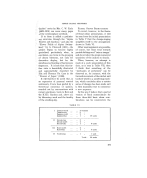
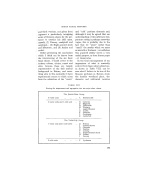
SIMPLE FLORAL PERFUMES proportion of which will yield a .... .: recognisable azalea perfume, but embellishment with traces of cycla- men and hyacinth is advantageous. (F) OLEANDER. The Oleander (nerium) is usually described as a ... flowering shrub belonging to the ,'!i:: Apocynaca, having long dark green leaves and fragrant white, cream or : rose-coloured flowers. As a species, the oleanders are closely allied to the Rhododendrons and are some- times called Rose Bay, or in French, laurier-rose. The white-flowered variety, usually known as Rhododaphne, may be taken as a typical example for fragrance, and this particularly sweet-scented species may be emu- lated by a careful blending of rose, jasmin and lilac, in which the rose is dominant. (H) ROCKET. The double sweet- rocket, Hesperis rnatronalis, and H. violacea• or 14. tristis, derive their name from Hesperis, the Greek for "Evening Star," which introduces another species renowned for their nocturnal fragrance. From the common names in English--Dame's violets or Damask- violets' Queen's- or Winter-gilli- flowers, and in French, la Jullane de nuit la giro fide musqude, or la violette des damesmir will be remarked that the violet element is evidently prominent, and this, when supported by lilac and a fairly large proportion of jasmin, completes a close simulation of la cassolette or the "smelling-bottle," as it is some- times known on the continent. (N) LOTUS. These Nymphtea, "Queens of the aquatic flora," need a brief introduction because, from the perfumery angie, little seems extant. The N. alba, or white water-lily, fairly common in England, is scent- less, but the more prolific yellow Nufer luteurn has a somewhat re- markable country name, namely, "brandy-bottle," partly because the seed vessel is somewhat flagon- shaped, but particularly because this plant exhales a peculiarly musty- oenanthic odour. Incidentally, both these blooms nestle in the water upon their broad leaves. For a deeper appreciation of the oriental sister plants, the Nelumbo, one must turn to the graphic descrip- tions of Lafcadio Hearn, and other writers upon the floriculture of Japan, but briefly the "basu (or hasu) no hana" (or the "flower of the lotus") standing by contrast high out of the water, lasts but a day before dropping its petals, each morning bringing fresh buds, and this changing glory of fresh flowers lasting well over six weeks. It is the pink shades of the Lotus which attract the sightseers (in Japan) although these blooms are practically odourless. It is to the white variety that the almost over- powering perfume is due. I am of the opinion that this fragrance can be closely matched by a lilac foundation (based as previ- ously mentioned upon cyclamen) with the combined t9pnote fullness of violet and neroli, but there is one aspect of the perfume which I think worthy of supplementing. by quoting Florence du Cane's impres- 199

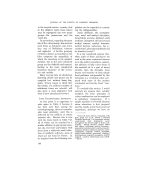
JOURNAL OF THE SOCIETY OF COSMETIC CHEMISTS sion, "I think the leaves and their stems . . . mus[ have their own peculiar odour for I have noticed near lotus beds, where no blossoms were to be seen, a strong and rather sickly perfume . . ." and this, I think, may be assumed to be something of a similar oenan- thic under-tone as mentioned in connection with the English yellow water-lily. (I) PAEON¾. Although of Chinese origin, the many and beautiful varieties of single and double blossoms have also in Japan their traditional gardens, and in addi- tion to the familiar bushy plant, floricultural skill has produced the delicate flowers of the tree- paeony. •Vith regard to the scent associated with these lovely flowers, strangely enough this may vary from the unpleasant, fox-like smell of the old, dark crimson, double-blossom, cot- tage garden plant, to the delightful and ethereal fragrance of the single- white Chinese and Portuguese varie- ties, which seem to possess a pro- nounced violet odour, with a sub- stratum of lily and Jasmin (any indoloid complement in the latter being unobtrusive). (E) C,•NDYTuFr. Of these common border-plants of the garden, the Iberis urnbellala and oe. sempervirens (the purple Persian and the Spanish tuft) are usually devoid of odour, but the sweet-scented varieties, the flowers of which are a dazzling white, are natives of the mountains of Geneva and, although the first im- pression of the fragrance inclines somewhat toward the violet, there is an after-development, similar to the jasmin-rose undertones of honey- suckle and oleander a remarkably simple but very effective tonal com- bination. (C) CORYLOPSIS. The C. spicata is another plant of Japanese origin, the fragrance of the yellow blossoms showing the similar 1ilac-neroli un- dertone which is more prominent in the Lotus. This motif is also ob- served with the Cowslip, so that the composite note of this simple diad, if complemented with the indis- pensable jasmin, and given a slight balsamic undertone, results in a very close impression of the exotic per- fume of the living blossoms.
Purchased for the exclusive use of nofirst nolast (unknown)
From: SCC Media Library & Resource Center (library.scconline.org)