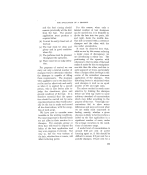
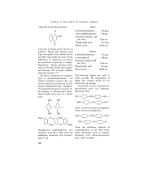
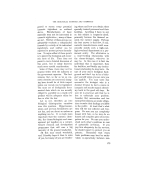
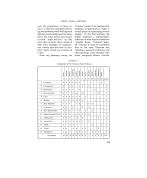
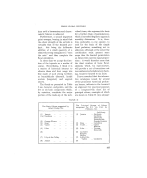
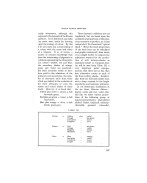
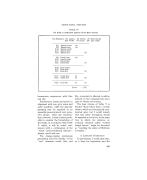
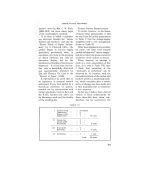
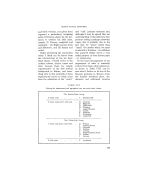
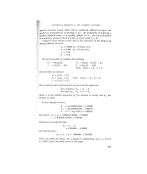
SIMPLE FLORAL PERFUMES : and third versions, not given here) represent a particularly intriguing series of blossom odours for the per- ' fumer to exercise his skill upon, namely, {1) Paeony, c. andytuft and corylopsis (2) Night-scented stock and laburnum, and (3) Azalea and : rocket. Before presenting the conclusions which I think can be drawn from :the interweaving of the six basic floral odours, I would revert to the •: tertiary colours, citrine, russet and olive, because these are largely representative of the dull neutral background in Nature, and some- thing akin to this neutrality I have experimental reason to think arises from the admixture of the "warm" and "cold" perfume elements and, although it may be agreed that our understanding of tlfis arbitrary tem- perature rating is perhaps somewhat vague, this is probably due to the fact that we "sense" rather than "smell" the q,tality which we name as warmth or freshness nevertheless this acquired ability serves a very useful purpose, as does litmus paper --it demarcates. In the final rearrangement of my impressions of what is osmically evolved from basic odour admixture, as shown in Table VIII, can be seen what I believe to be true of the blossom perfumes in Nature--from the homely woodland plant, the domestic and cultivated varieties TABLE VIII Showing the temperament and segregation into two major odour classes 3 warm units The Jasmin-lKose Group ......... A Honeysuckle 2 warm units and 1 cold unit K Cerinthe D Magnolia t3 Laburnum IV[ Wistaria L Apple Blossom G Azalea F Oleander C Corylopsis E Candytuft The Violet-Lily Group 1 warm unit and 2 cold units ß .. Q o P s H I Freesia Tobacco-flower Clematis Daphne Cowslip Night-Scented Stock Rocket Paeony 3 cold units ......... T Cyclamen 193

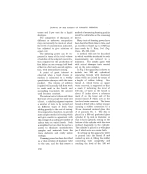
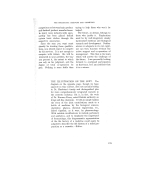
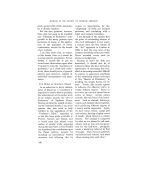
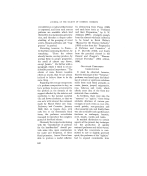
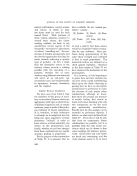
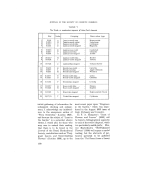
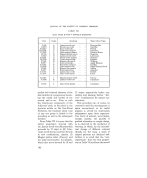
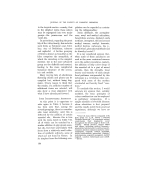
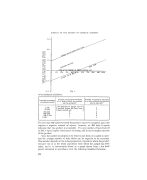
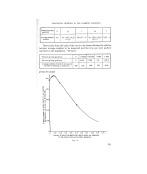
JOURNAL OF THE SOCIETY OF COSMETIC CHEMISTS to the tropical exotics--namely, that in the simplest terms these odours may be segregated into two major groups--the jasmin-rose and the violet-lily. In parenthesis, regarding the great lily of the valley family, this includes such items as Solomon's seal, fritil- lary, star of Bethlehem, tuberose and asphodel. A further grouping of flowers almost as beautiful as the lilies comprises the amaryllids, of which the snowdrop is the simplest member, but in the more advanced group are the daffodils and narcissi, leading to the more complicated botanical structure of the crocus, iris and orchids. Many varying lists of odoriferous flowering shrubs and plants can be compiled but, without being dog- matic, I have reason to think that the results, if a sufficient number of additional items are selected, will also show a close alignment with what I have already put forward. SOME INDISPENSABLE AROMATICS At this point it is opportune to refer again to Table I, because it has been seen that, among the several groupings, there is a consider- able tonal similarity, until this is deflected by the addition of certain essential oils likewise this is true with the items listed in Table VII, all of which can be enriched by a similar addition of appropriate essen- tial oils, but more particularly with items from a relatively small collec- tion of synthetic adjuncts, some of which are not found in Nature. In its simplest form the following corn- pilation can be regarded as contain- ing the indispensables: Anisic aidehyde, the acetophen- ones, amyl and methyl salicylates, benzylidene acetone, diphenyl oxide methane, isoeugenol, the ionones and methyl ionones, methyl benzoate, methyl heptine carbonate, the p.- cresol ethers, phenylacetaldehyde and its dimethyl acetal.* It is my considered opinion that, when some of these auxiliaries are used in the same restrained manner as in the earlier procedures, namely, the addition of only a few drops of the essential oil to a pint of mixed extraits, then the strength, tonal beauty and tenacity of such simple floral perfumes compounded by this technique is a revelation when com- pared with some of the modern overloaded and heavily fixed "crea- tions." To conclude this section, I would. reiterate my opinion that, suitably modified, the basic principles of colour combination can be employed in perfumery composition. If a simple schedule of two-fold blossom odour admixture is first prepared and the results noted from practical experiment, although we have no * This list may well be compared witl• that given by Y.-R. Naves ("Natural Perfume Materials") of important natural constituents that frequently occur throughout the whole range of flower oils, namely: benzyl alcohol, benzyl esters and ethers,, including methyl benzoate phenylethyl alcohol and its isothiocyanate, cinnamic alcohol, cinnamyl acetate, cinna- maldehyde, cuminal, methyl salicylate, methyl anthranilate, paracresol, dimethyl hydroquinone, eugenol, isoeugenol, methyl eugenol, vanillin, heliotropin and indole. --Editor. 194
Purchased for the exclusive use of nofirst nolast (unknown)
From: SCC Media Library & Resource Center (library.scconline.org)