HAIR* By J. L. STOVES, Ph.D., M.Sc., F.R.I.C. M^•M^LS ARE distinguished from all other vertebrates by the posses- sion of hair, which chemically belongs to the keratin group of scleroproteins. Among lower animals hair has a definite function in relation to heat regulation. It may also serve as a protection against the abrasive action of an animal's en- vironment or against the 'action of light. An example from the latter class is the Pennsylvanian fox- squirrel (Sciurus niger). The bones of this animal contain a bright red pigment, Uroporphyrin I, and if the animal coat was not heavily pig- mented, S. niger would probably suffer from photosensitivity as do human porphyrinurics. Hairs may also function as tactile organs, since the hair follicles have at their base a network of nerves which is stimulated by quite slight movements of the free part of the hair shaft. In cer- tain cases hair has been modified into a weapon of defence or attack, as, for example, in the spines of the hedgehog or the quills of the porcu- pine. Morphologically, it is of interest to note that in the evolution of mammals, hair appears to have re- * Presented at Scientific Meeting. November 12th, 1952. London. placed the scaly covering of reptilian precursors, and the grouping of hair follicles found on the skin of a typical mammal would seem to be deter- mined by the original development of hairs in relation to epidermal scales. X-ray analysis of epidermal structures has thrown considerable. light on the possible homology of mammalian hair and reptilian scales. HAIR GROWTH Hair development is initiated by the appearance of a group of closely adjoining, cylindrical, dividing cells deep in the epidermis. By growth into the underlying connective tissue these cells produce a gradually elongating, epithelial cylinder. This constitutes the so-called "hair germ," and is rounded and slightly flattened at the end, under which there soon appears an accumulation of con- densed connective tissue. From the latter arises the hair papilla. The epithelial cells immediately above the connective tissue papilla are the basis of the future hair, while connective tissue surrounding the hair germ (or bulb) later forms the connective tissue portions of the hair sac. A detailed account of the complex processes of histogenesis resulting in the fully developed hair 157

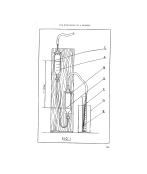
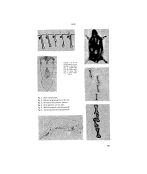
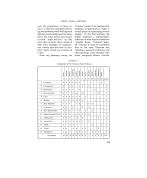
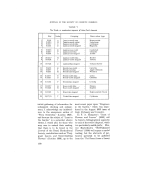
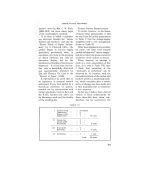
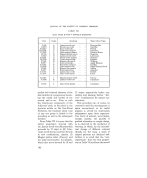
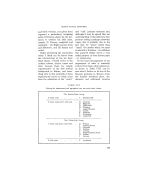
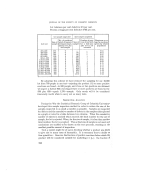
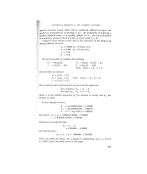
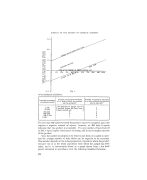
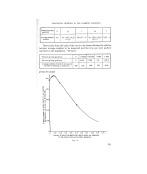
JOURNAL OF THE SOCIETY OF COSMETIC CHEMISTS has appeared elsewhere. • Figure 1 illustrates the process of hair replace- ment. Animal experiments have shown an interesting relation between hair growth and blood supply to a given skin area. It was found s that hair growth on the rat takes place in a series of waves symmetrically dis- posed about the longitudinal axis. This result was obtained from a study of the disposition of a flavin dye (9-phenyl-5: 6-benzoisoalloxazine), wkich after injection colours the hair of albino rats in a pattern corre- sponding to the most rapidly growing hair (Figure 2). The areas of regen- eration of depilated hair were also recorded and the blood capillaries were found to be most dense in the areas of rapid growth. It was con- cluded that the dye probably enters growing areas because these are the only ones in sufficiently active inter- change with the general circulation. Hale' has stated that hair growth on the rabbit appears to follow a similar course to that reported for the rat. In the rabbit it is probable that both rapid •rowth and natural pigmentation of the hair shaft are associated with local increased blood supply to the hair follicles. The possible significance of these findings for the cosmetic chemist need not be stressed. Impoverished scalp circu- lation has long been suggested as one of the causes of hair fall, and where this is the case, the beneficial effect of massage or chemical stimula- tion of the skin is readily understood. The possibilities and limitations of overcoming the results of inadequate blood supply by local topical applica- tion of protein hydrolysates, methion- ine or colloidal sulphur, have been discussed in an earlier communica- tion.* Genetic, as well as nutritional factors, are involved in the develop- ment of male baldness, however, and in many cases it must be admitted that the utmost that can be achieved is to delay the inevitable. General measures of scalp hygiene, such as frequent shampooing, and massage in association with the use of anti- septic and stimulating lotions will keep the scalp healthy and free from dandruff. Three typical lotions are: 1 per cent quinine «-2 per cent [3 in 30 per cent naphthol in 50 per alcohol. cent alcohol. 5 per cent resorcinol 5 per cent tinct. capsicum. 5 per cent castor oil 85 per cent ethyl alcohol (90 per cent). The role of cholesterol in hair preparations has been the subject of some debate it is undoubtedly of value, however, as a check against irritation liable to arise from con- tinuous use of alcoholic solutions. An aqueous alcoholic solution of 2-ethyl- hexane diol 1: 3 salicylate has been claimed to remove dandruff and im- prove scalp. conditions generally? while alkyl-dimethyl benzyl ammon- ium chloride is the basis of a germi- cidal hair rinse for use after a normal shampoo. Products are also avail- able in which a germicide, e.g. hexachlorophene, is present in the shampoo. An interesting biological relation 158
Purchased for the exclusive use of nofirst nolast (unknown)
From: SCC Media Library & Resource Center (library.scconline.org)