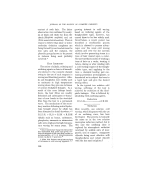
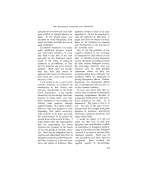
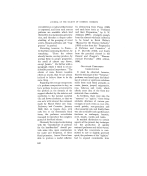
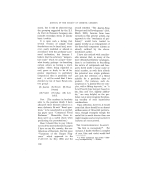
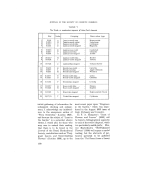
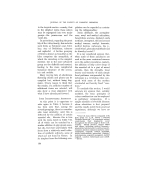
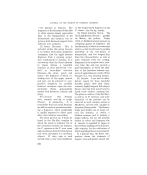
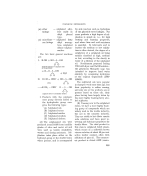
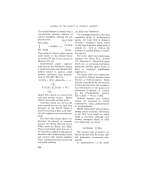
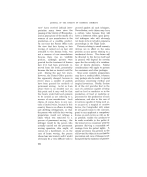
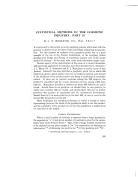
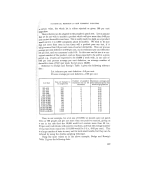
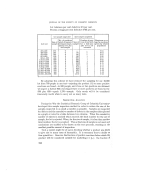
STATISTICAL METHODS IN THE COSMETIC INDUSTRY ?[ certain value, the whole lot is either rejected or given 100 per cent : ?iinspection. These schemes can be adapted to the prophetic patch test. Let us assume that we do not wish to market a product wkich will give more than 0.05 per cent contact dermatitis reactions. This is really much too high, as no'product would survive 1 in 2,000 complaints about dermatitis. We wish to be sure that not more than once in ten times will a product pass our test, if it !i•i•?::will give more than 0.5 per cent cases of contact dermatitis. Thus our process average per cent defective is 0.05 per cent, our lot tolerance per cent defective 0.5 per cent, and our consumer's risk 0.10. In this case our lot size is a con- venient number of the product, such as those expected to be sold in a given period, e.g., if sales are expected to be 10,000 a week with, in our case of ??.0.05 per cent process average per cent defective, an average number of ilerrnatitis cases of 50(!) per week, the lot size is 10,000. Reference to Dodge and Romig's Table 1 gives the following relevant data' Lot tolerance per cent defective--0-5 per cent. Process average per cent defective--0.05 per cent. Number of positive Maximum average per Lot Size Size of Sample to reactions not to be cent reactions given by be inspected exceeded whole of population .... _ 301-400 275 0 0.04 401-500 300 0 0.05 501-600 320 0 0-05 601-800 350 0 0-06 801-1,000 365 0 0.06 1,001-2,000 410 0 0.07 2,001-3,000 430 0 0.07 3,001-4,000 440 0 0-07 4,001-5,000 740 1 O. 10 5,001-7,000 750 1 0.10 7,001-10,000 760 1 0.10 10,001-20,000 775 1. O- 10 20,001-50,000 1,050 2 O. 13 50,001-100,000 1,060 2 O. 13 Thus, in our example, for a lot size of 10,000, we should carry out patch tests on 760 people and get not more than one positive reaction, giving us a one in ten risk that the 10,000 would not contain more than 50 (i.e., 0.5 per cent) individuals with positive reactions, and that the average number of reactions from many lots of 10,000 would be 5 li.e., 0.05 per cent). This is a large number of tests to carry out for such small results, but they can be reduced by using the double sampling technique. Using the same values as in the above example, Dodge and Romig's Table II gives the following data: 227

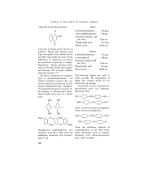
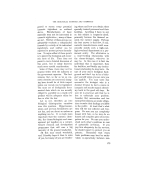
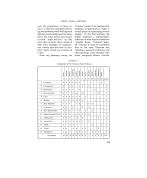
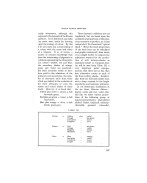
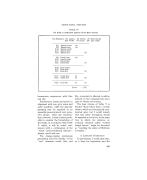
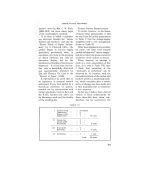
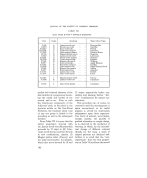
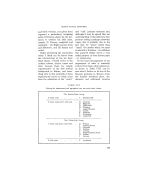
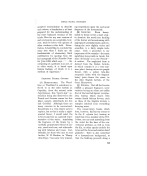
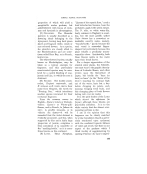
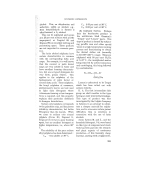
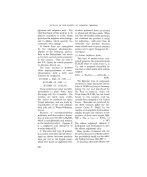
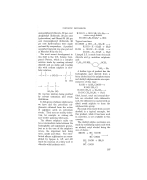
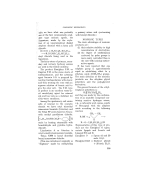
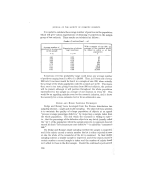
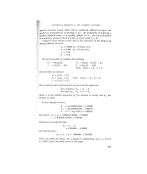
JOURNAL OF THE SOCIETY OF COSMETIC CHEMISTS Lot tolerance per cent defective 0.5 per cent. Process average per cent defective 0.05 per cent. i 1st sample inspected 2nd sample inspected -- No. of positives Number of posi- Maximum aver- Size of which if exceed- Size of rives from both age % reactions Lot size sample ed require exam- sample 1st q- 2nd sam- given by whole ination of a sec- pies not to be population ond sample exceeded -- 301-400 275 0 -- --- 0.04 401-500 340 0 110 1 O. C'4 501-600 355 0 140 1 0.05 601-800 400 0 185 I 0.06 801-1,000 430 0 200 1 0.07 1,001-2,000 490 0 265 1 0.08 2,001-3,000 520 0 290 1 0.09 3,001-4,000 530 0 570 2 0.11 4,001-5,000 540 0 580 2 0.11 5,001•-7,000 545 0 615 2 0.11 7,001-10,000 550 0 620 2 0'12 10,001-20,000 555 0 925 3 0.13 20,001-50,000 560 0 940 3 O. 14 , 50,001-100,000 560 0 1,210 4 O. 15 By adopting this scheme we have reduced the sampling for our 10,000 lot from 760 people in one test--rejecting the product if 2 or more positive reactions are found--to 550 people, and if one or two positives are obtained we inspect a further 620, rejecting if three or more positives are found in the 550 plus 620--equals 1,170--sample. Only rarely will it be considered financially worth while to carry out so many tests. SEQUENTIAL ANALYSIS During the War the Statistical Research Group of Columbia University 8 developed this sample inspection method in order to reduce the size of the samples inspected to as small a number as possible. Samples are inspected for defects and the cumulative number of defects in the samples either plotted in a graph or noted in a table between two columns. When the cumulative number of rejects is reached which exceeds the limit number for the size of sample, the lot is rejected. When, for the size of sample, it is less than another limit number, the lot is accepted. Thus a final size of sample is not used, and conclusions are enabled to be drawn as the test proceeds, resulting in the smallest possible amount of inspection. Such a system might be of use in deciding whether a product was likely to give rise to many cases of dermatitis. It is necessary first to decide on four quantities: these are the fraction of positive reactions below which the ' product will be considered suitable for marketing (= p•) the fraction of 228
Purchased for the exclusive use of nofirst nolast (unknown)
From: SCC Media Library & Resource Center (library.scconline.org)