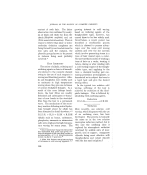
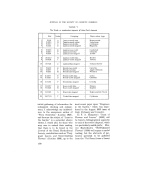
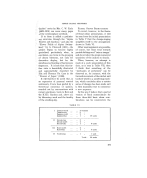
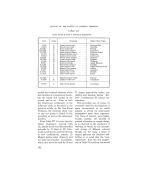
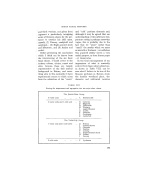
SYNTHETIC DETERGENTS- TYPES AND APPLICATIONS By A. r TAYLOR, M.P.S.* HISTORICALLY THE synthetic de- .: ::' tergents date back to the first World War, when German Patent 336558 disclosed the alkylation of naphtha- lene with isopropanol and concurrent or subsequent sulphonation. The .!i commercial products were Nekal A. and Nekal B.X. (when butanol was ', used for alkylation). These and :: similar products still find application as wetting out agents, particularly in the textile industry, while the free butyl naphthalene sulphonic acid is widely used in acid carbonising ,. baths for wool. Around 1925 Igepon T. was marketed by the I.G. and this was shortly followed by the commercial exploitation of the method of producing fatty alcohols by hydrogenation of fatty acids or esters in the presence of copper and chromium catalysts. Drene and Dreft were first marketed in the 1930's and Vel was introduced by Colgates in America in 1938. About this time Nacconal N.R., an alkyl aryl sulphonate, and the U.S.-pro- duced Igepon T. were introduced. During the last war considerable quantities of Mersolate type alkane sulphonates were made, particularly in Germany, using the original patents of Cortes F. Reed. * Marchon Products Ltd., Whitehaven, Cumberland. Shell, meanwhile, were busy devel- oping their secondary alkyl sulphate Teepol from the cracking and sulpha- tion of high petroleum waxes, and I.C.I. introduced their nonionic pro- duct Lissapol N.X., and its diluted form Lissapol N. Here I feel I cannot do better than to break down the various types of surface active agents very briefly as outlined by Schwarz & Perry in their book, "Surface Active Agents," where the various types are classified into the following groups: (1) Anionic. (2) Cationic. The hydrophobic group forms part of the cation in water. (3) Nonionic. R.NH•C1 ' (R-NH•)++C1. I propose to outline generally the various classifications and to deal briefly with their chemical properties before turning to their applications. ANIONIC DETERGENTS This, the most important group so far as tonnage goes, can be sub- divided as follows: (a) Carboxylic acids. (b) Sulphuric esters. (c) Alkane sulphonates. (d) Alkyl aryl sulphonates. 201

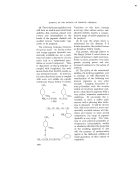
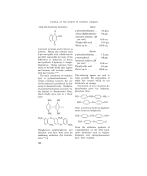
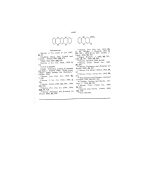
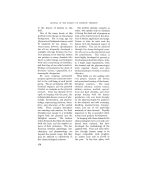
JOURNAL OF THE SOCIETY OF COSMETIC CHEMISTS (a) Carboxylic acids. i. The carboxyl (-COOH) group is directly attached to the hydrophobic (fatty) group. This class includes the fatty acid and rosin soaps and does not come within the scope of this paper. it. The carboxyl group is joined through an intermediate link- age. Examples of this type of compound are the Medialans, wherein the fatty acid chloride is prepared and reacted with an amino acid such as methyl glycine (safcosine). The fatty acid may be derived from coconut, palm kernel or olive oils, or synthetic fatty .acids may be used. The Medialans _ N/CH3 R CO- •CH•..C00- H + have good solubility and detergent power and are lime-resistant enough to be effective in quite hard waters (up to 15 ø German Hardness or 27 ø Ca hardness). The Lamepons or Maypons belong to this class of surface active agent. Lamepons are prepared by hydrolysis of waste protein (leather scraps) with alkali, yielding amino acids and polypeptides. These are then con- densed with a fatty aryl halide, such as oleyl chloride the mixture being kept alkaline with NaOH at about 25-30 ø C., finally, the temperature being allowed to rise to 60 ø C. R.CON(CH•)CH•C00-M + The products are normally mar- keted as viscous brownish liquids of about 35 per cent active matter content. The Lamepons are lime- resistant and are good dispersing agents for lime soaps, although they are precipitated by acids. Various other linkages have been proposed, e.g., stearic acid esters of tartaric acid, sulphonamides, but none has achieved any real commer- cial significance. (b) Sulphuric Esters. This classification is, from the cosmetic aspect, by far the most important section--though in the domestic and industrial field it has been overtaken by the alkyl aryl sulphonates. Nevertheless, 'even in this field, the sulphuric esters repre- sent a considerable tonnage. The two basic types of sulphuric esters comprise: (1) products wherein the sulphate group is attached directly to the hydrophobic group. (i) sulphate group is located near the centre of the molecule, the hydrophobic group having a polar group at the end, i.e., the sulphated oils. (it) sulphate group is near the end, or if near the middle of the molecule, no other polar group is present--i.e., the sulphated alcohols or olefines. (2) products where the sulphate group is attached to the hydro- phobic group through a linkage, which may be: (i) ester link -- sulphated mono- glyceride. (it) amide link -- sulphated alkylo- lamide 2O2
Purchased for the exclusive use of nofirst nolast (unknown)
From: SCC Media Library & Resource Center (library.scconline.org)