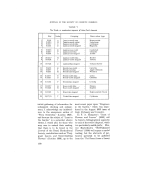
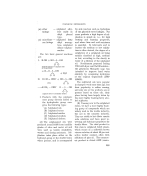
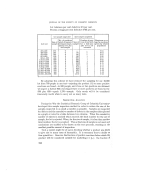
PIGMENTS products depends very largely upon their bulk production from readily available, cheap raw materials (usually by-products of some other process), and impurities, although small in comparison with those of the natural earth colours, can be quite large when expressed in parts per million. Indeed, the authors have been unable to find a synthetic yellow ochre with arsenic lower than about 25 parts per million. When, therefore, limitations of the quanti- ties of scheduled poisons are con- cerned, it is advisable to buy on bulk sample which has been ap- proved as being within the limits set. Before leaving the subject of iron oxide pigments brief mention must be made of black iron oxide. This material is a by-product of the manu- facture of aniline, iron being used as a catalyst in the reduction of nitro benzene. It is not a real black, and possesses a distinct brownish cast, and being a by-product is somewhat subiect to variation in strength. It is, however, very inert and requires stewing with strong hydrochloric acid to bring it into solution, and is less absorbent than the carbon blacks. So far as we know, there is no residual nitro-benzene in the pigment, which is completely innocu- ous. LAKES, TONERS, PIGMENTS Before beginning to discuss organic pigments it is necessary to define with some precision the terms lake, toner and pigment dyestuff. These terms have quite definite meanings to pigment manufacturers, but are often used loosely and misleadingly by pigment consumers. Lakes: When a water-soluble dyestuff is removed from solution by precipitation upon, or adsorption by, a substratum which is a necessary carrier, it is said to be "laked," and the resulting product is a "lake." A certain amount of this substratum is essential to confer pigmentary properties upon the complex formed and is not employed as a diluent. Toners: Certain dyestuffs contain water-solubilising groups and can- not be used, as such, as pigments if, however, the water-solubilising groups are converted into metal salts such as barium or calcium, the dye- stuff-salt (called a toner) loses its solubility characteristics and becomes suitable for use as a pigment. In pure toners there is no substratum. Pigment dyestuffs: Certain dye- stuffs, chiefly of the dis- or tetra-azo class, possess pigmentary properties as first produced by reaction of their components--these are called pig- ment dyestuffs and, •vhen pure, contain no substratum. Before leaving definitions it may be of advantage to point out that a "pure" pigment is merely a lake, a toner, etc., to which no diluent has been added a "reduced" pigment contains added extender or diluent. Tkis diluent is not necessarily added merely to reduce the cost of the pigment a small addition of a, suitable extender will frequently confer improved properties such as ease of incorporation into a medium, or improved "working" properties upon the finished product. 143

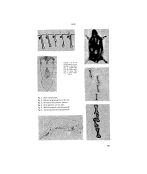
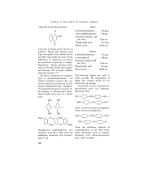
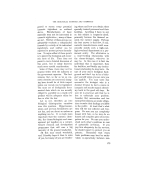
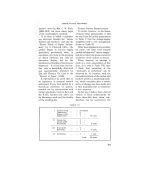
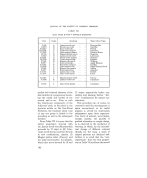
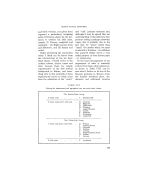
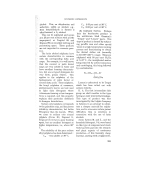
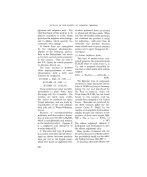
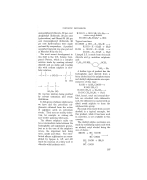
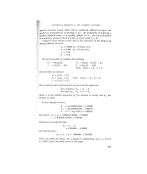
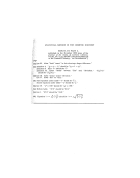
JOURNAL OF THE SOCIETY OF COSMETIC CHEMISTS Let us now consider examples of a lake, a toner and a pigment dye- stuff, and use these to illustrate the definitions ' (a) Honosol Fuchsine RS is an- thraquinone-g-sulphonic acid' 0 OH ,//'x./x,]/,,•/o 0•H II I 0 OH It is readily soluble in warm water and can be precipitated from aque- ous solution by means of barium chloride, but the dark brownish- violet solid resulting possesses no pigmentary properties' it is difficult to reduce to a fine pow- der and possesses little staining power. If, however, a solution of Monosol Fuchsine RS is added to a freshly prepared aqueous suspension of alumina hydrate it is adsorbed, and the resulting violet powder is suitable for use as a pigment. This complex of alumina hydrate and dyestuff is a lake--the substratum is necessary to confer pigmentary properties on the complex. Lakes containing up to about 40 per cent of this dye can be prepared. They are resistant to water washing and are not soluble in oils. The dye can be leached out by alkalies, but the solubility of the dye in the complex is by no means so great as that of the free dye. Many dyestuffs change shade to greater or lesser extent as the pH of their solutions change, and the precise shade and staining power of lakes can often be modified considerably by variations of the pH value of the base on which they are precipitated, as well as by vary- ing such factors as temperature and concentration. (b) Permanent Red 2B is a typical example of a toner. It is prepared by diazotising the amine 2-chlor-4- toluidine-5 sulphonic acid (usually called 2B acid): , CHo CH3 I /cl I/cl 0 •'HS0•/ HS0• / I N=N.cl NH•+0=N.0H + Hcl and coupling this product with hydroxy-naphthoic acid, thus' CH3 N=N.cl CH3 I /cl I-rSø/O , / HO COOH This product, however, is not suitable ' for use as a pigment, but when con- verted to its barium or calcium salt is a toner used in considerable quantities in many industries. It is to be noted that no substratum is present, but that the dyestuff acid 144
Purchased for the exclusive use of nofirst nolast (unknown)
From: SCC Media Library & Resource Center (library.scconline.org)