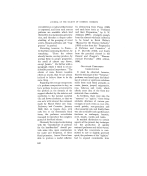
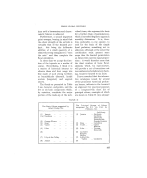
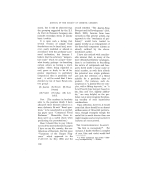
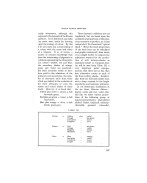
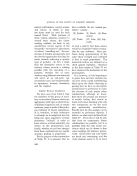
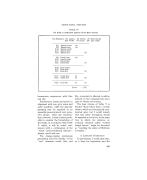
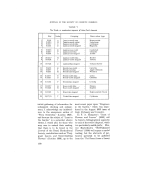
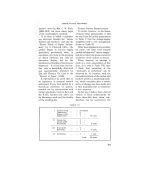
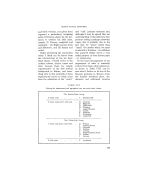
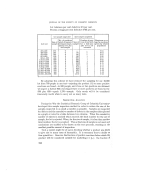
SIMPLE FLORAL PERFUMES Garden" series by Mrs. C. W. Earle (1892-1914) can cover many pages of the commonplace notebook. If to these is added a prelimin- ary excursion through the "Alpine Flowers and Gardens," and also the "Flower Fidds of Alpine Switzer- land," by G. Flemwell (1911)--the subject begins to become highly specialised, particularly when, in conclusion, one turns to the grouping of chosen blossoms, not only for decorative display, but for the simultaneous blending of harmonious fragrances. It is here that this fur- ther vista is beautifully illustrated and appreciatively described by Ella and Florence Du Cane in the "Flowers of Japan" (1908). It will therefore be noted that, in an expression of personal osmical sentiments, I have been guided by a theoretical consensus of opinion, sounded out by conversations with nursery gardeners, Visits to Kew and the R.H.S. Gardens and, above all, by laboratory work and the finality of the smelling-slip. FLORAL 0DOUR PERMUTATIONS To revert, however, to the theme of floral odour permutation, it will be seen from the initial presentation in Table V that the change-ringing simplifies itself to the arrangement shown in Table VI. Other rearrangements are possible, of course, but these tend towards partial shiftings and "mirror images" and do not show the simple numerical transition of the indices so clearly. When, however, an attempt is made at a cyclic presentation of this data, as is seen in Table VII, then I think that something of the "mechanics of perfumery" can be observed as, for instance, with the forward movement of the ratchet and toothed wheel in a numbering mach- ine, which concludes after a certain series of changes has been made and is then manually reset to commence a new sequence. In this way I believe that a partial version of floral nomenclature for these three-fold basic odour com- binations can be constructed, the TABLE VI Jasmin-neroli ...... 4 versions Jasmin-rose ...... 3 ,, Jasmin-violet ...... 2 ,, Jasmin-lilac ...... 1 ,, lXleroli-rose ...... 3 ,, Neroli-violet ...... 2 Neroli-lilac ...... 1 ,, III l•ose-violet ...... 2 l•ose-lilac ...... 1 , IV Violet-lilac ...... 1 ,, Total ß 10 units 6 units 3 units 1 unit 20 units 191

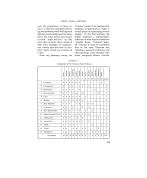
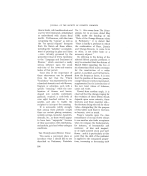
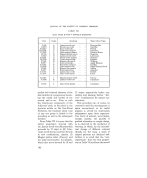
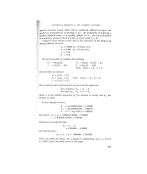
JOURNAL OF THE SOCIETY OF COSMETIC CHEMISTS TABLE VII Cyctic version of Table V showing its progressions ,, Key Index Grouping Basic Odour Type 3/5/9 A Jasminmeroli-rose ...... Honeysuckle 5/9/13 Ii Neroli-rose-violet ...... Cerinthe 9 / 13 / 17 Q I•o se-violet-lilac ......... Freesia 13/17121 T Violet-lilac-muguet ...... Cyclamen 17/21/3 J Lilac-muguet-jasmin ...... Tobacco-flower 21/3/5 D Muguet-jasmin-neroli ...... Magnolia 3/5/13 B Jasmin-neroli-violet ...... Laburnum 5/13/21 O Neroli-violet-mu guet ...... Clematis 13 [21/9 [R Violet-muguet-rose ...... Daphne 21/9/5 M Muguet-rose-neroli ...... Wistaria 9/5/17 L I•ose-neroli-lilac ......... Apple Blossom 5/17/21 P Neroli-lilac-muguet ...... Cowslip 17/21/9 S Lilac-muguet-rose ...... Night-scented Stock 21/9/3 G Muguet-rose-jasmin ...... Azalea 9/•/17 F I•ose-jasmin-lilac ...... Oleander 3 / 17/13 H Jasmin-lilac-violet ...... I•ocket 17 / 13/5 N Lilac-violet-neroli ...... Lotus 21 [3113 I Mu guet-j asmin-violet ...... Paeo ny 3/13/9 E Jasmin-violet-rose ...... Candytuft ,, , 17/5]3 C Lilac-neroli-jasmin ....... Corylopsis ,, medial and terminal elements of the first member of a progression becom- ing the initial and medial of the second, and so on. Thus, as with the twenty-one components of the Adjuvant cycle, as described in the previous article on the Non-Floral Perfumes, the resultant odour tone of any one group is linked to the preceding as well as the subsequent member. From Table VII it is seen that the initial progression starting with (A) Jasmin-neroli-rose (Honeysuckle) proceeds by 17 steps to (N) Lilac- violet-neroli (Lotus) and then diverts to new combinations, namely, (I) Muguet-jasmin-violet (Paeony) and (C) Lilac-neroli-jasmin (Corylopsis), which also move forward by 18 and 17 stages respectively before con- cluding and showing further "left- over" combinations for similar con- sideration. This procedure can, of course, be continued until the starting-point is again encountered, so no useful purpose is served by unnecessary enlargement upon these sequences. Two items of interest, nevertheless, emerge, namely, the parallel of gradual alteration in simple design, as is observed in the mechanics of weaving, in which, by the intermit- tent change of different coloured threads for the warp, a series of striped patterns are obtained and, further, it is noted that the "non- sequentials" from the first progres- sion in Table VI (and from the second 192
Purchased for the exclusive use of nofirst nolast (unknown)
From: SCC Media Library & Resource Center (library.scconline.org)