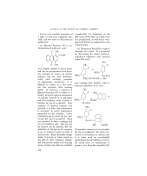
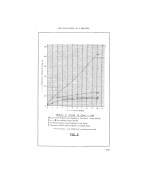
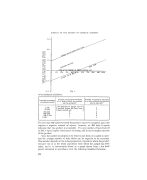
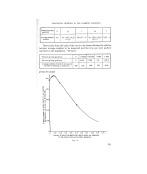
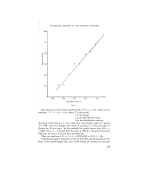
THE EVALUATION OF A SHAMPOO 120 100 80 dO ,40 2O 0 1 2 3 4 5 6 7 8 9 10 11 ---• TIME IN MINUTES DECREASE IN VOLUME OF FOAM V. TIME Q Commercial Sodium Lauryl Sulphate in Tap Water + Butyl Alcohol R as m q but including Lauryl Alcohol $ Commercial Sodium Lauryl Sulphale in Tap Water T Commeraal Sodium Lauryl Sulphate in Distilled Water 1 ml of all soluhons = 4 mls. M/S00 Celyl TrlmelhyJammonlum Bromide FIG. 2 155

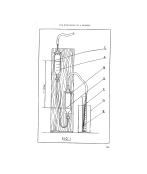
JOURNAL OF THE SOCIETY OF COSMETIC CHEMISTS . disc must be placed diagonally in the cylinder, otherwise a collapse of foam may occur between the tube and the cylinder. All parts of the apparatus com- ing into contact with the foam- ing liquid must be well washed with 5-10 per cent hydro- chloric acid and then two or three times with distilled water after each alternate estimation. The water levels in the cylin- ders A and B must be main- tained by adding water as evaporation takes place. Under these conditions: (1) Foam is produced in every case from essentially the same volume of air. (2)The air is broken up into bubbles of fairly uniform size. (3) The time of formation of the foams is substantially the same in all cases. (4) The foam comes into contact with surfaces free from uncon- trolled insoluble films which tend to destroy foam. (5) The comparative evaluation of a number of shampoos on a basis of foaminess is repeat- able for one operator and apparatus and reproducible for other operators and apparatus. Some results of tests are shown in Fig. 2, where it will be seen that the addition of butyl alcohol to the tap water causes a more rapid decline in the volume of foam and that the addition of unsulphated lauryl alcohol to the shampoo substantially arrests the decline. In saloon tests the shampoo which gave curve Q formed a more watery lather than that from which curve R was derived, and required for its production on an average approxi- mately 10 per cent more solution at the concentration defined in Fig. 2. A steeper curve than Q connotes a watery lather which breaks down rapidly on the head and may lead to absolute failure to lather on the first application. Although the shampoo user normally applies a much higher concentration of shampoo than that employed in the saloon tests de- scribed, the difference in quality between, for example, the shampoos Q and R is quite distinct on some heads. However important the practical shampoo test in the saloon may be, it is quite clear that a tekt on a single he/td can be misleading because different heads are not shampooed with equal facility. On the other hand, a single foaminess test carried out in the apparatus described will indicate a good shampoo which is above suspicion or a poor one which it is useless to consider further, or it will bring out the intermediate case in which further examination by saloon test on several heads is highly desirable. ACKNOWLEDGMENT The author wishes to express his thanks to the Directors of County Perfumery Co., Ltd., for permission to publish this paper. 156
Purchased for the exclusive use of nofirst nolast (unknown)
From: SCC Media Library & Resource Center (library.scconline.org)