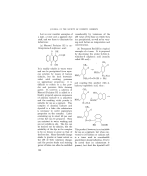
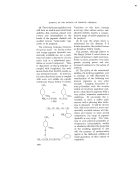
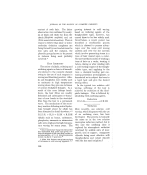
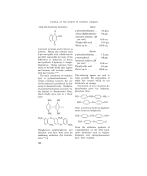
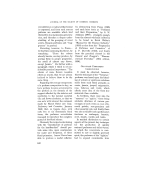
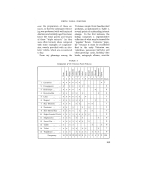
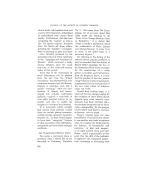
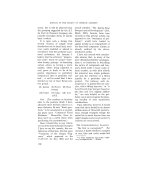
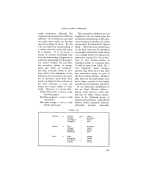
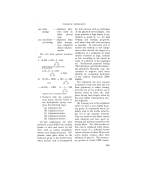
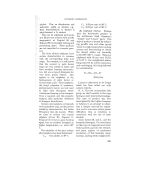
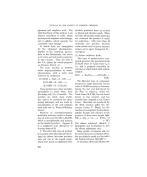
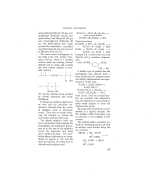
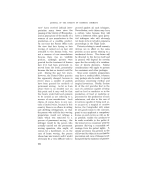
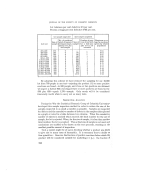
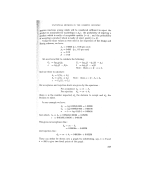
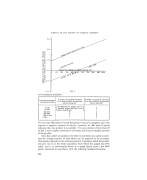
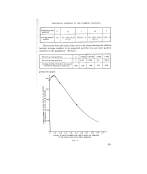
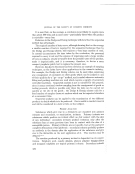
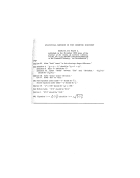
JOURNAL OF THE SOCIETY OF COSMETIC CHEMISTS whle the 2-hydroxy derivative Black O p-phenylenediamine .. 2.5 gins. I1 Amino-diphenylamine 0.2 gin. q/x] -OH Ammonia solution (20 ,Nv•N/• per cent) .. 10-0 ccs. II Thioglycollic acid .. 0' 15 gm. O Water up to .... 100-0 ccs. is present in henna and is known as lawsone. Henna also contains some 6 per cent gallic acid, which may be partially responsible for some of the differences in behaviour of henna and synthetic 2-hydroxy-1: 4-naph- thaquinone. Being quinones there seems to be little doubt that juglone and lawsone will actively combine with hair keratin. •'• The main constituent of oxidation dyes is p-phenylenediamine. In certain countries, however, the use of this material is prohibited by law owing to dermatitis risks. Oxidation of p-phenylenediamine procoeds via the aliimine to Bandrowski's Base, which finally gives rise to a black azine. NH• NH N/ II II NH• NH H•NN• / N %/• H,.NNj k Thioglycerol, polythioglycols and thiocitric acid have been used for stabilising oxidation dye formula- tions/• e.g. Blonde p-phenylenediamine .. 1-5 gms. p-aminophenol .. 0'8 gm. Ammonia solution per cent) .... 10.0 ccs. Thioglycollic acid 0'1 gm. Water up to .... I00'0 ccs. Thio-reducing agents are said to make possible the preparation of stable dye creams which do not deteriorate on storage. Oxidation of p-p'-diamino-di- phenylamine gives the indamine, phenylene blue, while p-amino-p'-hydroxy-diphenyl- amine forms an indophenol. H•N--• •-NH-- .__/•X2--0H-- From the oxidation products of o-aminophenol, on the other hand, cyclic structures such as triphen- dioxazine and aminophenoxazone have been isolated. 166

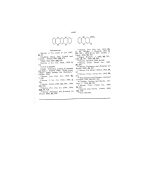
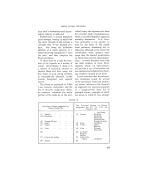
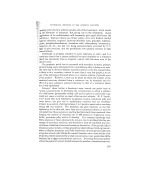
HAIR ]-•EFERtgN CES • Stoves, J. $oc. z)yers •.• Col., 1947, 63, 65. 2Haddow , Elson, I•oe, Rudall and Timmis. Nature, 1945, 155, 379. 3 Hale, ibid, 1945, 155, 670. 4 Stoves, J. Soc. Cos. Chum., 1952, 3, 170. 5 U.S.P. 2,523,867. 5 Kidd, "]Direction of Hair in Animals and Man." London, 1903 Wood Jones, "Man's Place among the Mammals." London. 1929. •Mercer, Jour. Text. Inst., 1949, 40, T. 640. 8 Stoves, J. Soc. Cos. Chem., 1951, 2, 158. 9 Stoves, •'ature, 1943, 151, 304 1946, 157, 230. •o Stoves, Proc. Roy. Soc. -Edin., 1944, 62B, 99, 132. • Stoves, Perfumery and .Essential Oil Record, 1952, 43, 232. •o. Ohslow, Proc. Roy. Soc., 1915, 89, 13, 36' •rright, J. Heredity, 1910, 8, 224, 521' 1918, 9, 33, 227 I(oller, J. Genet., 1930, 22, 103. •3 Raper, Blochem. J., 1926, 20, 735 1927, 21, 89 1930, 24, 239. • Stoves, Research, 1953, 6, 29S. • Stoves, Trans. Farad. Soc., 1942, 38, 254. • Stoves, Perfumery and Essential Oil Record, 1952, 43, 427. •* Stoves, The Retail Chemist, 1953, 24, 37. •8 Stoves, Trans. Farad. Soc., 1942, 38, 501. • Brauckmeyer and Rouette, Melliand Textilber, 1937, 18, 222, 293. x0 Consden, Gordon and Martin, Blo- chem. J., 1946, 40, 580. n Stoves, Trans. Farad. Soc., 1943, 39, 301. • Burton and Stoves, Nature, 1950, 165, 569, • B.P. 653,053.
Purchased for the exclusive use of nofirst nolast (unknown)
From: SCC Media Library & Resource Center (library.scconline.org)