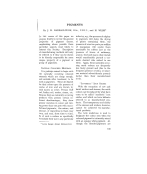
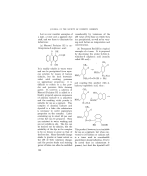
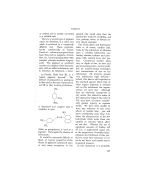
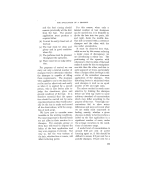
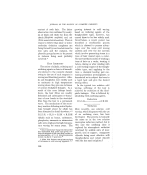
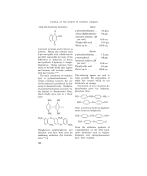
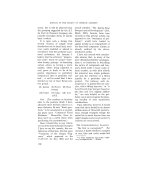
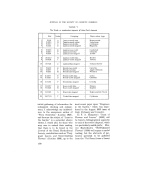
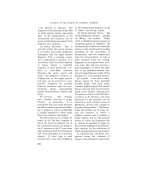
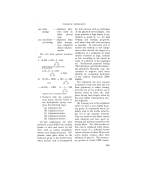
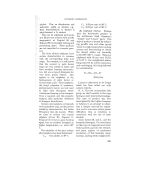
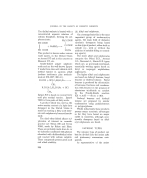
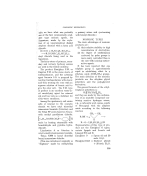
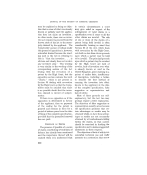
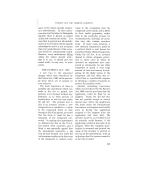
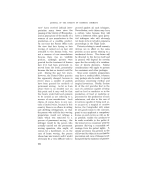
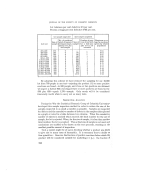
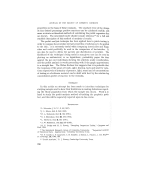
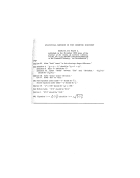
JOURNAL OF THE SOCIETY OF COSMETIC CHEMISTS Let us now consider examples of a lake, a toner and a pigment dye- stuff, and use these to illustrate the definitions ' (a) Honosol Fuchsine RS is an- thraquinone-g-sulphonic acid' 0 OH ,//'x./x,]/,,•/o 0•H II I 0 OH It is readily soluble in warm water and can be precipitated from aque- ous solution by means of barium chloride, but the dark brownish- violet solid resulting possesses no pigmentary properties' it is difficult to reduce to a fine pow- der and possesses little staining power. If, however, a solution of Monosol Fuchsine RS is added to a freshly prepared aqueous suspension of alumina hydrate it is adsorbed, and the resulting violet powder is suitable for use as a pigment. This complex of alumina hydrate and dyestuff is a lake--the substratum is necessary to confer pigmentary properties on the complex. Lakes containing up to about 40 per cent of this dye can be prepared. They are resistant to water washing and are not soluble in oils. The dye can be leached out by alkalies, but the solubility of the dye in the complex is by no means so great as that of the free dye. Many dyestuffs change shade to greater or lesser extent as the pH of their solutions change, and the precise shade and staining power of lakes can often be modified considerably by variations of the pH value of the base on which they are precipitated, as well as by vary- ing such factors as temperature and concentration. (b) Permanent Red 2B is a typical example of a toner. It is prepared by diazotising the amine 2-chlor-4- toluidine-5 sulphonic acid (usually called 2B acid): , CHo CH3 I /cl I/cl 0 •'HS0•/ HS0• / I N=N.cl NH•+0=N.0H + Hcl and coupling this product with hydroxy-naphthoic acid, thus' CH3 N=N.cl CH3 I /cl I-rSø/O , / HO COOH This product, however, is not suitable ' for use as a pigment, but when con- verted to its barium or calcium salt is a toner used in considerable quantities in many industries. It is to be noted that no substratum is present, but that the dyestuff acid 144

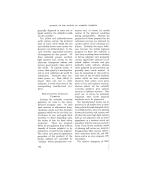
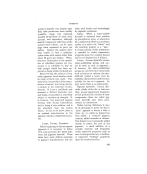
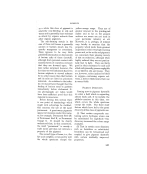
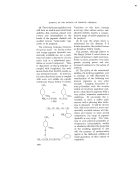
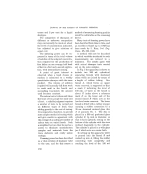
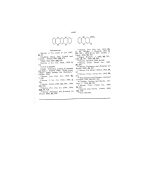
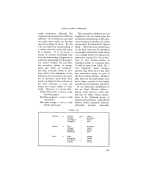
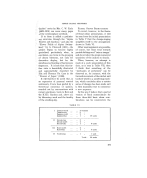
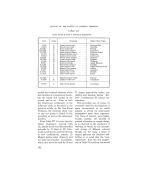
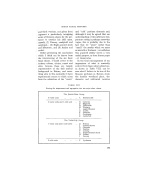
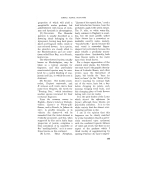
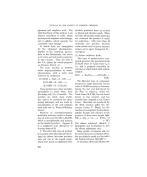
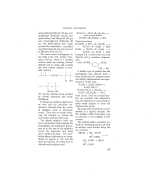
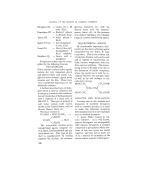
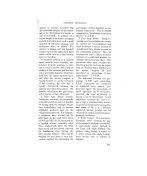
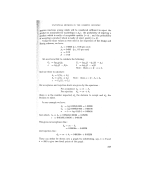
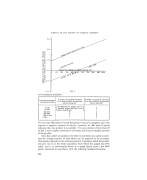
PIGMENTS or sodium salt is merely converted to a suitable salt. There is a second type of pigment which, by definition, is a toner, but which is produced in a completely different way. These pigments, lmown commercially as Consol, Fanal, etc., colours are prepared from basic dyes such as magenta, victoria blue, etc., by precipitating them with complex phospho-molybdo-tungstic acids. The pigment so produced consists of a complex of dye and acid, only, with no added substratum, and is, therefore, by definition, a toner.. (c) Finally, Helio Red RL is a typical pigment dyestuff. The method of preparation is analogous to that used in the case of permanent red gB in that m-nitro-p-toluidine: CH3 1 .•, --NO, 1 NH• is diazotised and coupled with naphthol to give HO /N_--N_ •/---• / / NO• which, as precipitated, is used as a pigment. Note again the absence of substratum. It would be extremely difficult to speak of typical properties of the classes of pigments mentioned since so very many exceptions to the general rule would arise that the generalities would be worthless, and it is, perhaps, better to discuss cer- tain chosen examples. One of the oldest and best known lakes is, of course, madder lake, made by the adsorption of alizarine upon a complex substratum con- taining alumina hydrate and phos- phate with calcium irons also pre- sent. Commercial madder lakes vary in depth of hue, in tone and also in s raining power--factors modi- fied by manufacturing techniques and concentration of dye on the substratum. All, however, possess very satisfactory light fastness--. indeed, this lake is still regarded as the standard against which that of other organic pigments is assessed and on this assessment few organic colours are more fast. Although they are relatively transparent in oily media (the refractive index of the substratum being of the order of 1.5), they have, of course, consider- ably greater opacity in aqueous media. We have been unable to trace any reference to any toxic effects of madder lake you will know considerably more than I do about the idiosyncracies of the few individuals which make them sus- ceptible to irritants which affect no one else. Whether the use of significant amounts of Turkey red oil (i.e., a sulphonated castor oil), in the preparation of madder lakes, enhances the likelihood of this pro- duct to cause such irritation or not we do not know, and merely report its general presence. In this connection it is probably 145
Purchased for the exclusive use of nofirst nolast (unknown)
From: SCC Media Library & Resource Center (library.scconline.org)