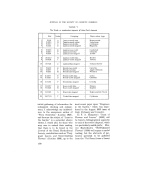
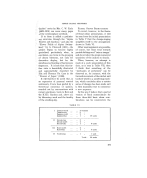
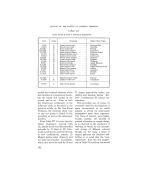
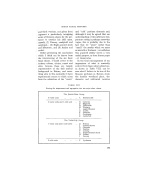
JOURNAL OF THE SOCIETY OF COSMETIC CHEMISTS stearyl--are available under various proprietary names, made self-emulsi- fying by the use of anionic or non- ionic products. Many proprietary waxes are sup- plied to the industry for the manu- facture of cold creams, vanishing creams, hair creams, etc., and these often appear to be various mixtures of mineral oils, spermaceti, cetyl alcohol and the like. A fundamental study on emulsion formation which is of both academic and practical interest was carried out by Schulman and Cockbain, and reported in Transactions of Faraday Soc., June 1940. They suggest that interfacial complex formation has a marked stabilising influence on emulsions. They observe that: (1) the emulsifying power of water-soluble paraffin chain salts is increased if amphi- pathic molecules such as cetyl alcohol, oleyl alcohol or chole- strol, are incorporated in the oil phase and (2) the order of effectiveness of combinations of surface-active compounds is in general the same as the order of their tendency to form stable com- plexes at air/water interfaces. This theory satisfactorily explains the practical applications of the Cera Emulsificans B..P. type of pro- duct and its predecessors of the 1930's, as well as the familiar Speakman patent for the addition of oleyl alcohol to wool lubricat- ing oils, to render the oils readily removable from the wool on subse- quent scouring. One interesting practical applica- tion to the cosmetic chemist is the fact, previously pointed out by J. Pickthall in this Journal, that, in the preparation of Empiwax and similar Emulsifying Wax types of emulsion, for example, a stabler and more easily prepared emulsion is obtained by dissolving the fatty alcohol component in the oil phase and the sodium lauryl sulphate in the aqueous phase. TRADE-MARKED PRODUCTS. An endeavour has been made to distinguish trade-marked products by means of initial capital letters. So many of these are mentioned in this paper that it has not been considered practicable to attri- bute them to their proprietors but, should any reader be interested in obtaining further information on this subject, the Honorary Editor will be glad to furnish relevant names and addresses. 216

PATENTS' WITH PARTICULAR REFERENCE TO THE COSMETIC INDUSTRY By JAMES G. FIFE, M.Sc., Ph.D., F.R.I.C. THE CRANT of Letters Patent for invention in the United Kingdom is of very considerable antiquity, and in the Statute of Monopolies of 1623, which prohibited the grant of mono- polies in general, a special exception was made in respect of Letters Patent for invention, because in Section 6 of the Statute it is provided ß "6. Provided also, that any declaration before mentioned shall not extend to any letters patent and grants of privilege for the term of fourteen years or under, hereafter to be made, of the sole working or making of any manner of new manufactures within this realm to the true and first inventor and inventors of such manu- factures, which others at the time' of making such letters patent and grants shall not use, so as also they be not contrary to the law nor mischievous to the State by raising prices of commodities at home, or hurt of trade, or generally incon- venient' the said fourteen years to be accounted from the date of the first letters patent or grants of such privilege hereafter to be made, but that the same shall be of such force as they should be if this Act had never been made, and of none other." Originally separate Letters Patent were granted for England and Wales and the town of Berwick on Tweed, Scotland, and Ireland, but by the Act of 1852 a United Kingdom Patent was established, and the centenary of this event has just been celebrated by the Patent Office, the celebration in- cluding a very interesting exhibition of the patent specifications relating to famous and curious inventions. ß The Statute Law relating to patents has been revised on numerous occasions, the last revision being in 1949, when the law was completely codified for the first time since 1907 and many important changes were introduced in the law, some of which are of especial interest to the chemi- cal industry, including inventions relating to cosmetics. Before dealing with the important innovations introduced by the Pat- ents Act, 1949, I would first outline the procedure for obtaining the grant of Letters Patent in this country. PROCEDURE IN THE U.K. The first step is for the inventor or his assignee to make an applica- 217
Purchased for the exclusive use of nofirst nolast (unknown)
From: SCC Media Library & Resource Center (library.scconline.org)