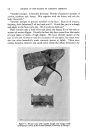
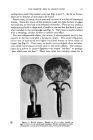
142 JOURNAL OF THE SOCIETY OF COSMETIC CHEMISTS Such tests are performed by using the usual Agar Cup-Plate Method to- gether with inoculating the sample itself with mold spores. The yeast and fungi cultures are grown on slants of Orange Serum Agar, No. 77, for ten days at room temperature. This media is manufactured by Sunkist Growers, Ontario, California, and supports copious yeast and mold growth. It contains concentrated orange serum, yeast hydrolysate, peptone, buffer salts, cysteine and agar. Yeast and mold counts are gen- erally greater using this medium when compared to the use of Sabouraud's Dextrose Agar. The mold is transferred from the slant into a small, sterile, Pyrex bottle containing glass beads. Sterile physiological salt solution is added the bottle stoppered and placed in a shaking machine for ten minutes. The resultant suspension is then filtered through sterile glass wool producing a suspension free from clumps which is used to inoculate the agar plates. Inoculation is carried out by means of a sterile "Q-Tip," swabbing the sur- face of the solidified agar medium. A cup 11/2 cm. in diameter is made by means of a sterile cork borer. The cup is filled with sample and the plate incubated in a humidified chamber and observed on the third, sixth and tenth days of incubation. If there are any fungistatic properties present, the three-day period usually shows a sharp clear halo that may measure from 3 to 10 m.m. However, by the sixth day, the sharp clear halo may be covered with mycelial growth and, by the tenth day, mold growth could be growing up to the edge of the sample. Of course, the ideal situation would be to have a sharp clear 3 to $ mm. halo present after the ten-day incuba- tion period. However, when the mold grows up to and adjacent to the sample area, but not over it, it is considered to be adequately preserved against this mold. Careful observation should be made under five power to be sure that the mycelia have not become imbedded in the surface of the sample. In other words, it is not considered necessary to produce a halo around the sample area to prove it will not support mold or yeast growth. If a halo is produced, so much the better. One must take into consideration the fact that the sample has been stored in the presence of countless mold spores for ten days, under conditions favorable to their growth. So, the absence of growth on the sample is indicative that it is adequately preserved against the test organism. In conjunction with the above test, it is recommended that the cosmetic product under investigation be inoculated on the surface with dry mold spores. The inoculated sample is placed in a humidified chamber and stored for thirty days and examined under five power periodically during this period. It has been found that mold or yeast growth, if and when it takes place, will usually do so within ten to fourteen days incubation under these conditions. The results of this test are then correlated with those of

RHEOLOGY OF HYDROPHILIC POLYMER SOLUTIONS 143 the Agar Plate Method, which is a much more stringent test to meet. Naturally, the more test organisms employed, a more complete picture is obtained. As mentioned previously, no preservation tests are infallible but excep- tional success has been obtained by following these procedures. To summarize: 1. Cosmetic products can become contaminated with micro6rganisms by means of: (a) Raw materials (b) Ion exchangers (c) Unclean water filtering equipment (d) Contaminated plant equipment i.e., kettles, pipe lines, filling machines, etc. 2. Cosmetic products should be chemically preserved employing mixtures of suitable preservatives. 3. Laboratory preservation tests that have proved adequate have been outlined. 4. Cosmetic products should be subjected to these tests upon comple- tion of their development and periodically thereafter. REFERENCES (1) Cruickshank, G. A., and Braithwaite, D. G., fnd. Eng. Chem., 41,472 (1949). (2) Elsman, P. C., Kull, F. C., and Mayer, R. L., •. •7m. Pharm. •7ssoc. $ci. Ed., $8, 88(1949). THE RHEOLOGY OF NATURAL AND SYNTHETIC HYDROPHILIC POLYMER SOLUTIONS AS RELATED TO SUSPENDING ABILITY By R. J. M•¾•P. and L. Cou•* Presented November 20, 1958, New York City THE EFFECT OF gravity on suspensions or emulsions has long resulted in the general problem of sedimentation of solids and phase separation in emulsions. Because of an inability to cope with this handicap, many cosmetic products have failed at some stage of commerical development. The objective of this paper is to introduce a new mechanism for obtaining permanent suspension. This mechanism involves the rheology of the water phase in a static system. It will be shown that permanent sus- pension results when the water phase exhibits a critical minimum yield value irrespective of the apparent viscosity. * B. F. Goodrich Chemical Co., Avon Lake Development Center, Avon Lake, Ohio.
Purchased for the exclusive use of nofirst nolast (unknown)
From: SCC Media Library & Resource Center (library.scconline.org)