RHEOLOGY OF HYDROPHILIC POLYMER SOLUTIONS 143 the Agar Plate Method, which is a much more stringent test to meet. Naturally, the more test organisms employed, a more complete picture is obtained. As mentioned previously, no preservation tests are infallible but excep- tional success has been obtained by following these procedures. To summarize: 1. Cosmetic products can become contaminated with micro6rganisms by means of: (a) Raw materials (b) Ion exchangers (c) Unclean water filtering equipment (d) Contaminated plant equipment i.e., kettles, pipe lines, filling machines, etc. 2. Cosmetic products should be chemically preserved employing mixtures of suitable preservatives. 3. Laboratory preservation tests that have proved adequate have been outlined. 4. Cosmetic products should be subjected to these tests upon comple- tion of their development and periodically thereafter. REFERENCES (1) Cruickshank, G. A., and Braithwaite, D. G., fnd. Eng. Chem., 41,472 (1949). (2) Elsman, P. C., Kull, F. C., and Mayer, R. L., •. •7m. Pharm. •7ssoc. $ci. Ed., $8, 88(1949). THE RHEOLOGY OF NATURAL AND SYNTHETIC HYDROPHILIC POLYMER SOLUTIONS AS RELATED TO SUSPENDING ABILITY By R. J. M•¾•P. and L. Cou•* Presented November 20, 1958, New York City THE EFFECT OF gravity on suspensions or emulsions has long resulted in the general problem of sedimentation of solids and phase separation in emulsions. Because of an inability to cope with this handicap, many cosmetic products have failed at some stage of commerical development. The objective of this paper is to introduce a new mechanism for obtaining permanent suspension. This mechanism involves the rheology of the water phase in a static system. It will be shown that permanent sus- pension results when the water phase exhibits a critical minimum yield value irrespective of the apparent viscosity. * B. F. Goodrich Chemical Co., Avon Lake Development Center, Avon Lake, Ohio.

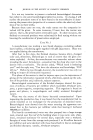
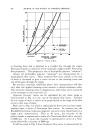
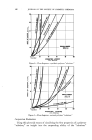
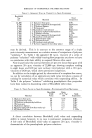
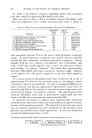
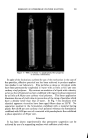
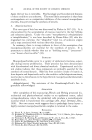
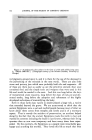
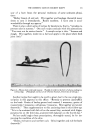
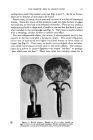
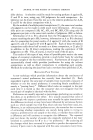
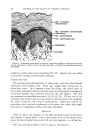
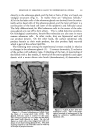
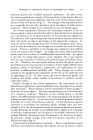
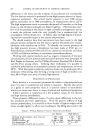
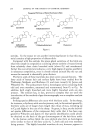
144 JOURNAL OF THE SOCIETY OF COSMETIC CHEMISTS HISTORICAL BACKGROUND The commonly known methods of preventing settling of suspensions fall short of complete success in that they rely on a delaying effect rather than a permanent one. These methods make use of relationships defined by Stokes Law involving the particle size of the dispersed phase, the density of the dispersed phase, and the viscosity of the continuous phase. Agita- tion of the system is also commonly used. If the particle size of the dispersed phase of a system is in the colloidal range, no settling problem will exist. In almost all cases of commercial interest, the dispersed phase will be larger than colloidal size. Settling is delayed by a choice of as fine a particle size as is available. Further improvement is achieved by a physical reduction in size or by defloccula- tion of agglomerates to their individual particles. Delayed settling can also be achieved by reducing the density difference between the dispersed phase and the dispersing medium to a minimum. The opportunity to use this method occurs rarely in commercial practice. An increase in the viscosity of the suspension medium results in a re- duced settling rate. In many cases where high viscosities are permissible, very low settling rates can be achieved by this method. A major share of the application of thickening agents to cosmetic and pharmaceutical formulations is based on this effect of increase in viscosity. GRAV IT Y :: • . VISCOSITY ' " lillll I I '"["'iifl'iii'fi .... [llli[[I i[i'f"[rlirrffff ...... Figure 1.--Factors influencing suspension of a particle.
Purchased for the exclusive use of nofirst nolast (unknown)
From: SCC Media Library & Resource Center (library.scconline.org)