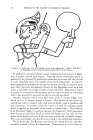
134 JOURNAL OF THE SOCIETY OF COSMETIC CHEMISTS It is not my intention to present a technical bacteriological discussion but rather to cite some bacteriological detective stories. In closing, I will outline the procedure some of us have found to be most effective in deter- mining the preservation properties of a cosmetic within the relatively short time of two to three weeks. Because these cases are true, the trade names nor the companies in- volved will be given. In some instances, I know how the matter was solved that is, the preservatives eventually used. In other instances, the finished or corrected products were submitted for final testing without my knowing the combination of preservatives employed. C^sv, No. 1 A manufacturer was making a new liquid shampoo containing sodium lauryl sulfate, a thickening agent together with pH adjustment. Heat was not applied during the manufacture. After four to five days, the finished shampoo became slimy, changed color and, oftentimes, liberated gas to such an extent that the glass con- tainer exploded. At first, the manufacturer was somewhat reticent about revealing the exact formulation--somewhat like the chap who went to the dentist with a toothache. The dentist asked, "Which tooth is bothering you?" and the reply was, "You have the education and knowledge YOU tell me." Before he was through, however, the manufacturer was only too willing to impart all information requested. This phase of the matter is cited to impress upon you the importance of giving all the information requested which, oftentimes, speeds up the solu- tion of the problem and, indirectly, reduces expenses. Bacteriological examination of the finished shampoo showed the pres- ence of millions of bacteria per milliliter which resembled derobacter aero- genes, a gram-negative, nonsporing organism. This organism is found on grains and plants is nonpathogenic and widely scattered throughout nature. What was the source of this heavy bacterial contamination? Upon inspecting the production line, it was found that the manufacturer had re- cently installed an ion exchanger for the production of deionized water. Bacteriological tests showed that the water entering the apparatus con- tained four to five bacteria per milliliter while that leaving it harbored 500,000 per milliliter. The heavily contaminated water was then pumped into a large storage tank, situated near the roof of the building where it was warm and, often- times, remained stationary for several days, especially over a weekend. Samples of water from this storage tank produced 5 to 10 million bacteria per milliliter and were identical with those found both in the ion exchanger and finished shampoo namely, derobacter aerogenes.

THAT UNWANTED COSMETIC INGREDIENT--BACTERIA 135 Frequent sterilization of the resin beds in the ion exchanger, together with the addition of 0.075 per cent formalin to the finished product, resulted in clearing up this trouble. Apparently, bacterial contamination from this source has become quite common as Elsman and his co-workers make the following statement: "A bacteriological study has been made of demineralizing units em- ploying synthetic cation and anion exchange resins for the production of water with low mineral content. It has been established that there exists a wide variation in bacterial content in deionized water which is conditioned by the manner in which these units are operated. An al- most sterile product may be produced provided the deionizing units are used daily and the resins regenerated every three or four days. If, on the other hand, the resins are regenerated at infrequent periods--that is, several weeks apart--the bacterial content of the eflquent, notwithstanding its chemical purity, may be excessive, being considerably greater than the numbers of organisms in the raw water entering the unit. The stor- age of such water gives rise to exceedingly large numbers of bacteria within twenty-four hours after collection." Also, Cruickshanks & Braithwaite make the following statement about the sterilization of cation exchange resins: "Beds of exchangers become contaminated because of the filtering action that occurs when operating as softening units. There has been no evidence that the bacteria normally encountered in water supplies are able to utilize the resinous cation exchange material itself as a nu- trient. Bacterial growth in the bed appears to be due entirely to sus- pended, organic material filtered from the water supply. Such organic material is capable of supplying the food requirements of a wide variety of micro•Srganisms. In a majority of the cases where bacterial contam- ination is encountered, the complaintwill be only periodic and may even be seasonal. A sterilization treatment that could be employed safely when required to maintain the bed in sanitary condition, therefore, would be completely satisfactory for most installations." These authors found the use of 0.25 per cent formalin to be the best mate- rial and concentration for the sterilization of these beds. CAS• No. 2 This is quite similar to the first in that the manufacturer was making a liquid. cream shampoo, noticed the finished product was becoming slimy and showed the presence of numerous gas bubbles. In this instance, the manufacturer did not have an ion exchanger. However, the water that was stored in a large tank on the roof entered the plant by gravity and was filtered by passing it through a cone filter, resembling in detail the cone-shaped coils of twine one used to see in the grocery stores years ago. These filter cones were larger in diameter and were comprised of rather
Purchased for the exclusive use of nofirst nolast (unknown)
From: SCC Media Library & Resource Center (library.scconline.org)