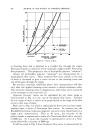
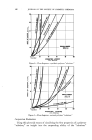
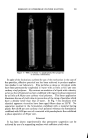
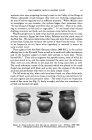
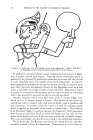
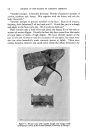
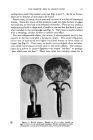
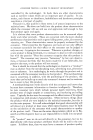
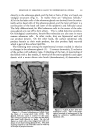
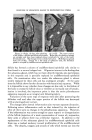
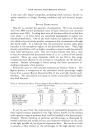
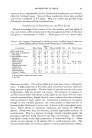
RHEOLOGY OF HYDROPHILIC POLYMER SOLUTIONS 153 Figure 7.--Effect of plastic vs. pseudoplastic flow properties in emulsion stabilization. In spite of the limitations outlined for use of the mechanism in the case of fine particles, effective practical use has been achieved in product applica- tion studies in our laboratory. Fine particles as dense as zirconium oxide have been permanently suspended in water with as little as 0.15 per cent carboxy vinyl polymer. By contrast an emulsion of a liquid with a density as low as that of heptane has been stabilized with regard to phase separation by as little as 0.10 per cent carboxy vinyl polymer. This latter application illustrates the use of yield value in prevention of the rising of particles which have a density lower than that of water. In Fig. 7 two emulsions with identical apparent viscosities have been aged fifteen days at 125øF. No separation resulted in the formulation stabilized with a material having plastic flow (0.10 per cent carboxy vinyl polymer) whereas the formulation stabilized with 0.30 per cent of a material with pseudoplastic flow exhibited a phase separation of 29 per cent. SUMMARY It has been shown experimentally that permanent suspension can be achieved by use of a suspending medium with sufficient yield value.

154 JOURNAL OF THE SOCIETY OF COSMETIC CHEMISTS The calculated minimum force/unit area necessary to permanently sus- pend particles is shown to be very closely related in actual experience to the physical measurement of yield value with the Brookfield Viscometer. Yield Value is associated with "Plastic" flow behavior. This is shown to be a very rare occurrence in "solutions" of the most widely used natural and synthetic gums. Of all the polymer "solutions" evaluated, carboxy vinyl polymer is unique in exhibiting high yield value at low concentra- tions. (1) Bowles, R. L., Davie, R. P., and Todd, W. D., "A Method for the Interpretation of Brookfield Viscosities," Modern Plastics, November (1955). (2) Heiberger, Dr. Philip, "Aqueous Coatings," Offiial Digest of Federation of Paint and Varnish Production Clubs, 29, 385, February (1957). (3) Levy, Gerhart, "Natural Gums in Cosmetic Formulations," Society of Cosmetic Chemists' Meeting, June, 1958. MUCOPOLYSACCHARIDES IN HUMAN EPIDERMIS By PETER FLESCH, M.D., PH.D.* Presented October 1, 1958, New York Chapter, New York City DtsRisc THE past few years our knowledge of the development and chemical composition of the human epidermis has progressed rapidly (1). In spite of great advances made in this field, we still do not understand some of the most common anomalies of the skin surface which are of great im- portance to dermatologists and cosmeticians alike. Therefore, the dis- covery of a new epidermal component is of considerable interest, because it may explain the origin of certain abnormalities. The present paper deals with such a component of the human epidermis, the mucopolysaccharides. Actually, the compounds are not at all "new." What we witness today is not their discovery, but their rediscovery. Thirty years ago, at a time when the role of the mucopolysaccharides in skin physiology was entirely unknown, Rothman, (2) with remarkable foresight, called attention to works of several German authors. These works reported the extraction from human and animal skin of a mucin-like substance which was soluble in alkali and could be precipitated with acetic acid. A large portion of * Dept. of Dermatology (Donald M. Pillsbury, M.D., Director), University of Penn- sylvania School of Medicine, Philadelphia 4, Pa. This study was supported in part by a grant from the National Institutes of Health, P. H. S. RG-4718 and Army Research Grant, DA-49-007-MD-154.
Purchased for the exclusive use of nofirst nolast (unknown)
From: SCC Media Library & Resource Center (library.scconline.org)