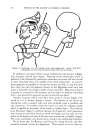
THE COSMETIC ARTS IN ANCIENT EGYPT 169 "stibnite," to mean sulfide of antimony or the metal antimony. However, the ancient Egyptian material has been shown by analysis to have been in almost every case largely galena. In earliest times these minerals were pulverized by the user on the very commonly occurring slate palettes, and the fine powder was no doubt ap- plied to the eyes with the finger dipped in water. In later times the palette developed into a highly decorated ritual and ceremonial object almost entirely, and people of means could no doubt acquire the already ground powder. Both eye-paints are found in various states in the graves of early times: As lumps of the raw material, as stains on the palettes and pebbles with which they were pulverized, as powder in small linen or leather bags, and as a compact mass of powder once a paste from which the wetting agent or adhesive has dried out. In later times the applicator or kohl rod was used for application and this object attained the status often of a piece of finely made jewelry of stone, ebony or ivory, sometimes inscribed and banded with gold. Kohl is an interesting word which is used even today for the black eye- shadow popular in the East. It is an Arabic word and properly should have the article "the" in front of it. This again is al-, hence al-kuh'l, and the whole sounds like the English word"alcohol." In fact when we speak of the eye-paint kohl and of alcohol we are using the very same Arabic word. That vagary of language, it seems, is to be accounted for in the following manner: 1) all-kuh'/when it first came into English meant the very finely pulver- ized antimony or stibnite of eastern eye-paint. Somewhere along the way kuh'l or kohl got separated from the article and still retained the original meaning. 2) In 18th century English "alcohol" was used to designate any ex- tremely finely ground powder so fine that it was almost impalpable. As late as 1812 one finds a phrase such as "alcohol of sulphur." 3) Finally, and this also in the early 18th century, "alcohol" came to mean not only a fine, impalpable powder of any sort but by extension also the pure substance of anything separated from the gross. Of course, it was only a step from there to the meaning "a very pure spirit or essence" and to the specific meaning that alcohol has today. Present day Egyptian kohl is soot made by burning something like shells of almonds or the safflower plant and it is applied with a small wooden, bone or ivory ornamental rod by moistening the rod and dipping it into the soot. There is in the Berlin Museum from ancient Egypt an eye-paint box which consists of four tubes. The inscriptions on the tubes indicate that three of them were to contain eye-paint of three different kinds, one for each of the three seasons of the Egyptian year, and the fourth was to contain "eye-paint for every day."

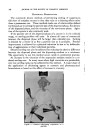
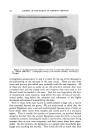
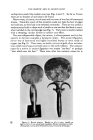
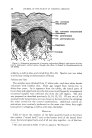
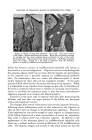
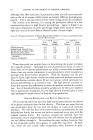
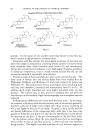
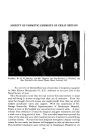
170 JOURNAL OF THE SOCIETY OF COSMETIC CHEMISTS Figure. 5.--Caricature of a girl holding mirror and rouging lips. (About 1200 B.C.) (Photograph courtesy of the Oriental Institute, University of Chicago.) In addition to eye-paint there is some evidence that the women of Egyp- tian antiquity colored their cheeks. Painting of the whole body, which is believed to be indicated by prehistoric statuettes of women, fell out of style in early historical times, the middle of the third millennium. In historic times pigment was applied to the lips by women (see Fig. 5), and this must have been the only red pigment known to the Egyptians until very late times, a naturally occurring red oxide of iron, red ochre. Red ochre is found in graves in connection with palettes and as stains on palettes indicating that it was ground for personal use just as was the eye-paint. Another cosmetic which must have been used in ancient Egypt very much as it is in modern Egypt is henna. The flowers of the shrub are odoriferous with a pungent odor and were probably used to perfume oils and ointments. In modern times the leaves are used for making a paste which is applied to the palms of the hands to redden them. The evidence from Pharaonic Egypt is dubious because the frequently cited arguments that mummies have been found on which the finger and toe nails and the palms of the hands and soles of the feet were stained red are highly suspect. The stain is probably only discoloration owing to the embalming materials. We do know that the Romans used henna for dying the hair, and they probably learned it from the Egyptians. There seems to be no other ex-
Purchased for the exclusive use of nofirst nolast (unknown)
From: SCC Media Library & Resource Center (library.scconline.org)