186 JOURNAL OF THE SOCIETY OF COSMETIC CHEMISTS CONCLUSION Obviously, selecting the right test is not simply a matter of picking up a book and deciding just what kind of test should be run. Consumer test- ing is a valuable tool and, as such, requires considerable thought and plan- ning. It has great value in its ability to give the technical researcher an unbiased measure of the all-important effect of product qualities on con- sumer acceptance. This is what every sincere technical man wants from his tests, and not a glossing over or approval which can only result in dis- appointment when a new product is finally marketed. In some cases it may be desirable for an organization to establish its own consumer test functions. In other businesses this may be too expensive and a better choice may be to consult established agencies who provide con- sumer testing of various sorts as a service. These will have available in varying degrees the necessary facilities for contacting consumers, designing tests, analyzing data and interpreting results. If these services are to be purchased outside of the organization, it may be well for the research de- partment to maintain a small staff or at least one man who is familiar with testing techniques, their capabilities and limitations and who can assist in selecting, designing and interpreting test results. In any case, a little understanding of the value to be derived and the opportunities which exist in this rapidly improving field cannot fail to be useful. The ultimate objective is better products with better market and profit potentials. Consumer testing, properly used, will help to achieve this objective. REFERENCES (1) Bradley, R. A., and Terry, M. E., Biometrika, 39, 324 (1952). (2) Carroll, M. B., "Consumer Product Testing Statistics," New York, Reinhold Publishing Co. (1958). (3) Dykstra, O., Jr., Biometrics Bull., 12, 301 (1956). (4) Dykstra, O., Jr., "Rank Analysis of Incomplete Block Designs: Unequal Numbers of Repetitions of a Method of Paired Comparisons," Master of Science Thesis, Rutgers University (1957). (5) Ferris, G. E., Biometrics, 14, 39 (1958). (6) Ishler, N.H., Laue, E. A., and Janisch, A. J., Food Technology, 8, 389 (1954). (7) Scheffe, H., •..din. Statist./lssoc., 47, 381 (1952).

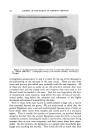
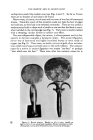
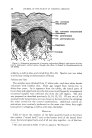
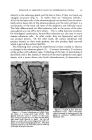
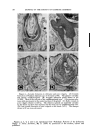
LIPID STUDIES ON "STRIPPED" AND "UNSTRIPPED" HUMAN SKIN By R. SeH•.P., M.D., F. H•.P.e.M^•, M.D., W. M. Coo•, M.D., and L. M^•DOI.* Presented October 8, 1958, Seminar, New York City I• .a PREVIOUS paper we reported on the quantity, acid number (A.N.) and spreading index (S.I.) of the ether-soluble material on the skin with reference to different areas of the skin surface (1). In the fol- lowing, we should like to report on studies of the same properties in an additional dimension, namely on the findings observed at different levels, more specifically, on those observed at the surface and at the base of the stratum comeurn. As a result of extensive recent studies, in particular by Szakall in Hamburg (2, 3, 4) and by Blank in Boston (5, 6, 7), the basal zone of the stratum corneum has become a focus of ever increasing in- terest (Fig. 1), having proven to be the site of a variety of biochemical regulatory mechanisms and natural protective functions it was designated as the "barrier" zone by Szakall, or as stratum "conjuncture" (whereas the outer stratum corneum was referred to as stratum "disjuncture" (2, 8)). EXPERIMENTAL Method The methods of assaying quantity, A.N. and S.I. of the lipids were those described previously (9, 10, 11, 12, 13, 1). In order to gain access to the barrier level (Fig. 1), the skin surface was denuded by manual stripping by means of a 2-in. wide cellophane tape** a method devised many years ago by Wolf in Germany (14), elaborated more recently by Szakall (15) and employed in this country at about the same time by Pinkus (16). The barrier level is recognized by a characteristic reflection of light. The number of strippings necessary to reach this level differed for different * Dept. of Dermatology and Syphilology, New York University Post-Graduate Medical School (Dr. Marion B. Sulzberger, Chairman) and the Skin and Cancer Unit of University Hospital, New York 3, N.Y. ** "Scotch Brand Cellophane Tape" •,!600, Minnesota Mining and Manufacturing Co. 187
Purchased for the exclusive use of nofirst nolast (unknown)
From: SCC Media Library & Resource Center (library.scconline.org)