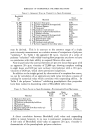
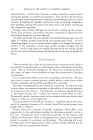
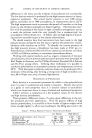
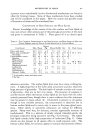
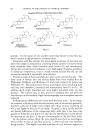
200 JOURNAL OF THE SOCIETY OF COSMETIC CHEMISTS differences in the resins and the methods of manufacture are considerable. The low density material is produced by the high pressure process in heavy, expensive equipment. The actual reactor pressure is over 1000 atmos- pheres, sometimes up to 7000 atmospheres, at temperatures above 212øF. The high temperature tends to promote the growth of branches on the long chains as the ethylene molecules are linked together. The branches inter- fere with the packing of the chains in tight crystalline arrangements and as a result the polymer made this way typically has a comparatively low crystallinity of 30 to 60 per cent. It follows that the high degree of branch- ing and low crystallinity give a low density polyethylene. We should mention here that innovations have been made in the high pressure process during the last few years to permit the production of poly- ethylenes with densities up to 0.94. To identify the various products of the high pressure process a breakdown has been made at 0.925 gm./cc. Polyethylenes of density 0.910 to 0.925 are classed as low density and those of 0.926 to 0.940 are medium, or sometimes intermediate density. Working with special catalysts, such as organic compounds of titanium and aluminum, the low pressure polymerization processes were developed by Karl Ziegler in Germany and by Phillips Chemical, Standard Oil of Indiana and Du Pont among others. Utilizing these techniques it is possible to synthesize polyethylene at atmospheric pressure and temperatures as low as 90øF. With the proper conditions, polymer chains can be produced with a minimum of branching, thus forming a strong resin of high crystalline con- tent, 80 to 90 per cent, and, of course, high density. DISCUSSION OF PROPERTIES Resin density is a convenient parameter by which to class polyethylenes since it is easy to understand and simple to measure. Density also serves as a guide to resin properties since it is directly related to crystallinity which is an important factor in many chemical and mechanical properties. Table 1 presents a comparison of a few property values for low density and high density polyethylene. These property differences mean, of course, great differences in the bot- tles produced and their applications. With the greater stiffness of high density polyethylene, it is possible to blow bottles of lighter weight which retain enough rigidity to allow easy handling in the filling plant and in the TABLE 1--TYPICAL PROPERTY VALUEs--PoLYETHYLENE RESINS Low Density High Density Ultimate tensile strength--short term, psi. Elongation, % Stiffness modulus, psi. Use temperature, øF. Impact strength--Izod (ft.-lb./in. notch) 1,800- 2,400 4,400- 5,500 400- 600 25- 180 20,000-25,000 100,000-150,000 -20 ø to-t-205 ø 0 ø to q-260 ø 13 3-5

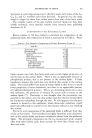
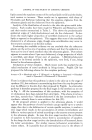
HIGH DENSITY POLYETHYLENE BOTTLES 201 home. Wide mouth bottles and jars can now be produced at reasonable weights with neck finishes stiff enough to give good sealing characteristics with standard closures. This stiffness also alters some of the functional properties which we have been accustomed to finding in plastic bottles. A high density bottle blown at the same weight as a normal polyethylene spray bottle is difficult to squeeze. If we make the bottle light weight to improve the spray prop- erties, we may find that we have problems in providing a good fit between the spray plug and the bottle neck and, in addition, that the recovery time of the bottle after squeezing is completely different. It is possible to pro- duce good spray packages with high density polyethylene but the bot- tle shape and weight must be carefully selected to insure proper function- ing. Most of the high density bottles produced now are intended for non- spray end uses. They are carrier-type containers for liquid detergents and shampoos, for household cleaning products and for basic chemicals. They serve as dispensers for lotions and creams and as drop-by-drop ap- plicators of pharmaceuticals. Some are used as laboratory ware and mil- lions have been sold as baby nurser bottles. The nurser bottles, laboratory ware and pharmaceutical packages illustrate another important property of high density polyethylenes. All of these bottles can be steam sterilized by regular autoclave techniques at 15 pounds steam pressure. One word of caution though autoclaving should be carried out with the containers unsealed or empty. The strength of the polyethylene is considerably decreased at high temperatures and any vola- tile materials sealed inside may cause rupture of the bottles. The question of bottle clarity is often an important one with users of polyethylene containers. The higher crystallinity of the high density resins results in a lower degree of clarity but product fill levels are visible through unpigmented high density bottles. All of the polyethylenes transmit ultraviolet light. For light sensitive products or where color is desired for appear.ance considerations, pigmented bottles can be provided in a wide variety of colors. To this point we have stopped for only a few comments on each of the bottle properties mentioned, but there are three more items which I think you may be interested in looking at a little more closely. These three are resistance to impact, to stress corrosion cracking and to permeation. Let us consider them in that order. BOTTLE IMPACT PROPERTIES We have already seen that the high density polyethylenes give lower Izod impact values than regular polyethylene. But what can we do to determine the impact resistance of a particular bottle? We have found
Purchased for the exclusive use of nofirst nolast (unknown)
From: SCC Media Library & Resource Center (library.scconline.org)