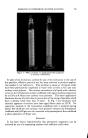
202 JOURNAL OF THE SOCIETY OF COSMETIC CHEMISTS that a simple drop test of filled bottles can give valuable information. For preliminary evaluation, a random selection of bottles are filled with 70øF. water to nominal capacity and sealed. Drops are made onto an asphalt tile over concrete floor beginning at 3 feet. Each bottle is dropped from this height first on the bottom corner, second on the side and finally on the fiat bottom. The same bottles then go through the same three drops at 4 feet, 5 feet and 6 feet or until failure. Thus, any bottle which passes the full test has been submitted to 12 drops. Bottles are examined carefully at each drop level by squeezing and checking for pinholes, splits or obvious leaks. Any water leakage from the bottle is considered a fail- ure. This test, of course, is a tedious chore but it has demonstrated the importance of three critical points--bottle design, machine blowing condi- tions and selection of proper polyethylene resins. As would be expected, small bottles or bottles with enough polyethylene to give a fairly stiff squeeze usually do not present problems of impact resistance. Problems can occur with larger bottles such as 16 ounce or 32 ounce sizes which have been lightweighted for reasons of economy. We have found that in de- signing these lightweight bottles it is best to round off any sharp corners and to avoid designs which will cause extreme variations in wall thickness. With poor designs, adjacent thick and thin sections cool at different rates thus giving slightly different crystalline development and setting up internal stresses in the bottle. These areas then fail under strain. This effect must also be considered in determining blowing conditions. Extrusion temperatures and cooling rates 'must be closely controlled to achieve the optimum results. RESISTANCE TO STRESS CORROSION CRACKING The second of the three properties we are to examine is resistance to stress corrosion cracking. The first significant work on this phenomenon was done by Bell Laboratories several years ago in connection with cable insulation. A test procedure for determining crack resistance of various polyethylenes was developed and is still used in one form or another throughout the plastics industry. We have converted the test slightly, using a standard polyethylene to test the products which go into the bottles for activity as cracking agents. With high density polyethylene, an addi- tional test of the blown bottle has been devised to evaluate the finished con- tainer for crack resistance. This consists of filling the bottles with a 33 per cent solution of Igepal CO which is a wetting agent and an active cracking agent. Bottles are then sealed, placed in a pan of Igepal and con- ditioned at 140øF., for seven days, with daily examination for evidence of cracking. Failures of poor quality containers will normally occur within the first two or three days but good bottles will pass with ease. As

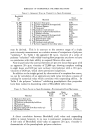
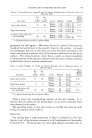
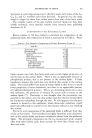
HIGH DENSITY POLYETHYLENE BOTTLES 203 is the case with impact properties, producing crack resistant bottles re- quires attention to design, blowing conditions and raw material proper- ties. BOTTLE PERMEABILITY Now let us consider the question of permeation. We have conducted well over 3000 routine permeation tests of basic chemicals and customer products since 1949. Looking back over all the data collected, we find that only about 1/a of these items are considered packageable in regular low density polyethylene. One of the main reasons for rejection of the other two-thirds is loss of certain product components due to permeation through the bottle walls. It is believed that the permeation process takes place basically in the amorphous regions of the polyethylene resin. Thus, high density polyethylene with its higher crystalline content would theoretically show lower permeation rates. Our test results indicate that this is true in fact, we normally find permeation losses of 1/2 to 1/8 those of low density material. There are some chemicals which do not fall in this range. Compounds least affected by the increase in crystallinity are the slow per- meators. Greater advantage is found among the faster permeators in- cluding compounds of low polarity. Permeation data on a few selected chemicals are listed in Table 2. The figures present a comparison of the calculated yearly percentage weight losses from 4-ounce Boston Round bottles of low and high density poly- ethylene. The calculations are based on results of standard twenty-eight- day shelf life tests. TABLE 2--PERMEATION DATA--4-OuNCE BOSTON ROUND BOTTLES CALCULATED PERMEATION LOSSES (% PER YEAR) .... 73OF.______--. 100øF.- .... Low High Low High Density Density Density Density Methyl salicylate 14.4 1.7 81. 11. Parafiqn oil light 0.2 0.2 1.6 1.0 Cetyl alcohol 0.5 0.2 2.7 1.7 Pure vanilla extract 0.7 0.2 4.9 1.6 Glacial acetic acid 6.5 1.8 26. 5.2 Oil of orange 366. 66. ! 590. 199. It can be seen from the improvement in permeability properties with these typical product ingredients that high density bottles can be utilized with a greater range of products than could be handled in low density poly- ethylene. Better retention of perfumes and flavorings, as illustrated by methyl salicylate and vanilla extract, and improved resistance to oils, such as the light paraffin oil, are of prime importance here. But we do not wish to present a false picture on the advantages of the high density resins.
Purchased for the exclusive use of nofirst nolast (unknown)
From: SCC Media Library & Resource Center (library.scconline.org)