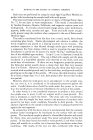
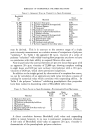
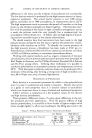
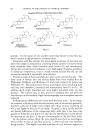
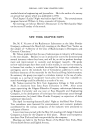
204 JOURNAL OF THE SOCIETY OF COSMETIC CHEMISTS Although they offer reductions in permeation, there are still many materials such as the oil of orange, which require an entirely different packaging ap- proach. This is one case where interior bottle linings should be considered. Our interest now, however, is in seeing the permeation effects of a few commercial products in high density polyethylene. Again in Table 3, we will make comparisons of yearly percentage weight losses based on twenty- eight-day tests in 4-ounce Boston Round bottles of equal weight. TABLE 3--PERMEATtON DATA--4-OuNcE BOSTON ROUND BOTTLES CALCULATED PERMEATION LossEs (% PER rEAR) ß --73øF..-----, ,------100øF.----, Low High Low High Density Density Density Density Liquid shampoo 0.4 0.1 3.7 1.0 Suntan lotion (alcohol base) 2.0 0.8 9.4 3.5 Suntan lotion (emulsion type) 0.4 0.01 4.2 1.4 Pre-electric shave lotion 2.7 0.4 21.4 2.8 Insect repellent (diethyltoluam- ide base) 1.5 0.7 9.4 2.7 Tincture merthiolate 1.2 0.2 8.4 0.9 These data point out another factor in determining the proper container for a specific product. Although the over-all permeation losses of most of these items in low density polyethylene are within commercially acceptable limits, there are certain components in several products which necessitate a package with better barrier properties. With the shampoo and the pre- electric shave, high density bottles provided improved perfume retention. The merthiolate contains about 10 per cent acetone which permeates low density polyethylene at an excessive rate. The high density container re- duces this acetone loss sufficiently to make the product suitable for market- ing. Any of the polyethylenes would be satisfactory for the insect repellent from a permeation standpoint, but the high density material gives a more rigid package for easier control of drop-by-drop application. GREASE RESISTANCE AND BOTTLE DISTORTION We mentioned earlier the fact that high density polyethylenes had better oil or grease resistance than the low density. This does not mean that we can recommend them for use with all oil-base or water-in-oil emulsion products. We still feel that oil-in-water emulsions are preferable for any polyethylene bottle, but we are not quite so restricted as we were with the original squeeze bottle. For instance, mineral oils typically have low permeation rates in polyethylene but they will dissolve into the polyethyl- ene and diffuse through it. On reaching the outer surface, however, they do not evaporate readily and a greasy or tacky film may form. In addi- tion, these oils and certain other compounds, when dissolved in poly-

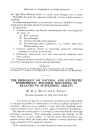
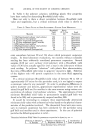
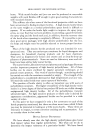
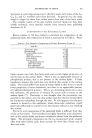
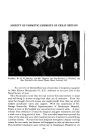
HIGH DENSITY POLYETHYLENE BOTTLES 205 ethylene, cause it to swell or expand and this eventually produces bottle distortion, more commonly called "collapse." Because of their greater crystalline content, the high density polyethylenes exhibit lower soliabil- ity constants and slow down diffusion of the product to the outer surface. We therefore have appreciably fewer problems with greasiness on the bottle surface and less tendency to collapse. A specific application where we can take advantage of these properties is the packaging of creams in polyethylene jars. A group of cream prod- ucts has been on extended shelf life test in 6-ounce high density jars for a full year with encouraging results. The initial twenty-eight-day test at controlled temperatures gave permeation results as shown in Table 4. TASLE 4--CALcu•arm) PERWEar•OS LossEs (% CItEAM PRODUCTS IN 6-Ounce JARS 73øF. 100øF. Hand cream, o/w 2.1 Cold cream, o/w 2.3 Vanishing cream, o/w 2.2 Dry skin cream, w/o 1.5 All purpose cream, o/w 1.7 Facial cream, o/w 1.9 5.5 5.4 9.0 5.0 The test jars showed no indication of collapse or greasy surface after the twenty-eight-day test period, and after an additional eleven months at room temperature all show good oil retention and good appearance. It should be pointed out here that some instances of bottle collapse can be traced to causes other than swelling of the polyethylene. Absorption of oxygen from the bottle airspace into the product or extremely high perme- ation of the product can both set up a partial vacuum condition in the bottle. Conventional polyethylene bottles collapse easily to equalize the pressures, but the high density polyethylenes, because of their greater rigidity, provide improved resistance to this collapse tendency. LIGHTWEIGHT CONTAINERS Now that we have seen the comparative data on permeability of the poly- ethylene resins, we can look again at the matter of light weighting high density bottles. Permeation losses are inversely proportional to bottle thickness so we can reason from the data in Tables 2 and 3 that bottles of high density polyethylene can be produced at weights considerably less than normally used with low density material and still afford equivalent, or even improved, product retention. As we mentioned earlier, these light weight high density bottles are practical from both production handling and consumer use viewpoints because of the inherent rigidity of the poly- mer. The lower bottle weight gives lower costs. Thus, for the proper ap-
Purchased for the exclusive use of nofirst nolast (unknown)
From: SCC Media Library & Resource Center (library.scconline.org)