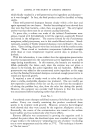
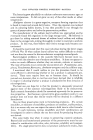
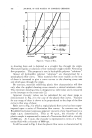
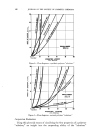
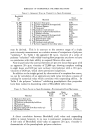
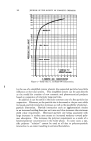
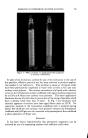
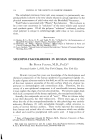
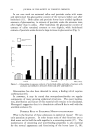
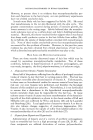
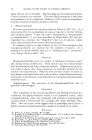
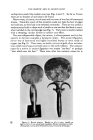
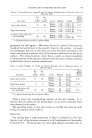
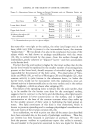
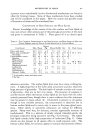
BIOCHEMISTRY OF SEBUM 207 a process must undoubtedly involve biochemical mechanisms not found in other fat forming tissues. Some of these mechanisms have been studied and will be considered in this paper. Both the nature and possible mode of formation of sebum will be considered here. COMPOSITION OF SKIN SURFACE AND HAIR LIPIDS Present knowledge of the nature of the skin surface and hair lipids of man and certain other animals and of the preen gland secretion of the duck and goose is summarized in Table 1. Preen gland oil is an almost pure TABLE 1--THE CHEMICAL COMPOSITION OF THE SKIN SURFACE AND HAIR LIPIDS OF MAN AND OTHER ANIMALS AND THE PREEN GLAND SECRETION OF CERTAIN BIRDS Guinea Constituent Man Sheep Pig Mouse Rabbit Rat Ox Duck Goose Fatty acids (free) 28.3 11.0 6.0 7.5 Fatty acids (combined)* 41.6 44.0 49.3 36.7 Glycerides 32.5 0 0 0 Unsaponifiable matter 30.1 46.1 44.8 54.6 Squalene 5.5 0 0 0 Hydrocarbons 8.1 1 1.5 1.1 Wax alcohols 6.2 9.0 5.0 5.9 Cholesterol 4.1 10.0 18.0 4.5 Dihydrocholesterol 0.1 2.5 Lathosterol i l 8 •11 Other sterols 613 i' 0.7 .. Isocholesterol J' tr 12.5 Alkane-1: 2-diols 2.0 2.5 • 16 2• 15 9.0 7. 43.6 51 0 0 45.9 41 0 0 3.5 1 31.0 17 3.5 5 0.3 0 4 5.1 .4 53.4 4•16 4•'5 0 .. .4 42.7 0 5 .. 5 4fi 0 4fi 0 8 1•14 1 4 0 3 ß . • .. • .. ß . 9 .. * As glycerides, waxes and other esters. •' See text. sebaceous secretion. The surface lipids from man have many striking fea- tures. A high proportion of free fatty acids are present and also relatively large amounts of glycerides. The hair lipids of animals contain only traces of glycerides--they are in fact true waxes. The presence of squalene is another feature which the human surface lipids do not share with the other animals presented here, though there is some evidence that this substance may be present in horse sebum (2). Cholesterol is present in all species though in very variable amounts the concentration is relatively low in human surface lipids and it occurs only in traces in the preen gland secre- tions. Other steroIs or sterol-like substances are typical for different species. Sheep wool wax, for instance, contains appreciable amounts of isocholesterol. This is a mixture of closely related trimethyl-sterols the principal component being lanosterol (see Fig. 1 for formula). The rodent hair lipids contain fairly high proportions of lathosterol (Fig. 1). Other steroIs are also present in all species often in small amounts only. The human surface lipids, for instance, appear to contain small amounts of keto-

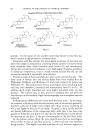
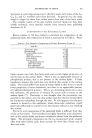
208 JOURNAL OF THE SOCIETY OF COSMETIC CHEMISTS Suggested Pathway of Sterol Synthesis in Skin H0 H0 H0 Lanosterol Dihydrolanosterol as-Cholestenol HO HO HO Lathosterol 7-Dehydrocholesterol Cholesterol (•7-Cholestenol) Figure 1. steroids. In the mouse we see another interesting feature in that this ma- terial contains a high proportion of alkane-diols. Compared with the animals the preen gland secretions of the birds are relatively simple in composition consisting almost entirely of waxes formed from relatively short chain branched acids (about C6) and octadecanol. In fact the over-all picture indicates a very high degree of species specificity in sebaceous composition, even in closely related animals like the rat and mouse the material is chemically quite distinct. The fatty acids of these materials also show some unusual features. The fatty acids of human hair and surface lipids have been studied first by Weitkamp, Smiljanic and Rothman (3) and more recently by James and Wheatley (4). The acids present form a homologous series containing both odd and even members, saturated and unsaturated, from C7 to C20. In addition both singly branched and more highly branched acids are also present. The mixture has, in fact, proved so complex that not until the introduction of the methods of gas chromatography was a complete analysis achieved. Striking species differences also occur with the fatty acids. In the sheep, for instance, a-hydroxy acids are also present, and, in the animals generally, the fatty acids are of longer chain length than those of man, extending up to C30 and higher in the case of the sheep. So great, in fact, are the individ- ual species differences of the component fatty acids that it has been sug- gested by Wheatley and James (5) that species identification could almost be obtained on the basis of the gas chromatogram of the hair fatty acids. In the human surface lipids the wax alcohols also form an homologous series similar to that of the fatty acids (6, 7), both odd and even members being present. The highly branched members do not, however, appear to
Purchased for the exclusive use of nofirst nolast (unknown)
From: SCC Media Library & Resource Center (library.scconline.org)