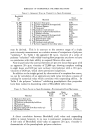
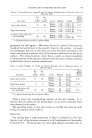
BIOCHEMISTRY OF SEBUM 209 be present in such large amounts as in the fatty acids, only traces of the Cn, C•a, C•5 and C•7 members have been detected. In general too, the chain length is longer by about four carbon atoms than that of the fatty acids. The complex nature of the skin surface and hair lipids has thus been briefly reviewed more detailed reviews have recently been published elsewhere (8, 9). COMPOSITION O1 v THE EPIDERMAL LIPIDS Recent studies (1, 10) have helped to elucidate the composition of the epidermal lipids, the composition of which is summarized in Table 2. These TABLE 2--THE CHEMICAL CouvostT•o• or Hu•aAs Ev•r)Ev.•An Ltvtr)s (1) Acid No. 7 Total fatty acids 63.3% Phospholipids 7.9% Nonsaponifiable matter 36.9% Squalene 3.0% Other hydrocarbons 10.0% Wax alcohols 2.0% Sterols (total) 9.3% 7-dehydrocholesterol 0.3% Other fast-acting 0.1% Free cholesterol 7.4% Esterified cholesterol 1.5% lipids contain very little free fatty acids and a much higher proportion of sterols than do the surface lipids. There is also an appreciable amount of phospholipid present this is not present in the surface lipids. A little squalene is present, but much less wax alcohols than occurs in the surface lipids. The sterols differ from those of surface lipids in that there is a much lower proportion of ester cholesterol, but there is an appreciable amount of 7-dehydrocholesterol present. This is an interesting observation since this substance, the precursor of vitamin D, occurs only in traces in the surface lipids (7). Previously it was thought that the provitamin was secreted in the sebum onto the skin surface and the vitamin formed there by irradiation reabsorbed through the skin. It now appears that the pro- vitamin is formed in the epidermis, where ultraviolet radiations would penetrate sufficiently to convert it into the vitamin without it ever reaching the surface. The fatty aci•t composition of the epidermal lipids is different from that of the surface lipids. The branched and highly branched acids character- istic of the surface lipids are almost completely absent from the epidermal lipids. The principal components are the C•, unsaturated acids--mainly oleic with some linoleic acid these account for more than 50 per cent of the total acids.

210 JOURNAL OF THE SOCIETY OF COSMETIC CHEMISTS By comparing the composition of the surface and epidermal lipids, an evaluation of the true composition of sebum can be made. Such an evalua- tion is made later in this paper. BIOCHEMICAL PROBLEMS OF SEBUM FORMATION Evidence, mainly of a histochemical nature, has given some indications of the nature of the enzyme systems present in the sebaceous glands but such information is still very incomplete. Other studies which have thrown some light on this very complex picture will now be considered. Mode of Formation of Long Chain Compounds. There are at least five main series of long chained compounds found in the surface and hair lipids. These are as follows: 1. Hydrocarbons R. CH.• 2. Wax alcohols R.CH2OH 3. Alkane-diols R-CH(OH).CH2OH 4. Fatty acids R.COOH 5. a-Hydroxy acids R.CH(OH).COOH The radical R is a straight hydrocarbon chain which may be unsaturated or may be branched near the end. Of these compounds it is not clear at present how much simple hydro- carbon is present in sebum. The straight chain hydrocarbons found in early investigations were almost certainly contaminants. Some of the branched material appears to come from the epidermis--nevertheless, there still appears to be some branched hydrocarbons secreted by the sebaceous glands. The wax alcohols are largely of sebaceous origin, a little coming from the epidermis. Of the fatty acids the branched and highly branched members come from the sebaceous glands as does also the majority of the C•0 unsaturated (11) acids. The hydroxy acids are peculiar to the sheep and are almost certainly of sebaceous origin, and the alkane-diols appear to be genuine sebaceous products. All of these compounds appear to be built up from small terminal units by a process of chain elongation by means of acetate (12). The even membered fatty acids start with acetate as this terminal unit, while for odd members the unit is propionate. With the branched chain members the terminal units are probably derived from amino acids since in the seba- ceous glands the over-all process is one of the conversion of cellular proteins into lipids. Valine and isoleucine form the basis of two types of branched acids (13). These appear to be first decarboxylated and then deaminated to form the terminal units which are then built up by the chain elongation method. It is not clear yet whether the long chain compounds are built up first as fatty acids and then converted into the alcohol, or other type of compound,
Purchased for the exclusive use of nofirst nolast (unknown)
From: SCC Media Library & Resource Center (library.scconline.org)