THE THERAPEUTIC POTENTIALITIES OF TRIGLYCERIDES By S. G. KNIGHT* Presented November 20, 1958, N•w York City DuRt•rc THE past year lornrelations containing glycerol triacetate (triacetin) as the active ingredient have been used with great success in the treatment of superficial mycotic infections. Basically the use of triacetin is merely a unique way of providing a constant level of mildly fungistatic acetic acid and, as a consequence, a lowered pH. The acetic acid is liberated from the triglyceride after enzymatic hydrolysis of the ester bond by esterases or lipases from various cells. This paper deals with certain aspects of this hydrolysis and its consequences. PR•oR ART AND PATENTS The use of acetic acid, usually in the form of vinegar, as an aid to healing goes back to antiquity. The Assyrians in the era of 600 to 700 B.C. reportedly used vinegar in the treatment of ear diseases (l) and the "Jewish Encyclopedia" mentions the medicinal use of vinegar in a number of ways. "The Encyclopedia Britannica" states that Hippocrates used vinegar medicinally in 400 B.C. and of course the Bible records the use of wine, probably vinegar or "soured wine," for annointing wounds. "The Oxford English Dictionary" points out that in 1600 vinegar was known to be very good for healing burns, and in World War II, a solution of one-half per cent •'•cetic acid in saline glycerol was used in a Naval hospital in the Pacific to treat burns that were large enough to require skin grafts (2). Also, in modern' times, Burrow's solution or variations of the basic aluminum acetate-acetic acid formula has been used for a variety of purposes. Most of these usages are directed toward combating bacterial infections, often gram-negative bacteria. As a therapeutic fungicide acetic acid has had comparatively little usage, undoubtedly because the higher fatty acids are somewhat more active. Previous to the past year, triacetin has not been formulated into chemo- therapeutic agents. However, because of its low toxicity, it has been * Department of Bacteriology, University of Wisconsin, Madison 6, Wis. 3O7

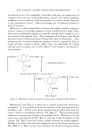
308 JOURNAI, OF THE SOCIETY OF COSMETIC CHEMISTS suggested as a nonaqueous solvent for chlorine releasing compounds such as chlo•oamide, an antimustard gas protective (3). The rights to develop glycerol triacetate and related glycerides as chemotherapeutic agents have been assigned to the Wisconsin Alumni Research Foundation at Madison. The Foundation now has a number of patent applications on these develop- ments. BODY OF REPORT A few years ago, in my laboratory, there was a research project aimed at studying the over-all kinetics of the formation of ketones from triglycerides by Penicillium roqueforti. The oxidative conversion of fatty acids to a 2-ketone with the concurrent loss of the carboxyl group is a reaction unique to Penicillium roqueforti and since these ketones are responsible for the characteristic aroma and flavor of mold ripened cheese, it is a reaction of considerable economic importance. In many experiments the enzymatic hydrolysis of the triglyceride and the oxidation of the newly liberated fatty acids would proceed nicely at first only to have the oxidative part of the reaction stop with rather sudden abruptness. It took some time to deter- mine that this happened only when two events coincided: the fatty acids had to be liberated from the triglyceride faster than they were oxidized and the buffer capacity of the medium had to be poor enough at pH 6.8 so that a pH of around 5.0 was aftained. Under these conditions the fatty acid existed largely in the nondissociated form and the cessation of oxidation was a consequence of the well-known fungicidal activity of fatty acids in acidic environments. For the time being then our interest changed from the over-all reaction to the first step: the enzymatic liberation of fatty acids fi'om triglycerides by the lipases. The enzymes involved here are the well-studied lipases or esterases which hydrolyrically split the ester bonds between fatty acids and glycerol. Since these esterases are abundantly present in most of the common saprophytic fungi it seemed reasonable to assume that in the presence of a trig}yceride of a fungistatic fatty acid the mold would virtu- ally inhibit or kill itself. The use of such a triglyceride instead of the free fatty acid as a fungistatic agent seemed to offer some advantages: the glyceride is neutral, relatively odorless, much more potential acid than free acid could be used, and even after hydrolysis the pH would not be lower than around pH 4 where the esterase should become inhibited. This reasoning was put to test in the laboratory in different ways using different triglycerides and a number of saprophytic fungi and found to be true. However, in practical tests none of the glycerides proved effective enough to warrant further work at the moment: we cannot explain this lack of activity under practical tests. We assumed also that the dermatophytic fungi would be inhibited by
Purchased for the exclusive use of nofirst nolast (unknown)
From: SCC Media Library & Resource Center (library.scconline.org)