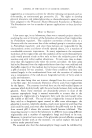
286 JOURNAL OF THE SOCIETY OF COSMETIC CHEMISTS Another factor that is rather coniCsing is that most fruit and fruit juices particularly those of the citrus variety, have acid potentials that vary fkom pH 2.0 to 5.0. If acids are the cause of dental caries, then these acid solu- tions when taken into the mouth should cause decalcification regardless of the sugar content. It has been demonstrated many times that most citrus fruit juices will readily decalcify teeth, yet it has been shown many times that citrus and other fruits are not cariogenic. Under some circumstances, the teeth have been known to erode when acid fruits are held in contact with them for long periods of time, but no cariou's lesions are produced. Before the present-day theory of dental caries can be fully established, this paradox must also be explained. It has been demonstrated many times that the inorganic portion of the tooth is rather constant within narrow limits. The inorganic portion of the deciduous tooth is essentially the same as tha.t of the permanent tooth. It has been shown repeatedly that a deciduous tooth will decay more rapidly than a permanent tooth. It has also been shown that a young permanent tooth is much more susceptible to dental caries than an old permanent tooth. It is generally believed that if dental caries can be prevented until a person is t•venty-five years of age, few cavities will normally form after this age. If the composition of the tooth is essentially the same, whether the tooth is deciduous, new, old or young, unless there is a marked change in environ- ment, there should be little difference in the rate of decay. If the inorganic portion of the tooth is the first portion that is dissolved in the initiation of a carious lesion, then in so far as the inorganic portion does not change, ease of solution should remain constant. This is not the case. The experiments of Kite (16) adequately demonstrated that when the sugars of a cariogenic diet are fed to rats via stomach tube no carious lesions developed. However, in all of the experiments in which substances that would prevent fermentation were incorporated into the cariogenic diets, even though caries activity was reduced, some lesions always developed. In most cases the sugar inhibitor mixtures would not ferment in vitro. Hence we must assume that either the sugar per se had some effect or under the conditions that prevail in the mouth, some fermentation did take place and some acid did form. The fact that dental caries does develop with non- fermentable sugar mixtures requires some explanation. On the basis of recent investigations logical explanations for the above discrepancies have been made available. These new data may also explain why control measures to date have been only partially successful and may furnish clues for new approaches to the entire problem of caries control. PERMEABILITY OF THE TOOTH The enamel shell appears to be nonvital, it does not regenerate when it

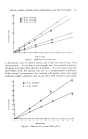
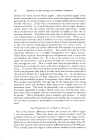
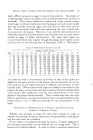
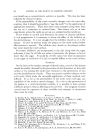
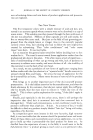
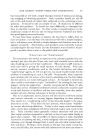
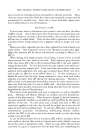
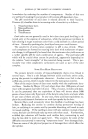
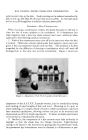
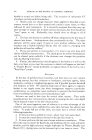
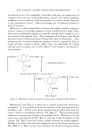
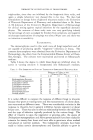
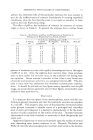
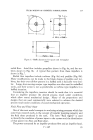
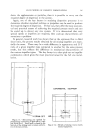
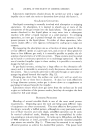
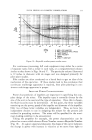
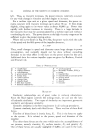
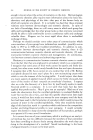
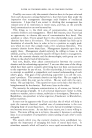
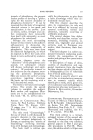
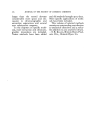
I)ENTAL CARIES CONTROL WITH DENTIFRICES AND MOUTH WASHES 287 2O ß : 12 yr. old tooth •1: 36 yr. old tooth / • = 56 2rr. old tooth / • i0 ß 1 2 • 4 5 6 7 ,?. 9 Time in Days Figure l.--I)iffusion of 1.0 molar urea. is destroyed, it has no sensory nerves, and •t has very •ew, • any, v•ta• characteristics. At one t•mc • was thought rhar th•s matcr•a• wou•d nor change •n any rcspcc• from •hc time o•crupt•on. •t • now known that h•rd Hfc•css shcU, the enamel, may act as a scm•pcrmcab•e membrane. Under norma• c•rcumsranccs •h•s matcr•a• w• permit water and smaU molecular weight substances that do no• reac• wkh cname• to pass • - • = 26 •. •e•pted 70 • • 19 •, e•ed A 5o • 40 o '• 20 10 0 • 0 i 2 3 4 5 6 7 8 9 iO •i •2 i3 14 T• in Days Figure 2. Diffusion of 1.0 normal NH4CI pH 6.5,
Purchased for the exclusive use of nofirst nolast (unknown)
From: SCC Media Library & Resource Center (library.scconline.org)