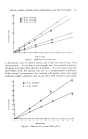
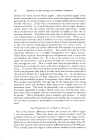
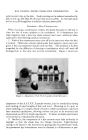
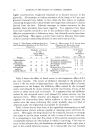
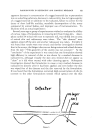
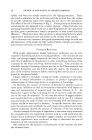
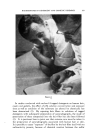
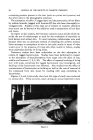
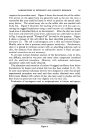
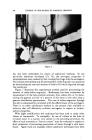
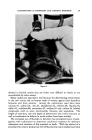
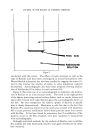
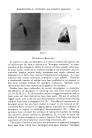
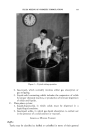
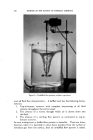
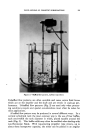
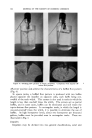
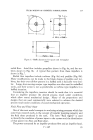
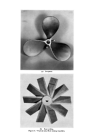
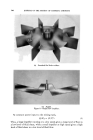
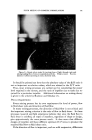
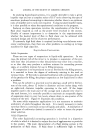
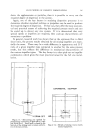
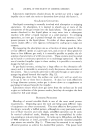
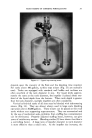
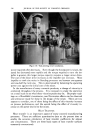
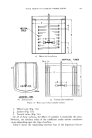
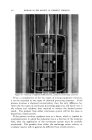
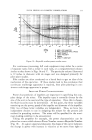
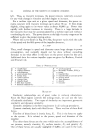
288 JOURNAL OF THE SOCIETY OF COSMETIC CHEMISTS between the saliva and the blood supply. Once the blood supply of the tooth is destroyed as in a treated tooth in which the pulp canal is filled with gutta-percha, the tooth no longer acts as a semipermeable membrane and no transfer will occur. Under these circumstances the tooth becomes dehy- drated and brittle. It is easily fractured and it will no longer develop a carious lesion with the typical inverted cone-type penetration. Under these circumstances the enamel rods decalcify as rapidly as does the ce- menting substance. It produces the same type of decalcification as when acid is placed upon an isolated area of an extracted tooth. When an ex- tracted tooth is set up in such a manner as to act as a semipermeable mem- brane, and acid is permitted to act upon it, then the lesion produced appears to have the typical morphological characteristics of a carious lesion. It would seem that under an osmotic differential the hydrogen ion penetrates the tooth along lines of least resistance. This would normally be in the cementing substances as it is highly impregnated with organic protein. Under these conditions the hydrogen ion will penetrate until it reacts with and displaces the calcium ion. In so far as the calcium ions are further apart, the penetration is much greater through the cementing substances than through the rods. Thus it would seem that the permeability of the teeth may be an important item in the rate of progress of a typical carious lesion. It has been demonstrated that the permeability of a freshly erupted tooth is much greater than that of an older tooth that has been subjected to the oral environment for a long period of time, Fig. 1, 2. An old impacted tooth however, that has not been subjected to the oral environment ex- hibits the permeability as great, if not greater, than a freshly erupted tooth. This change in permeability with age may be the explanation why young permanent teeth and deciduous teeth decay more rapidly than an old permanent tooth. This must be particularly true in animals where it is practically impossible to produce dental caries even with the most cario- genic diets, if the cariogenic diets are started after the animal has obtained its growth. This is particularly true in monkeys and baboons. It would seem th at a permeable tooth should decay more rapidly than an impermeable one and that a decrease in permeability is associated with its oral environ- ment. THE PERMEABILITY OF DENTAL PLAQUES One of the primary differences between the natural and refined sugars is the concentration. Most fruit juices and natural products, with the exception of honey, are essentially isotonic in respect to the sugar content. The penetration of any molecule or ion is dependent upon a number of vari- ables such as the character of the membrane, the size and shape of the dif- fusant, the viscosity of the solution and the diffusion pressure of the diffusant. Thus it would seem that sugar in dilute solution would not have nearly so

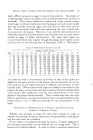
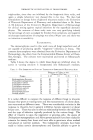
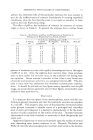
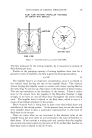
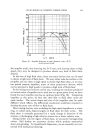
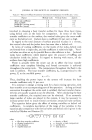
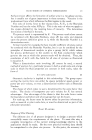
DENTAL CARIES CONTROl. WITH DENTIFRICES AND MOUTH WASHES 289 high a diffusion pressure as sugar in concentrated solution. The simple act of refining sugar makes it possible to form markedly hypertonic solutions in foodstuffs. Thus, many confections, candies and syrups contain concen- trated sugar and hence would penetrate the plaque and tooth more rapidly than the naturally occurring sugars and such items as fruit juices and the like. There has been little work done concerning the rate at which solu- tions penetrate the plaque. However, it was recently demonstrated that artificially prepared microbial plaques and microbial mats are quite imper- meable to sugar of dilute concentration. Yet when these sugars are in concentrated form they migrate through the plaque quite rapidly so that acids can form on the inner portions of the plaque, Table 1. When dilute TABLE 1--D•FFtrS•ON OF GLtrCOSE--gm./ml. t .Diffusion Time, Minutes- Slice 5 15 30 5 15 30 5 15 30 5 15 30 5 15 3O 0 100 100 100 300 300 300 500 500 500 800 800 1 31 44 49 78 130 142 95 142 167 219 339 2 30 42 45 73 110 131 88 132 149 170 292 3 30 40 43 67 95 125 85 122 145 161 280 4 30 37 40 62 78 123 83 113 143 157 272 5 29 31 37 57 69 120 71 101 141 153 265 6 25 28 35 49 62 111 52 88 140 148 255 7 22 27 33 37 54 95 40 79 130 138 237 8 20 26 31 28 49 88 33 72 109 120 218 9 18 25 30 25 45 81 29 62 98 95 197 10 17 25 28 21 42 78 27 52 89 71 177 800 1000 1000 1000 424 325 452 515 396 276 416 498 378 246 399 490 339 215 376 478 331 178 323 468 320 152 258 464 314 133 215 456 306 113 195 443 290 92 190 429 273 71 182 410 acid solutions with a concentration equivalent to that of fruit juices are applied to the outer portions of the plaque, the inner portions do not be- come acid nor do the sugars permeate in sufficient concentration to form harmful acids. When concentrated sugars are added to the surface of the plaque, the sugar concentration becomes isotonic on the inner surface within a few minutes after application and the acid concentration in the inner depths of the plaque become harmful. Thus it would seem that one of the primary mechanisms associated with dental caries is the permeability of the plaque which in turn is effected materially by the concentration of the sugar. , '['HE EFFECT OF PERMEABILITY OF PLAQUE AND TOOTH IN THE CONTROL OF DENTAL CARIES Whether one attempts to make the tooth more resistant to acids, or whether one attempts to halt acid formation, the permeability of the plaque and the tooth must be considered. If one wishes to incorporate fluorides by means of topical application, the maximum penetration can be obtained only on young teeth. This is borne out by clinical evidence. In order to obtain a maximum penetration
Purchased for the exclusive use of nofirst nolast (unknown)
From: SCC Media Library & Resource Center (library.scconline.org)